
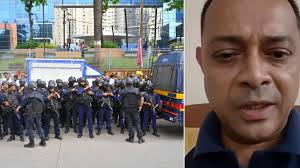
A Quiet Thursday Turns Terrifying in Powai
The Rohit Arya Hostage Case has shaken Mumbai to its core — a shocking incident where 17 children and two adults were held captive inside a Powai acting studio on October 30, 2025.
What began as a routine audition quickly spiraled into chaos when acting coach Rohit Arya locked the doors, trapping the children and sparking one of the city’s most intense police operations in years.
By evening, the studio was surrounded by commandos, terrified parents crowded the streets, and Mumbai Police faced a delicate mission: rescuing every child alive from a man who claimed he wasn’t a terrorist — just someone demanding “moral answers.”
“He kept saying he wasn’t a terrorist. That he wanted moral answers, not money,” — a police official told India Today.
The Audition That Became a Trap
Arya had allegedly invited the children for what he called a web-series audition. Mumbai parents are familiar with such offers — countless small studios promise “breaks” in TV or OTT.
But this time, once the kids entered, Arya locked the door, blocked exits, and started recording live videos demanding “truth” from society.
“I am not a terrorist. I just want moral and ethical answers,” — Rohit Arya, in a livestream before the standoff.
His words made little sense, but his intensity was chilling. Police believe he suffered a severe mental breakdown. What began as delusion soon escalated into a city-wide emergency.
Inside the Standoff
By 2 p.m., Powai was sealed off. The building’s windows were draped with curtains.
Negotiators kept Arya talking while commandos mapped every corner of the studio. He waved a gun and, according to witnesses, threatened to set fire to the premises if anyone tried to enter.
“He was alternating between calm speeches and sudden shouting,” — a negotiator later told The Week.
When talks collapsed, Arya reportedly fired a shot, hitting a wall. Police stormed in through a bathroom vent.
In the brief gunfire that followed, Arya was shot in the chest. The children were rescued unharmed, though several needed counseling.
“He fired first; we retaliated. Our priority was saving the children,” — Mumbai Police statement to Times of India.
Arya later died in hospital.
Who Was Rohit Arya?
Not a hardened criminal — but a man on the edge.
Arya was an acting coach and YouTuber, running small workshops for aspiring child actors. He’d once been described by neighbors in Pune as “bright but unstable.”
He had recently rebranded himself, changing his surname from Kumar to Arya, hoping to sound more film-world-friendly.
Friends recalled he felt “betrayed by people in the industry.” On social media, he posted cryptic rants about “truth” and “fake morals.” Police now suspect untreated paranoia and depression were behind his spiral.
Audition Culture Under Scrutiny
The Rohit Arya case ripped open a conversation Mumbai has avoided for years — the wild-west nature of child auditions.
India’s film and OTT boom has created thousands of small “studios” offering acting lessons and fake casting calls. Most operate without licenses, safety checks, or child-protection guidelines.
In 2019, a Delhi-based agency was busted for taking ₹25,000 from each parent for “Netflix auditions” that never existed. In 2023, another Mumbai studio was caught using children in unpaid YouTube skits under “training.”
Yet, despite repeated warnings, no central authority monitors these spaces.
“Anyone can rent a flat and call it an acting school. Parents trust blindly because they’re chasing a dream,” — industry safety consultant, quoted in MastiMedia analysis.
Rohit Arya’s act turned that systemic negligence into a national headline. The Powai studio had no verified license, and parents were unaware of its security setup.
The Mental-Health Collapse Behind the Crime
Arya’s final video before the siege contained one line that haunts many:
“Instead of killing myself, I decided to take this stand.”
That isn’t the voice of a rational criminal — it’s the sound of a man imploding.
India’s entertainment industry is brutally competitive. Every day, thousands audition, a handful succeed, and most fade into debt, rejection, and humiliation.
A 2024 NIMHANS report found that one in four independent artists in India showed symptoms of severe anxiety or depression. Yet access to mental-health support in the creative sector is almost zero.
Arya’s breakdown isn’t excusable — but it’s explainable. He needed therapy, not a camera and a gun.
“Society mocks failed dreamers, but never asks why they failed,” — psychologist and film-industry counselor Dr. Meera Shah.
The Children, the Parents, and the Aftermath
The rescued children are now receiving counseling from the Maharashtra Child Welfare Department. Many still wake up from nightmares about that day.
Parents are furious that basic background checks weren’t done on the instructor. Some have begun petitioning for mandatory registration for acting schools involving minors.
“We trusted him because everyone in the neighborhood knew his classes. Never again,” — Parent of a rescued child, quoted in local media.
The Mumbai Police have since issued advisories urging families to verify studios before sending children.
What the Case Says About Us
Every Indian city has its Powai — a place where dreams outpace reality.
The Rohit Arya tragedy exposes a web of neglect:
- No regulation of audition spaces
- No screening for instructors working with minors
- No mental-health infrastructure for struggling artists
If those three holes remain open, another disaster is inevitable.
The Moral Question He Asked
Arya kept repeating, “I want moral answers.” Ironically, his actions forced society to confront its own lack of moral responsibility.
We glorify success stories of overnight fame but never secure the ecosystem that feeds them.
Perhaps the moral answer is this: Art without ethics breeds exploitation; dreams without safety breed tragedy.
Conclusion
For six hours, 17 children lived a horror film they never auditioned for.
Rohit Arya’s death ended the siege, but not the questions. His story must serve as a warning — not just about one unstable man, but about a system that looks away until chaos knocks.
If India wants to keep nurturing its creative dream, it must protect the dreamers and their children first.
Fame can wait. Safety cannot.
People Also Ask
Who is Rohit Arya?
Rohit Arya is a Mumbai-based acting coach who ran a studio in Powai. He became the center of national attention after being accused of holding several children and adults hostage during a supposed acting audition.
What exactly happened in the Rohit Arya Hostage Case?
On October 30, 2025, Rohit Arya allegedly locked 17 children and two adults inside his acting studio during an audition. The police were alerted when parents couldn’t reach their kids. After hours of negotiation, commandos stormed the building and rescued everyone safely.
Why did Rohit Arya take hostages?
According to reports, Arya was not motivated by money or terrorism. Instead, he demanded what he called “moral answers” from society and film industry insiders. His exact motives are still under police investigation.
Were there any injuries in the Mumbai hostage case?
Fortunately, no fatalities were reported. A few children were treated for minor injuries and shock after being rescued by the Mumbai Police’s quick response team.
What charges has Rohit Arya been booked under?
Police have registered multiple cases, including wrongful confinement, criminal intimidation, and endangering the lives of minors. Further charges may follow as the investigation progresses.
How did Mumbai Police respond to the hostage situation?
Mumbai Police acted swiftly, deploying commandos and negotiators to handle the crisis. Their strategy focused on ensuring the children’s safety first, leading to a successful rescue operation with zero casualties.
What does this case reveal about Mumbai’s audition culture?
The Rohit Arya Hostage Case has exposed major flaws in how auditions for children are conducted — often without proper verification, safety checks, or parental supervision. It has reignited calls for regulation in the entertainment training sector.
What happens next in the investigation?
Authorities are now analyzing digital evidence, Arya’s communications, and witness statements. More information is expected as police uncover the psychological and social motives behind his actions.