
What happened in the Delhi Blast 2025 near Red Fort?
On 10 November 2025, a car exploded near Delhi’s Red Fort Metro Station, killing at least 13 and injuring 19. The NIA is investigating under the UAPA anti-terror law, and the blast triggered citywide lockdowns and heightened security across India.
(Verified via Reuters & NDTV)
The Night That Changed Delhi’s Pulse
Delhi is a city that never truly sleeps.
The honks, the chai stalls, the late-evening rush — it’s chaos we’ve all made peace with. But on the evening of 10 November 2025, that chaos turned to horror.
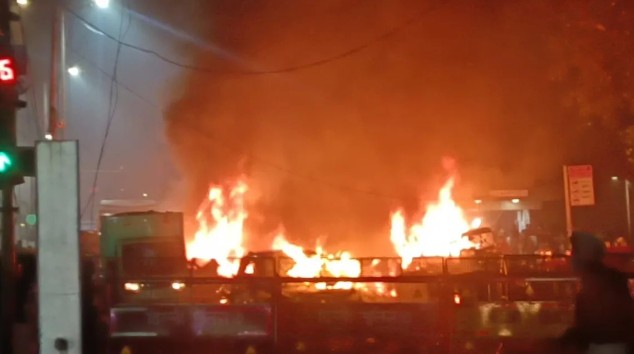
At around 7:30 PM, a Hyundai i20 stood waiting at a red light near Red Fort Metro Gate 1. Seconds later, the car exploded. Flames shot into the air, shattering glass and melting metal in one of India’s most tightly secured areas.
According to Reuters, the blast sent shockwaves across central Delhi and triggered an immediate security lockdown.
“I was selling chaat right across the gate,” said Rakesh Kumar, a local vendor. “The ground shook. We thought it was an earthquake. Then the screams began.”
Delhi didn’t just witness another tragedy that night — it felt its heartbeat stop.
The Explosion and Its Aftermath
By the time the fire department arrived, flames had already swallowed nearby cars and rickshaws.
AP News confirmed that at least 13 people were killed and 19 injured.
The blast caused gridlock through Chandni Chowk and Daryaganj. Metro gates were sealed, and tourists inside the Red Fort were evacuated as emergency alarms rang.
The Delhi Fire Service later said the car’s fuel tank had been packed with high-grade explosives, creating an intense shockwave.
Thick black smoke hung over Old Delhi for hours, leaving behind the smell of burnt rubber and a sense of disbelief.
Investigations: The Questions That Won’t Die
Within hours, the National Investigation Agency (NIA) took over.
NDTV reported that investigators invoked the UAPA (Unlawful Activities Prevention Act) — a clear signal they were treating it as terrorism, not accident.
The car, registered in Haryana, was traced to a man allegedly linked with a Pulwama-based terror module.
The Hindu revealed that intelligence agencies are probing connections between the vehicle’s previous owner and operatives in South Kashmir.
Although no group has yet claimed responsibility, early forensic evidence points to a fidayeen-style operation — a possible suicide-type detonation.
And here’s the haunting question every Delhiite is asking:
How did a car loaded with explosives get this close to Red Fort, the same monument from which the Prime Minister addresses the nation every Independence Day?
The Fear That Followed: A City on Edge
By midnight, Old Delhi looked like a war zone.
Barricades rose around Connaught Place, India Gate, and Jama Masjid. Sniffer dogs patrolled metro platforms. Police commandos stood guard at heritage sites.
LiveMint reported a full city-wide security alert, with metro bag checks doubling and drone surveillance deployed near landmarks.
“Customers are scared to come here,” said Aslam Khan, who runs a tea stall near Jama Masjid. “It’s not business loss — it’s fear. You can smell it in the air.”
Delhi’s heartbeat — its crowd — suddenly felt like a threat to itself.
How Daily Life Has Been Impacted
1. Tourism and Heritage Zones Emptied
Red Fort, once buzzing with students and selfie sticks, is now fenced with rifles.
Security checks take twice as long, and vehicle parking within a kilometre radius is banned. Tour guides estimate footfall has dropped over 60 percent in a week.
Local markets such as Meena Bazaar and Chatta Chowk have turned eerily quiet.
Even weddings nearby scaled down celebrations to avoid “risk zones.”
2. Traffic Chaos and Metro Anxiety
Delhi’s metro, normally the city’s lifeline, has become a zone of tension.
DMRC issued new protocols — random cabin checks, more CISF personnel, and loudspeaker reminders to report suspicious bags.
Routes through Chandni Chowk and Daryaganj remain choked due to diversions.
What used to be a 15-minute commute now takes an hour — not because of congestion, but because of fear.
3. Business and Markets Bleeding
Small traders say they’ve lost nearly ₹40 crore collectively in a week, as footfall collapsed across Old Delhi.
“Every time a blast happens, the poor pay for it,” said Nandini Agarwal, owner of a saree store near Nai Sarak. “Insurance doesn’t cover panic.”
Food vendors, delivery drivers, and e-rickshaw operators echo the same: survival is suddenly harder than before.
4. Schools and Parents on Alert
Schools within a 5-km radius, including those near Daryaganj, temporarily shifted online.
WhatsApp flooded with “safety forwards,” most of them fake — but the fear they fuelled was very real.
Parents are now re-routing school buses, avoiding Red Fort Road entirely.
5. The Mental Toll
This attack hit where Delhiites feel safest — the familiar.
Therapists say anxiety cases are spiking. College students report nightmares; commuters experience panic in metro crowds.
This isn’t just about one explosion. It’s about a generation learning to live with permanent unease.
Social Media: The Second Blast
While firefighters fought flames on the ground, another inferno burned online.
Hashtags like #DelhiBlast, #RedFortAttack, and #JusticeForDelhi flooded Twitter.
Alongside genuine updates came misinformation — recycled images, communal rumors, and conspiracy threads.
Experts warn that fake news after tragedies worsens trauma and divides communities.
Even LiveMint highlighted how disinformation spread faster than verified police briefings.
Political and Public Response
The Prime Minister condemned the attack as a “cowardly strike on the peace of our nation” and promised justice.
Delhi CM Arvind Kejriwal demanded a full security audit of all heritage monuments.
Opposition leaders questioned how such a breach could happen despite prior alerts.
Meanwhile, the Home Ministry instructed all major Indian cities to increase surveillance around tourist hubs and metro stations.
For reference, India’s primary anti-terror framework — the UAPA Act — empowers agencies to detain suspects for longer investigative windows, a measure now invoked in this case.
A City That Refuses to Break
Delhi has been scarred before — by attacks, floods, smog — yet it always rises.
The day after the blast, vendors reopened, metro gates unsealed, and traffic crawled back.
That’s Delhi’s paradox: fear in its eyes, fight in its bones.
Bruised, but never broken.
Lessons That Can’t Be Ignored
The Delhi Blast 2025 exposes painful truths:
- Our surveillance is reactive, not preventive.
- Security drills exist, but chaos still rules first response.
- Civic vigilance is our strongest defense.
If a car bomb can reach the Red Fort, then “routine security” isn’t security at all.
Hope Amid the Smoke
Even in tragedy, Delhi’s courage showed.
A rickshaw driver, Suraj Pal, rescued two people from a burning car before firefighters arrived.
A metro guard guided passengers through smoke until his oxygen mask failed.
These unsung heroes remind us: the capital’s true fort isn’t made of red sandstone — it’s made of ordinary people.
Closing Punchline: What This Blast Really Means for India
The Red Fort Explosion isn’t just another headline.
It’s a warning — that safety in India’s capital is fragile, and our attention span even more so.
Delhi will heal. It always does.
But if this blast doesn’t make us rethink how we guard our people, our monuments, and our truth — then maybe it’s not Delhi that’s broken.
Maybe it’s us.
FAQs
Q1. What caused the Delhi Blast 2025 near Red Fort?
Explosives were planted in a Hyundai i20 parked near Red Fort Metro. The NIA suspects a terror plot under the UAPA framework.
Q2. How many people died?
At least 13 people died and 19 were injured, as reported by AP News.
Q3. How did it affect daily life?
Tourism collapsed, markets emptied, metro checks tightened, and anxiety spread across Delhi, according to LiveMint.
Q4. Is there a terror link?
The Hindu reported potential Pulwama connections, though no group has yet claimed responsibility.
Q5. What steps are being taken now?
Delhi Police have tightened surveillance, added CCTV coverage, and imposed stricter checks around all monuments. Updates via Reuters.
Share your thoughts via contact us page or just comment below
1 thought on “Delhi Blast 2025: Red Fort Explosion That Froze the Capital — Stories, Fear, and the Questions India Can’t Ignore”