
Introduction
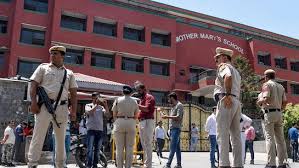
The term “Delhi bomb threat” took on immediate urgency on 18 November 2025 when multiple court complexes and schools in the Indian capital received alarming warnings of explosive devices. Although each alert ultimately proved to be a hoax, the incident reveals the fragility of urban institutions, the spread of fear through threat notifications, and lessons that extend well beyond India’s borders.
What Happened
Early on the morning of 18 November 2025, around 9 a.m., security agencies in Delhi received warnings that bombs had been planted in selected sites. The targeted locations included:
- Several district court complexes (e.g., Patiala House Courts, Saket District Court, Rohini District Court, Dwarka District Court) in Delhi. Hindustan Times+2mint+2
- Two schools operated by Central Reserve Police Force (CRPF) in Dwarka and Prashant Vihar. India Today+1
- The threats arrived via email at the courts, and via a phone call for the schools. Hindustan Times+1
- Security forces responded immediately, evacuating staff and students, and deploying bomb-disposal squads and K9 units to search the premises thoroughly. mint
- Following detailed inspection, no explosives or suspicious items were found and the alerts were declared hoaxes by officials. The New Indian Express
Immediate Response & Impact
- Court operations were suspended for a period (about two hours in some locations such as Saket). mint
- Schools were evacuated and secured, causing disruption to students, parents and staff. www.ndtv.com
- Security was heightened across the capital; access controls, frisking, baggage checks and searches were intensified at the sites mentioned. Hindustan Times
- Although nothing was found, the cost in disruption, fear and resource mobilisation was substantial.
Broader Implications
- Institutional vulnerability – The targeting (even if hoax) of courts and schools shows that critical civic/educational institutions are perceived as weak links in urban security frameworks.
- Psychological & social impact – Even a hoax threat triggers real evacuations, fear among parents/students/litigants, media coverage and reputational cost.
- Global relevance – For your international audience: similar threats exist in major cities worldwide. Understanding how authorities respond and communicate is valuable.
- Terror vs hoax blur – The email claimed the name of Jaish‑e‑Mohammed (JeM) but investigation is ongoing as to authenticity. The invocation of terror-group branding matters even if false. India Today+1
- Preparedness & protocols – This incident underlines why institutions need strong protocols: evacuation plans, search procedures, clear communication channels, and public coordination.
- Media and information flow – In a digital age, such alerts spread fast; accuracy, calm messaging and avoiding panic become critical.
What to Watch Next
- Will law enforcement agencies disclose who sent the threat(s), motive, and whether they were linked to any terror module or simply a prank?
- Will the institutional protocols (for courts and schools) be revised and publicly reinforced to reassure the public?
- For travellers, parents of students abroad, or educational/civic institutions: how will this change the safety landscape in Delhi or similar cities?
- Will similar alerts target other cities, sectors (transport, airports, malls) and how proactively will the public and media respond?
Conclusion
The “Delhi bomb threat” incident may have ended without explosives, but it offers a potent case study in modern urban security, institutional resilience and the psychology of threat. For bloggers, citizens, educators and global observers alike, it underscores a simple truth: the absence of a device doesn’t mean absence of threat. The ripple effects — in disruption, fear and resource mobilisation — are very real.
FAQs
Q1: Were any explosives found during the searches?
A: No, thorough searches of the courts and schools did not locate any suspicious devices or materials. The New Indian Express+1
Q2: How many locations were targeted?
A: At least four district court complexes and two CRPF-schools in Delhi were reported as targeted. India Today+1
Q3: Which group claimed responsibility?
A: The email to courts claimed affiliation with Jaish-e-Mohammed, but authorities are still investigating the veracity of that claim. India Today
Q4: What should someone do if they’re at a location that receives a bomb threat?
A: Cooperate with authorities; follow instructions for evacuation; don’t ignore alarms; trust trained teams for sweeping; stay informed via official channels.
you can see about Delhi car blast here:- Delhi Blast 2025: Fresh Developments & The Suspects Behind the Shock