
Introduction
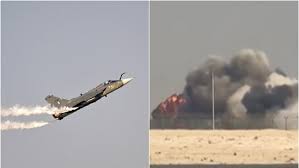
The Tejas crash has sent shockwaves across India — not just because of the tragic loss involved, but because Tejas has long been celebrated for having one of the cleanest safety records among modern fighter jets. As the Indian Air Force pushes ahead with Tejas Mk1A induction and India courts nations like Argentina and Egypt for export sales, this incident has triggered tough questions about reliability, production pace, and operational readiness.
This blog breaks down the crash from five angles:
- Why Tejas crashes are rare
- What the incident means for Mk1A production & exports
- Past Tejas incidents & safety upgrades
- What the IAF has officially confirmed
- Public reaction & political context
Why Tejas Crashes Are Rare — Defence Experts’ Point of View
Before the recent Tejas crash, the aircraft had maintained over two decades of operations without major accidents, crossing 10,000+ flight hours — a record that even Western jets rarely achieve early in their lifecycle.
Key Reasons Experts Give for Tejas’ High Safety Reputation:
1. Modern Fly-By-Wire Controls
Tejas uses a digital quadruplex fly-by-wire system with built-in safety and envelope protection. This reduces human-error-induced stalls, spins, and over-G manoeuvres.
2. Controlled Operational Profile
Until recently, Tejas missions were mostly training and operational tasks under controlled conditions.
No high-risk combat deployments = fewer stress cycles.
3. Fewer Legacy Issues
Unlike older jets derived from Cold War designs, Tejas is a modern platform built around digital control laws and redundancy systems.
4. Industry Oversight
Every major sortie has data monitoring, allowing HAL & the IAF to track anomalies before they become failures.
So when a crash happens, defence analysts don’t see it as a systemic failure — but as a statistical outlier worthy of serious investigation.
Impact on Tejas Mk1A & Export Deals (Argentina, Egypt, Philippines, etc.)
The crash instantly puts a spotlight on India’s ambitions. Let’s break it down.
Impact on Domestic Mk1A Induction
The Tejas Mk1A is India’s big bet — lighter, faster, with modern electronics and reduced maintenance.
IAF already placed orders for 83 Mk1A units, with more likely coming.
A crash can cause:
- Tightened inspections → production slowdowns
- More stringent quality checks → longer delivery timelines
- Pressure on HAL to prove reliability
- Scrutiny over engine supply chains (GE engines are imported)
Nothing stops Mk1A from moving forward, but the tolerance for error is now zero.
Impact on Export Deals
India has been aggressively pitching Tejas to:
- Argentina
- Egypt
- Philippines
- Nigeria
- Malaysia (previous bid)
A crash affects this because export buyers always ask:
- Is the aircraft stable?
- Is the design mature?
- Are spares reliable?
- How quick is post-crash corrective action?
Here’s the honest truth:
One crash won’t kill export deals—but it WILL delay decisions, as foreign teams re-evaluate safety data.
Tejas still offers:
- Modern avionics
- Competitive pricing
- No geopolitical baggage
- Customisation flexibility
So the export potential remains strong, but India must prove technical resilience after the crash.
Past Tejas Incidents & IAF Safety Upgrades
Past Tejas Crashes
Tejas has had extremely few incidents:
1. March 2024 – Rajasthan crash
- Cause: Engine seizure / oil pump failure
- Pilot ejected safely
- IAF grounded & inspected fleet
2. November 2025 – Dubai Air Show crash
- Aircraft failed to recover from a negative-G manoeuvre
- Pilot died
- Display team practices placed under scrutiny
H3: Safety Upgrades Implemented
After earlier incidents, the IAF introduced:
- Stricter fleet-wide inspections
- More training for extreme manoeuvres
- Low-speed recovery algorithms
- Better monitoring of engine stress points
- Maintenance upgrades across HAL production lines
Tejas still remains one of the safest modern fighters in its category — but these cases show where systems must be strengthened.
IAF Official Statement — What’s Confirmed, What’s Not
WHAT IS CONFIRMED:
- A Tejas aircraft crashed during an aerial activity.
- Pilot suffered fatal injuries.
- Court of Inquiry (CoI) has been ordered.
- Preliminary cause is not yet declared.
- IAF expressed condolences and confirmed full investigation.
WHAT IS NOT YET CONFIRMED:
- Root cause of the crash (pilot error / mechanical issue / structural failure).
- Whether any specific Mk1A components were involved.
- Any implication for export negotiations.
- Any fleet grounding.
Until the inquiry concludes, everything else is speculation.
Public Reaction & Political Response
Public Sentiment
- Massive shock, given Tejas’ reputation
- National grief for the pilot
- Concern about India’s indigenous defence credibility
- Renewed debate about quality control at HAL
- Yet strong support for Tejas as a symbol of Indian self-reliance
Political & Strategic Commentary
Keeping it neutral:
- Some are questioning HAL’s production discipline.
- Others say one crash does not define an aircraft programme.
- Policymakers emphasise that even F-16s, Rafales, and Gripens have had multiple crashes.
- Export partners will silently monitor the inquiry outcome.
Tejas isn’t under attack—just under scrutiny.
Conclusion
The Tejas crash is a serious moment, not a program-ending disaster. Tejas has been India’s pride because it has delivered high safety, strong performance, and remarkable reliability for years.
But this incident forces a new chapter:
- HAL must strengthen quality control.
- IAF must enhance training for complex manoeuvres.
- Export prospects must be managed with transparency.
- Mk1A timelines must remain consistent.
How India responds now will decide how strong Tejas’ future becomes — not just in Indian skies but on the global stage.
FAQs
Q1. Is Tejas a safe aircraft?
Yes. It has one of the best safety records among modern fighters, with very few crashes in 20+ years.
Q2. Will the crash affect Tejas Mk1A deliveries?
It may slow inspections, but Mk1A delivery plans are unlikely to stop.
Q3. Will this impact export deals with Argentina or Egypt?
It might slow down negotiations, but not cancel them. Tejas still has strong value in the market.
Q4. Was this crash caused by a design flaw?
Not confirmed. The inquiry is still ongoing.
Q5. Is Tejas still a viable global fighter?
Absolutely. One crash does not define an entire programme.