
Let’s be honest.
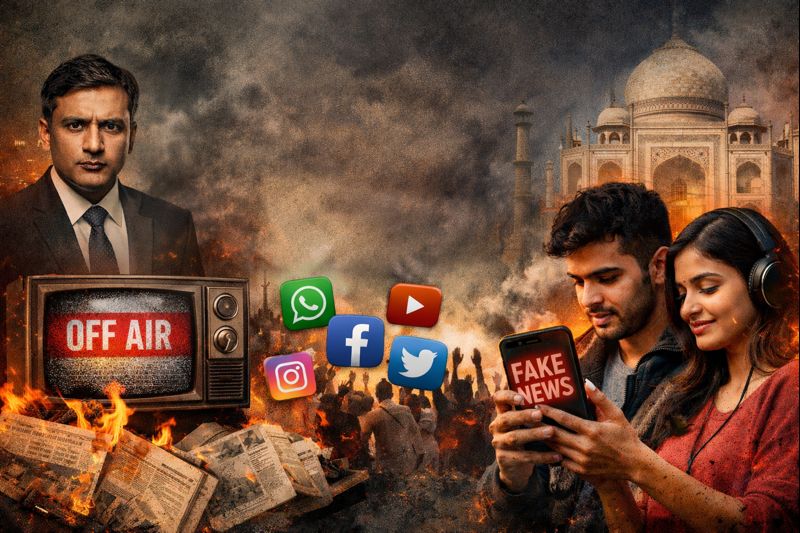
Nobody in India waits for the news anymore.
We scroll for it.
Instagram reels.
WhatsApp forwards.
YouTube shorts.
Twitter drama.
That’s our “news” now.
And whether people like it or not, Social Media Is Replacing Indian News — and the quality has gone straight to hell.
Not because social media is evil.
But because it rewards emotion, outrage, and stupidity more than facts.
News Used to Inform. Now It Just Entertains.
Earlier, news was about what happened.
Now it’s about what will get clicks.
If it doesn’t:
- Shock you
- Anger you
- Or emotionally manipulate you
It doesn’t spread.
That’s why half-baked stories perform better than real reporting.
Even the Reuters Institute Digital News Report admits people now get most of their news from social platforms — accuracy be damned.
Truth doesn’t trend.
Drama does.
Everyone Thinks They’re a Journalist Now
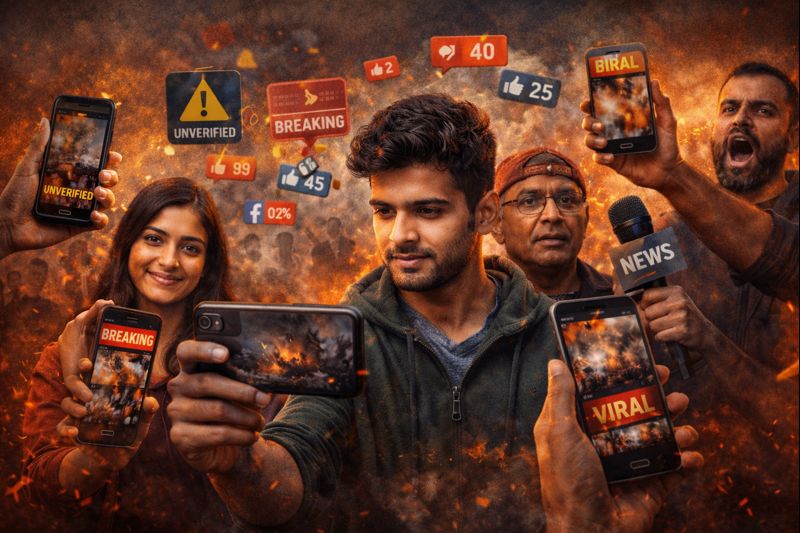
One viral reel can destroy reputations, start fights, and mislead millions.
And what’s the qualification?
A phone and some confidence.
No fact-checking.
No sources.
No responsibility.
Just vibes and views.
When a lie is shared enough times, people stop questioning it.
It becomes “news.”
WhatsApp University Is Still the Biggest Threat
Fake health tips.
Fake political claims.
Fake emergency alerts.
Indian families treat WhatsApp forwards like official government notices.
The BBC Reality Check team has shown again and again how misinformation spreads faster than the truth in India.
But nobody cares.
Because checking facts takes effort.
Forwarding nonsense takes one tap.
India Loves Emotion More Than Accuracy
Here’s the uncomfortable truth:
India romanticizes suffering.
We love dramatic stories.
We glorify pain.
We worship emotional struggle.
Social media doesn’t fix this — it exploits it.
That mindset is explained perfectly in
India romanticizes suffering.
Now imagine that emotional addiction mixed with fake news and viral algorithms.
Result?
Facts lose. Feelings win.
Sad stories spread faster than verified ones.
Outrage spreads faster than logic.
Because emotion sells.
Facts don’t.
Algorithms Control Your Brain
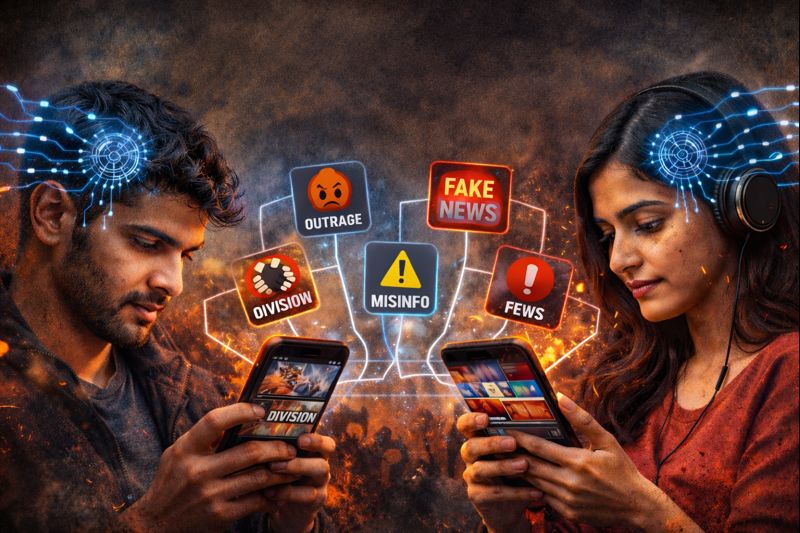
You don’t choose your news.
The algorithm does.
It shows you:
- What you already agree with
- What makes you angry
- What keeps you addicted
So instead of learning, you get stuck in a confirmation bubble.
No balance.
No context.
Just emotional manipulation on repeat.
Real Journalism Is Being Buried
Investigative reporting takes time, money, and effort.
But why bother when:
- A 30-second reel gets more views
- A fake headline gets more shares
- A dramatic thumbnail gets more clicks
Even the Press Council of India says journalism depends on verification — something social media clearly doesn’t care about.
Truth doesn’t pay.
Engagement does.
The Result? A Confused, Divided Country
When people stop trusting facts, they start trusting feelings.
When they stop trusting journalists, they trust influencers.
That’s how misinformation spreads.
That’s how society gets polarized.
That’s how chaos wins.
Social Media Isn’t the Problem. Blind Trust Is.
Social media can educate.
It can expose corruption.
It can spread awareness.
But only if people use their brains.
Stop believing everything you see.
Stop forwarding garbage.
Start questioning sources.
Because if Social Media Is Replacing Indian News,
we’re not getting informed —
we’re getting manipulated.
FAQs
Is social media replacing traditional news in India?
Yes. Most Indians now get their “news” from reels, forwards, and short videos instead of proper news reports.
Why is fake news so common on Indian social media?
Because emotional and shocking content spreads faster than verified facts. Algorithms reward engagement, not truth.
Can social media replace journalism?
No. Journalism needs fact-checking, accountability, and responsibility. Social media has none of that.
Why do people believe WhatsApp forwards so easily?
Because they trust familiar sources more than verified ones — even when the information is wrong.
How can Indians avoid misinformation?
By checking sources, avoiding blind sharing, and not trusting every viral post.