
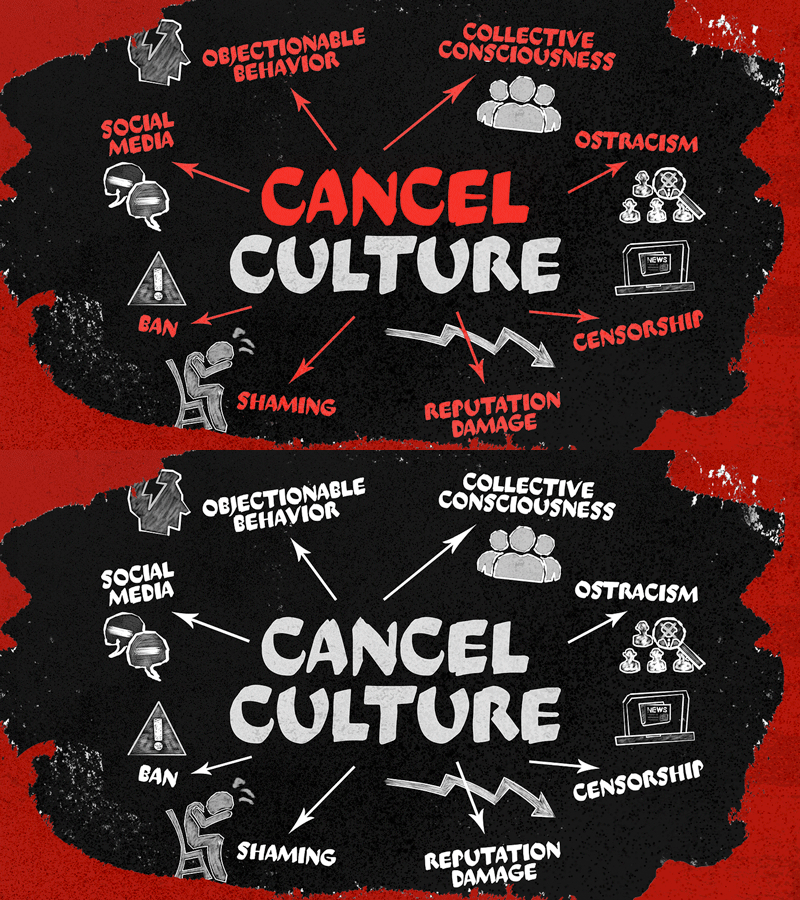
Every few weeks, India decides to be furious.
A clip resurfaces.
A tweet explodes.
A name trends.
Social media fills with anger, moral declarations, and calls for consequences. And then — almost overnight — it’s gone. The outrage fades. The timeline moves on. The same people who were “disgusted” yesterday are laughing at memes today.
We call this cancel culture. But that’s not what this is.
India doesn’t really have cancel culture. What it has is selective outrage in India — loud, temporary, and deeply inconsistent.
Outrage Here Is Fast — And Convenient
In theory, outrage is supposed to demand accountability. In practice, Indian outrage works more like a flash sale: intense, crowded, and short-lived.
Some controversies dominate every platform for days. Others, often far more serious, barely trend. The difference is rarely the severity of the issue. It’s about whether outrage is convenient.
We get angry when:
- it’s socially safe
- it aligns with our existing beliefs
- it won’t cost us followers, friends, or comfort
We stay quiet when:
- the person involved is powerful
- the issue complicates our narrative
- the outrage feels “inconvenient”
That’s not justice. That’s crowd management.
We Don’t Ask “What Happened?” — We Ask “Who Did It?”
This is the uncomfortable part.
In selective outrage in India, the reaction depends less on the act and more on the actor. The same behaviour can be unforgivable or forgettable depending on who’s involved.
A struggling influencer makes a mistake? Destroyed.
A major celebrity does the same? “Let’s wait for context.”
A politician? “This is being exaggerated.”
Morality here isn’t fixed. It’s flexible — and power decides the shape.
This pattern has been dissected repeatedly in global conversations around outrage cycles and online mobs, including how platforms amplify emotional reactions without accountability, as explained by The Atlantic’s analysis of online outrage culture.
The Comfort of Fake Activism
One reason selective outrage thrives is because it feels productive without requiring effort.
A retweet feels like a stand.
A comment feels like resistance.
A hashtag feels like change.
In reality, most of this is just performative activism in India — loud enough to signal virtue, shallow enough to avoid responsibility.
There’s rarely follow-up. Rarely any concern for outcomes. Once the outrage stops trending, the issue stops mattering.
We don’t demand solutions.
We demand stimulation.
Why Some People Are “Uncancellable”
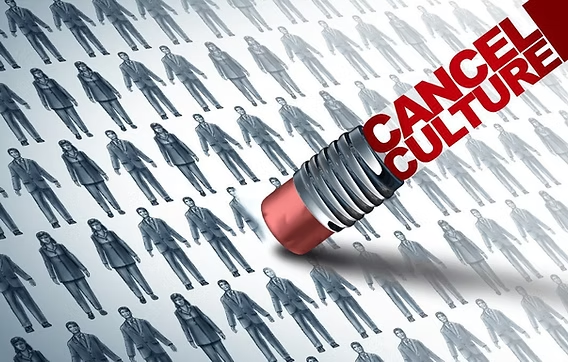
Look closely and a clear pattern emerges.
Some individuals survive:
- repeated controversies
- serious allegations
- documented harm
Others are erased for:
- an old joke
- a clipped video
- a poorly worded opinion
The difference isn’t ethics. It’s insulation.
Power, money, influence, and usefulness act as shock absorbers. If someone generates revenue, votes, or clout, outrage bends around them instead of breaking them.
This isn’t unique to India, but the selective outrage in India is sharper because it’s mixed with fan culture, political loyalty, and hero worship — a phenomenon explored by BBC Future’s reporting on outrage and social media behaviour.
The Internet Isn’t Angry — It’s Restless
Indian social media isn’t driven by justice. It’s driven by momentum.
Outrage provides:
- belonging
- identity
- relevance
Being angry together feels powerful. But once the next controversy arrives, yesterday’s “unacceptable” behaviour becomes old news.
That’s why apologies don’t matter.
That’s why accountability doesn’t stick.
That’s why nothing really changes.
As Pew Research Center has shown, online outrage often escalates emotion without translating into real-world consequences — especially in highly polarised environments.
What Selective Outrage Says About Us

It’s tempting to blame “the internet.” But the internet isn’t some external monster. It’s a mirror.
Selective outrage in India exposes an uncomfortable truth:
- We don’t want consistency
- We want confirmation
- We don’t want fairness
- We want our side to feel right
As long as someone aligns with our identity — political, cultural, or emotional — we excuse them. Everyone else becomes disposable.
That’s not activism. That’s tribalism with better graphics.
This Isn’t Cancel Culture — It’s Selective Memory
Real cancel culture, for better or worse, implies consistency. It implies lasting consequences. It implies standards.
What we have instead is:
- short attention spans
- selective silence
- temporary morality
India doesn’t cancel values.
It cancels people it’s allowed to cancel.
And once the noise dies down, we move on — until the next target appears.
The Question Worth Asking
The next time outrage trends, pause and ask:
- Would I care if a different person did this?
- Will I still care next week?
- Or am I just enjoying the spectacle?
Because until outrage costs something —
until it’s consistent —
it isn’t justice.
It’s entertainment.
Final Thought
This isn’t about being cynical.
It’s about being honest.
Selective outrage in India feels powerful, but it changes nothing. And until we stop confusing noise with accountability, the cycle will repeat — louder, faster, emptier.
FAQs
What is selective outrage in India?
Selective outrage in India refers to the pattern where public anger is applied inconsistently — intense for some people or issues, silent for others — based on convenience, power, and social alignment rather than principles.
Is selective outrage the same as cancel culture?
No. Cancel culture implies consistent accountability. Selective outrage is temporary and biased, where reactions depend on who is involved rather than what was done.
Why does outrage in India fade so quickly?
Because most outrage is driven by social media momentum, not long-term concern. Once attention shifts to a new controversy, the previous issue is forgotten without resolution.
Why are some celebrities or public figures never cancelled in India?
Influence, fan bases, political utility, and economic value often shield powerful individuals. Outrage bends around power instead of challenging it.
Is social media activism in India effective?
In many cases, no. Much of it is performative — focused on visibility rather than outcomes — which creates noise without accountability or real change.
How does selective outrage affect real issues?
It distracts from systemic problems, replaces sustained discussion with short-term anger, and allows harmful behaviour to repeat once attention moves on.