
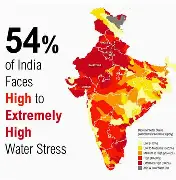
What is causing the Water Crisis in India 2026?
If your water supply is already irregular in April, you’re not imagining things. The Water Crisis in India has started earlier this year, and it’s hitting cities faster than expected.
Recent updates show that reservoir levels across India have dropped sharply heading into peak summer, raising early concerns about supply stress. According to latest India reservoir level report April 2026, multiple regions are already under pressure due to low storage and rising demand.
At the same time, heatwave conditions and weak rainfall patterns are accelerating evaporation. This is pushing the India water shortage into cities weeks before May.
Why Water Crisis India is making cities run dry faster
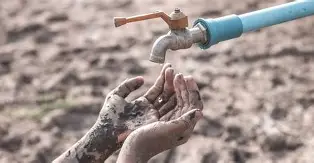
The water crisis in Indian cities is not just about weather. It is about how cities are expanding without planning for water demand.
Recent ground reports highlight how fast things are escalating:
- In Thane, authorities have restricted non-essential water usage like vehicle washing due to shortages
- In parts of Karnataka, water supply cycles have been extended due to falling reserves
- Delhi has already seen localized supply disruptions due to rising demand and system stress
These updates reflect a larger issue explained in urban water stress India report 2026, where experts warn that urban demand is outpacing supply systems.
The result is simple. Cities are running out of accessible water, even if total resources exist.
What are the main causes of Water Crisis India?
The Water Crisis India is driven by multiple overlapping factors, not just one.
Key causes of Water Crisis India
- Groundwater depletion India due to excessive borewell usage
- Poor urban planning and weak water infrastructure
- Loss of lakes, ponds, and recharge zones
- Leakages in pipelines causing massive water loss
- Rapid population growth increasing demand
According to groundwater crisis India latest analysis, several regions are already seeing critical groundwater decline levels, which directly impacts urban supply.
How groundwater depletion India is worsening the crisis right now
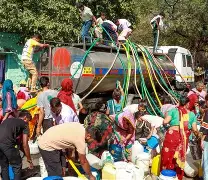
The biggest driver of the Water Crisis India is still groundwater depletion India, and this is where things are getting serious.
Take Bangalore as a current example. Reports show that water tanker demand has surged sharply as borewells dry up, forcing residents to depend on private supply.
This shift has real financial impact:
- Households are paying ₹1,000 to ₹3,000 per tanker
- Monthly water costs are rising significantly for middle-class families
When groundwater fails, cities lose their backup system, and that’s when the crisis becomes visible.
How India water shortage is affecting daily life in cities
The India water shortage is no longer something you read about. It is something people are living every day.
Across cities:
- Families are storing water early morning before supply cuts
- Usage is being reduced for basic needs like bathing and washing
- Tanker dependency is increasing across apartments and societies
Even daily services are affected. Workers on platforms like Swiggy and Zomato are dealing with extreme heat and water shortages together, slowing down deliveries.
For lower-income households, this becomes a serious access issue, not just inconvenience.
Why the Water Crisis India is actually a planning failure
Here is the part most people ignore. The Water Crisis India is not only about scarcity. It is about mismanagement.
Experts point out in India water management challenges 2026 that cities lose large amounts of water due to inefficient systems and lack of planning.
Major problems include:
- Pipeline leakages
- Unregulated groundwater extraction
- Destruction of natural water bodies
So the reality is simple.
India is not completely out of water. It is failing to manage it properly.
How this connects to India’s heatwave and climate pressure
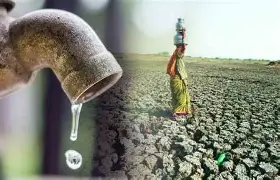
The Water Crisis India is directly linked to rising temperatures.
If you want to understand how heat is making this worse, read India Heatwave 2026: Why Cities Are Becoming Unlivable Faster Than Expected.
Heat increases water demand, while shortages make heat more dangerous. This creates a cycle where both problems feed into each other.
What can actually fix the Water Crisis India long term
Short-term fixes like tankers are not enough. The India water shortage needs structural solutions.
Long-term solutions
- Mandatory rainwater harvesting in urban buildings
- Wastewater recycling and reuse
- Protection of lakes and groundwater recharge zones
- Smart monitoring of water usage
Without these changes, demand will continue to rise faster than supply.
Is Water Crisis India going to get worse?
Yes, and this is the uncomfortable truth.
With rising temperatures, falling groundwater levels, and growing urban demand, the Water Crisis India will likely intensify every year.
If cities do not adapt quickly, water access could become one of the biggest challenges in urban India.
FAQs
What is the main reason for the Water Crisis in India?
The main reason is groundwater depletion, rising urban demand, and poor water management systems.
Which cities are facing the worst water crisis in India?
Cities like Bangalore, Delhi, Chennai, and parts of Maharashtra are among the most affected.
How does groundwater depletion affect Water Crisis in India?
It reduces the primary backup water source for cities, forcing reliance on tankers and external supply.
Is the Water Crisis in India getting worse in 2026?
Yes, due to heatwaves, low reservoir levels, and increasing population pressure, the crisis is worsening.
How can people deal with water shortage in India?
People can save water, install rainwater harvesting, fix leaks, and reduce unnecessary usage.