
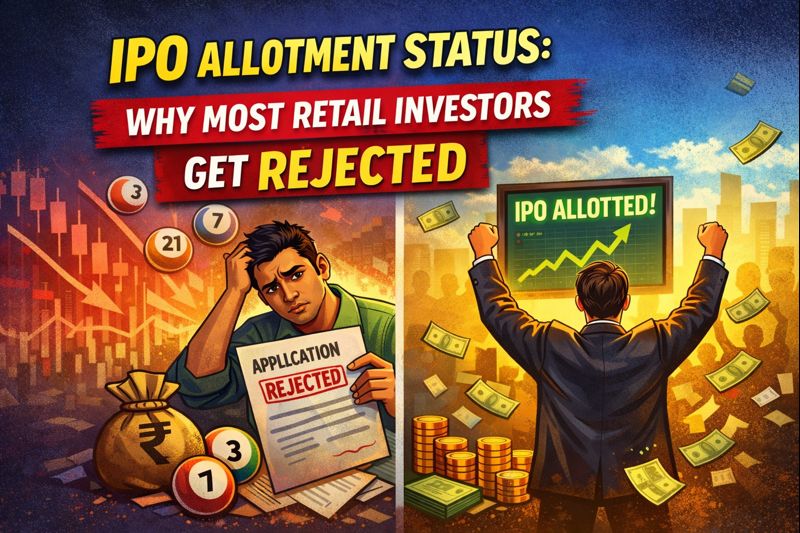
IPO allotment status is the first thing every retail investor checks after applying for a new IPO in India. But for most people, the result is almost always the same — “Not Allotted.”
And no, it’s not because you did something wrong.
It’s because the system is stacked against small investors.
Every time a popular IPO opens, lakhs of people apply with the same hope:
“Is baar toh mil hi jayega.”
Reality?
Most of them walk away empty-handed.
So why does this happen again and again?
Let’s break it down properly — no drama, no false claims, just facts.
How IPO Allotment Status Is Decided in India
When an IPO is oversubscribed, shares are not allotted on a first-come-first-serve basis.
Instead, the registrar uses a lottery system for retail investors.
That means:
- If demand is higher than available shares
- Only a limited number of applicants get allotment
- Everyone else gets rejected — randomly
So even if:
- You applied on day one
- Your details were perfect
- Your bank balance was ready
You can still lose the lottery.
This is why IPO allotment status feels more like chance than skill.
You can check official allotment results on platforms like BSE India or NSE India once the process is complete.
Reason #1: Oversubscription Kills Your Chances
Popular IPOs often get subscribed 20x, 50x, or even more.
Now do the math.
If an IPO has:
- 1 lakh retail allotment slots
- But 30 lakh applicants
Then 29 lakh people get rejected.
No strategy can beat those odds.
This is the main reason most IPO allotment status results show “Not Allotted” for retail investors.
Reason #2: Retail Category Is the Most Crowded
Retail investors rush into IPOs because:
- Minimum investment is affordable
- Social media creates hype
- Everyone wants listing day profits
But here’s the truth:
Retail is the most crowded category.
HNI and QIB investors often have better odds.
So when you apply as a small investor, you’re competing with millions of others for limited shares.
That’s not investing — that’s probability.
Reason #3: One PAN = One Shot
In the retail category:
- Only one application per PAN is allowed
- Multiple entries lead to rejection
Some people try to be “smart” by using:
- Family PAN
- Multiple accounts
- Name variations
That can actually get you disqualified.
If your details don’t match perfectly, your IPO allotment status will show rejection — no second chances.
You can check results directly on registrar websites like Link Intime depending on the IPO.
Reason #4: Luck Beats Research
This part hurts, but it’s true.
IPO allotment is not based on:
- Market knowledge
- Company analysis
- Financial intelligence
It’s based on random selection.
You could study the company for hours and still get rejected.
Meanwhile, someone who applied without any research might get the allotment.
That’s why IPO allotment status feels unfair — because it kind of is.
Reason #5: Hype Creates Chaos
Indian IPO culture is driven by:
- Telegram tips
- Instagram reels
- Grey market premium hype
Most people don’t even care about the company.
They just want quick profits.
When everyone chases the same thing, rejection becomes the default outcome.
High demand = low probability
Simple.
Is IPO Allotment Even Worth It?
Yes — if you stay realistic.
Apply knowing that:
- Rejection is normal
- Allotment is rare
- Profits are never guaranteed
If you treat IPOs like easy money, you’ll stay frustrated.
If you treat them like a probability-based opportunity, you’ll stay calm.
Your IPO allotment status should never decide your mood for the week.
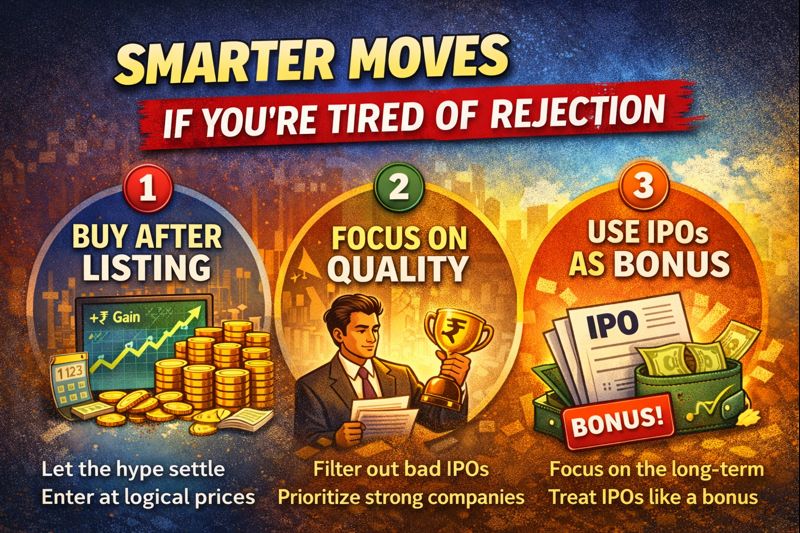
Smarter Moves If You’re Tired of Rejection
Instead of obsessing over allotment:
- Buy after listing
Let the hype settle and enter at logical prices. - Focus on quality
Not every IPO deserves your money. - Use IPOs as a bonus, not a plan
Your main strategy should be long-term investing — not lottery tickets.
Final Truth
Most retail investors get rejected because:
- IPOs are heavily oversubscribed
- Retail category is overcrowded
- Allotment is random
- Luck matters more than skill
You’re not unlucky.
You’re just part of a massive crowd.
Once you accept that, IPO investing becomes less emotional and more strategic.
FAQs
Why does my IPO allotment status show “Not Allotted”?
Because most IPOs in India are heavily oversubscribed. When demand exceeds supply, shares are allotted through a lottery system, and most retail investors don’t get selected.
Is IPO allotment based on luck or skill?
For retail investors, it’s mostly luck. Research doesn’t affect allotment — only random selection does.
Where can I check IPO allotment status in India?
You can check it on the official BSE, NSE, or registrar websites like Link Intime.
Do HNI investors get better IPO allotment chances?
Yes. HNI and QIB categories usually face less crowding than retail investors.
What should I do if my IPO allotment gets rejected?
Focus on long-term investing, consider buying after listing, and stop treating IPOs like guaranteed profit.
1 thought on “IPO Allotment Status: Why Most Retail Investors Get Rejected”