
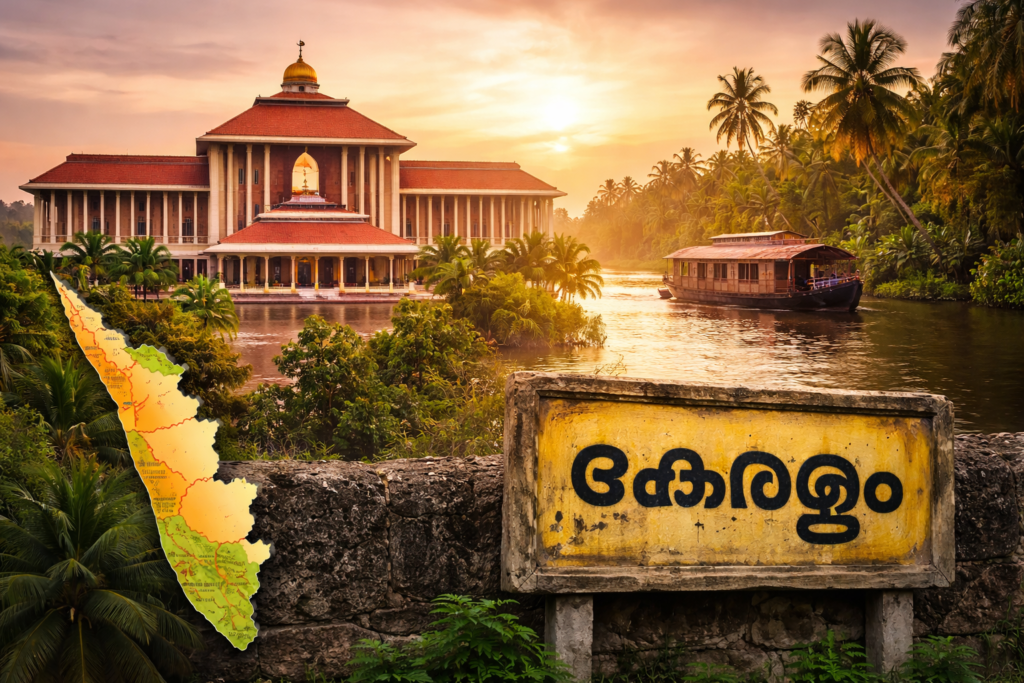
When a place changes its name, it is rarely just about spelling. It is about memory, identity, power and timing.
On February 24, 2026, the Union Cabinet approved a proposal to rename Kerala to “Keralam.” The decision follows resolutions previously passed by the Kerala Legislative Assembly and now moves into the parliamentary process required under Article 3 of the Constitution.
According to the official announcement published by the Press Information Bureau, the Cabinet approved the proposal to alter the name in the Constitution, paving the way for the formal legislative procedure.
At first glance, it looks simple. Add two letters. Update official records. Move on.
But if it were that simple, it would not dominate headlines.
So the real question is this: Is Kerala to Keralam an act of cultural reclaiming, or is it political signalling wrapped in cultural emotion?
The honest answer is not comfortable. It is both.
What Exactly Is Changing?
Let’s start with clarity.
The state currently known in English as Kerala has always been referred to as “Keralam” in Malayalam. This is not a reinvention. It is a formal recognition of the name used in the state’s own language.
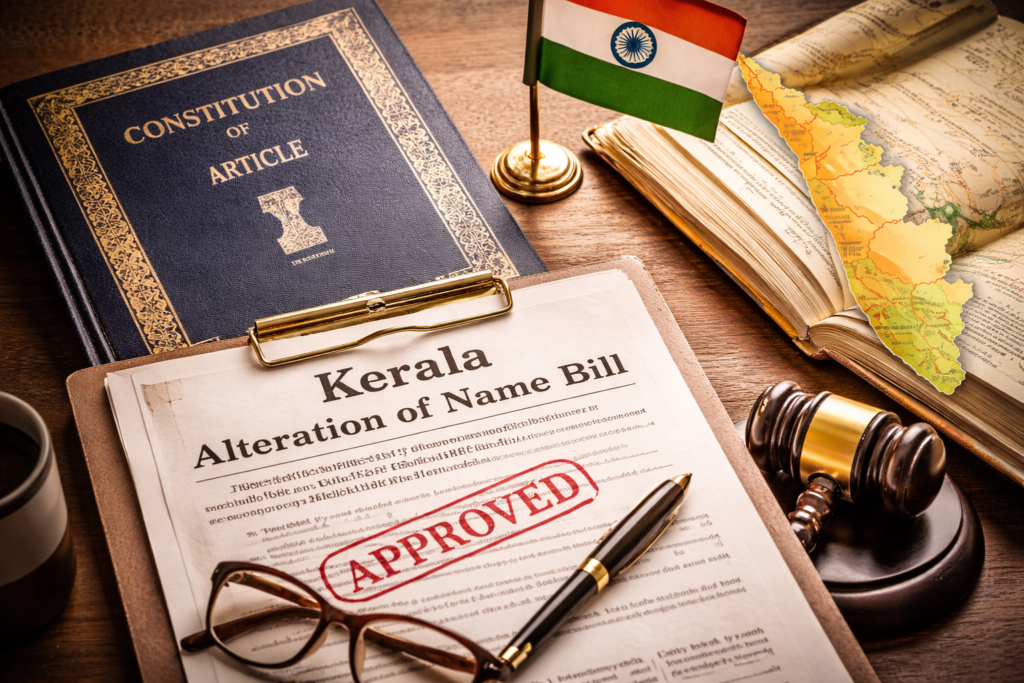
The process is governed by Article 3 of the Constitution of India, which outlines how Parliament can alter the name of a state after referring the proposal to the concerned state legislature. You can read the constitutional framework directly in the official Constitution text.
The Kerala Assembly had earlier passed resolutions requesting the change. With Cabinet approval now granted, Parliament will take up the bill before the alteration becomes official.
In practical terms, daily life does not change immediately. Governance, economic structure and administrative systems remain the same.
What changes is symbolic recognition.
And symbolism in India carries weight.
The Cultural Reclaiming Argument
Supporters argue that this step aligns the state’s official name with its linguistic identity.
Kerala was formed on November 1, 1956 under the States Reorganisation Act, which reorganised boundaries largely along linguistic lines. The historical roots of the state lie in the Malayalam language itself, something documented extensively in discussions around the States Reorganisation Act of 1956.
If the state was born from linguistic unity, then using the Malayalam version of its name appears logically consistent.
There is precedent.
Bombay became Mumbai.
Madras became Chennai.
Orissa became Odisha.
Each change reflected a desire to move away from colonial spellings and restore native linguistic forms.
For many Malayalis, “Keralam” is not a political slogan. It is how they have always referred to their homeland. Formalising that name is seen as cultural alignment rather than reinvention.
Among sections of the diaspora and cultural commentators, the move has been described as overdue recognition of linguistic authenticity.
From this angle, Kerala to Keralam feels organic. It feels rooted in history rather than opportunism.
The Political Signalling Argument
Now comes the uncomfortable part.
Timing matters.
The approval arrives with Kerala’s Assembly elections approaching in 2026. While the Assembly had passed resolutions earlier, the Centre’s approval at this stage inevitably invites analysis.
Several national outlets, including The Times of India’s political coverage, have highlighted how the timing intersects with the electoral calendar.
Symbolic decisions often energise public sentiment. They signal responsiveness. They allow political actors to demonstrate alignment with regional pride.
That does not invalidate the cultural argument. It simply introduces political context.
There is also a broader debate about consistency. Leaders such as Mamata Banerjee have previously questioned why certain state name change proposals move faster than others.
That contrast fuels speculation about political calculus.
But politics and culture in India are rarely separate lanes. They overlap constantly.
The sharper view is not to deny political strategy. It is to recognise that cultural identity can be both sincere and strategically powerful at the same time.
What Actually Changes for Citizens?
For residents, daily life remains steady.
There is no sudden economic shift. No governance overhaul.
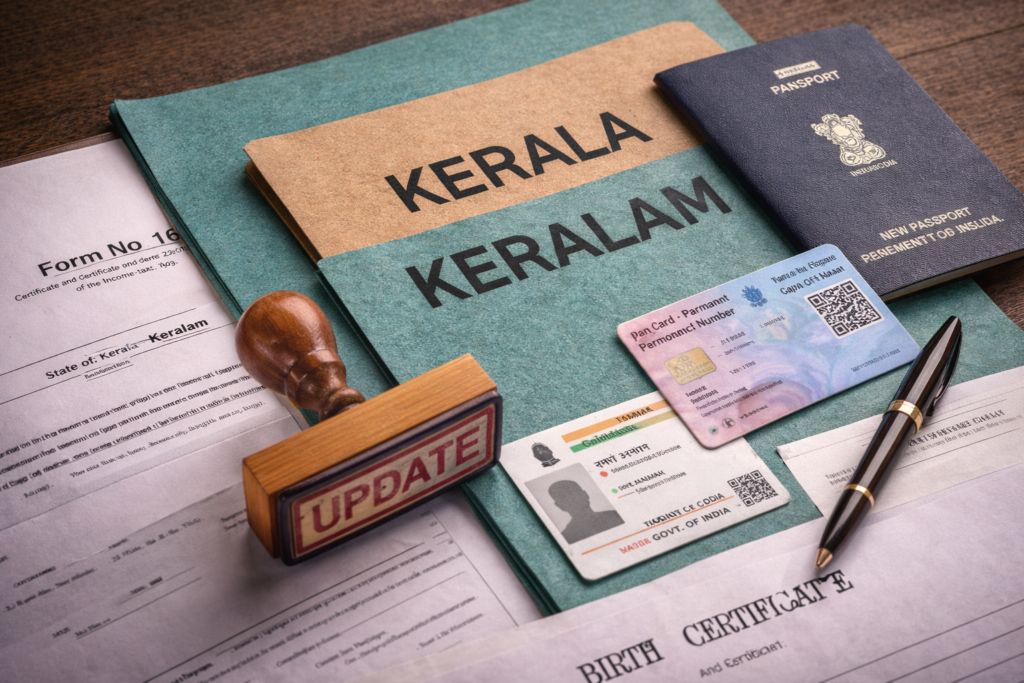
Over time, official documentation, parliamentary references and central records will reflect “Keralam” once the legislative process concludes.
Textbooks may update. Government websites will adjust. Administrative templates will be revised.
Gradually, the new official spelling will normalise.
And names matter more than we admit. They influence perception. They shape narrative. They reflect who controls the story.
The Larger Pattern
Kerala to Keralam fits into a larger national pattern of reclaiming indigenous names.
This trend signals growing cultural confidence across regions. At the same time, it highlights how identity remains politically potent.
The real insight is not choosing between culture and politics.
It is understanding how they reinforce each other.
Final Thought
Kerala to Keralam is not merely a spelling correction.
It is a reminder that in India, identity is layered. Language carries memory. Memory shapes emotion. And emotion influences power.
Calling it purely cultural ignores electoral timing. Calling it purely political dismisses genuine linguistic pride.
The stronger conclusion is this:
Kerala to Keralam represents cultural reclaiming operating within political reality.
And that intersection is where the real story lives.
FAQs
Why is Kerala being renamed to Keralam?
The Kerala to Keralam proposal aims to officially recognise the Malayalam name of the state. Supporters say it aligns with linguistic identity, while critics question the political timing of the decision.
Has Kerala officially become Keralam?
Not yet. The Union Cabinet has approved the proposal, but Parliament must pass a bill under Article 3 of the Constitution before the change becomes official.
What changes after Kerala becomes Keralam?
Daily life remains the same. The change mainly affects constitutional references, official documents and administrative records once Parliament finalises the process.
Is Kerala to Keralam a political move?
Some analysts argue the timing, close to Assembly elections, gives the move political weight. Others see it as a long-overdue cultural correction. The debate continues.
Have other Indian states changed their names like this?
Yes. Bombay became Mumbai, Madras became Chennai and Orissa became Odisha. These changes reflected linguistic and cultural identity shifts.