
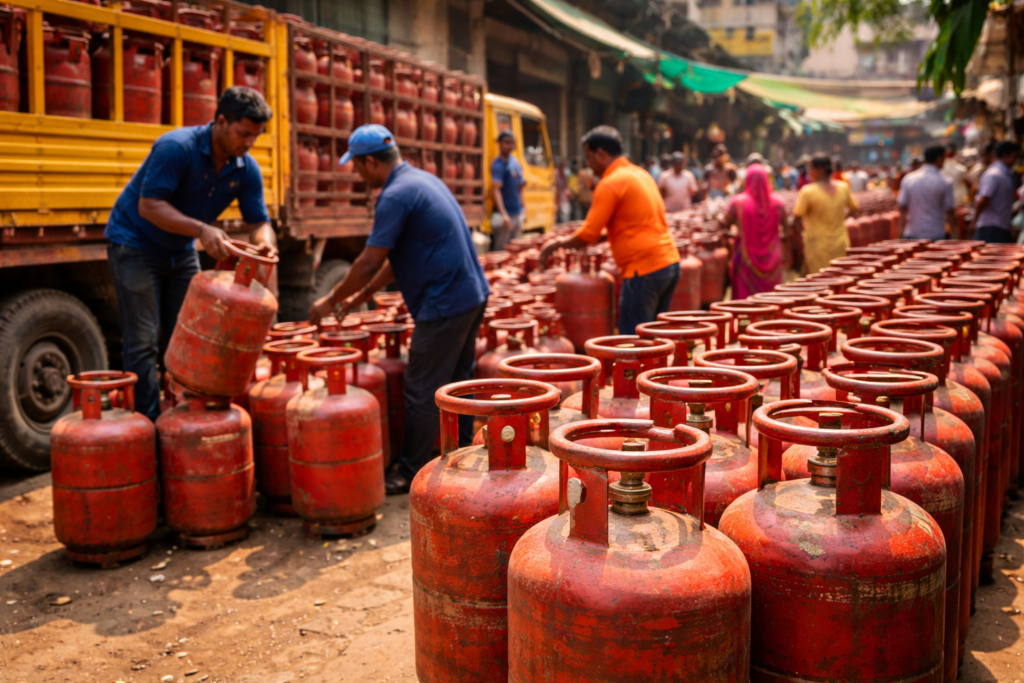
Reports about an LPG shortage in India have started gaining attention across several news platforms, and the discussion has raised concerns among businesses and consumers who depend on liquefied petroleum gas every day. LPG cylinders are not just used in households for cooking. They are also essential for restaurants, hotels, catering services, and thousands of small food vendors operating across the country.
Recent reports suggest that supply disruptions have begun affecting certain commercial users, while oil companies and distributors are attempting to manage the situation so that domestic households continue receiving priority access to LPG cylinders. At this stage, the situation does not appear to be a nationwide collapse in LPG supply. However, it does highlight how sensitive India’s fuel distribution system can become when supply chains face pressure.
Understanding what is actually happening helps separate the headlines from reality and gives a clearer picture of why the LPG shortage discussion has suddenly become an important topic.
What Is Happening With LPG Supply in India
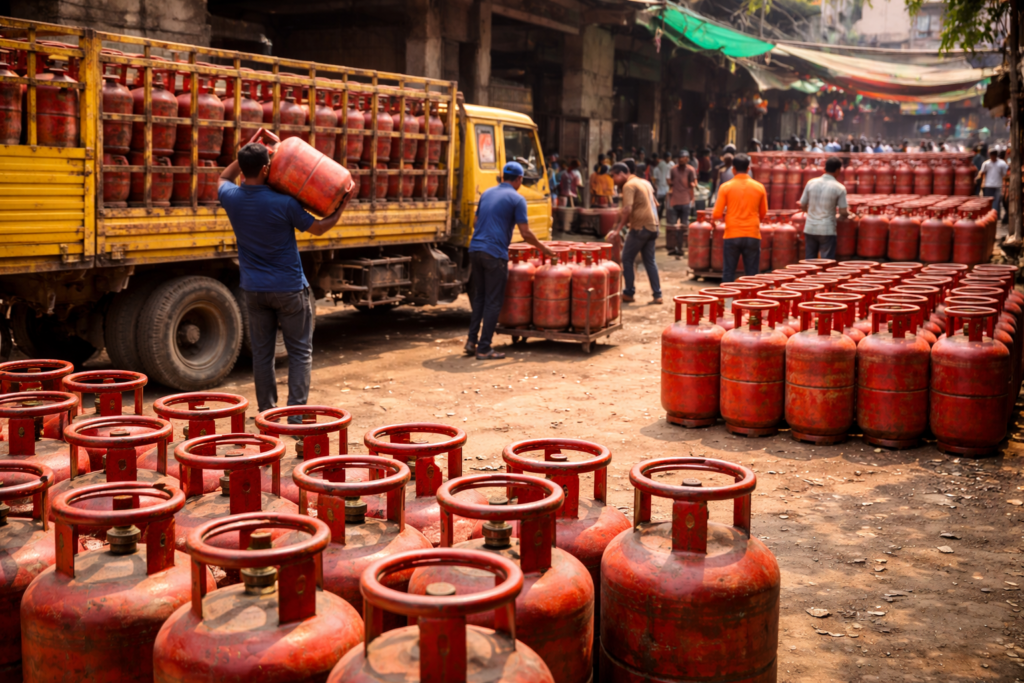
The current LPG shortage reports mainly revolve around supply disruptions affecting commercial users such as hotels, restaurants, and catering businesses. In some locations, distributors have struggled to keep up with demand, which has resulted in delays in cylinder deliveries.
Media reports from outlets such as India Today and Mint indicate that the supply pressure has been particularly noticeable in sectors where LPG consumption is high. Commercial kitchens often require multiple cylinders each day, so even a small disruption in supply can quickly affect operations.
At the same time, oil companies and local distributors appear to be prioritizing domestic consumers to prevent disruptions to household cooking gas supplies. This approach is not unusual. Whenever supply pressure increases, domestic LPG users generally receive priority distribution over commercial users.
The result is a situation where businesses begin to feel the shortage first, while residential consumers may not immediately experience major disruptions.
Why the LPG Shortage Is Happening
There is rarely a single reason behind an LPG shortage. In most cases, several factors combine to create supply pressure.
One of the most common reasons is supply chain disruption. LPG distribution in India relies on a large network of refineries, storage facilities, transportation systems, and distributors. When any part of this chain slows down, delivery schedules can quickly fall behind demand.
Another important factor is rising consumption. India’s LPG demand has grown rapidly over the past decade as millions of households switched from traditional cooking fuels to LPG cylinders. Government programs encouraging clean cooking fuels have significantly increased LPG usage, particularly in rural areas.
Import logistics also play a role. India imports a large share of its LPG supply, so global shipping schedules, refinery maintenance, and international supply conditions can influence domestic availability.
LPG production is also closely connected to crude oil refining. When global energy markets face supply pressure or volatility, it can influence LPG availability as well. Recent shifts in global energy markets have already been visible as crude oil prices continue rising globally.
Energy market research from organizations such as the International Energy Agency often highlights how global supply chains can affect domestic fuel availability in large importing countries like India.
When multiple pressures such as rising demand, logistics delays, and supply prioritization happen at the same time, temporary distribution gaps can appear even when national supply levels remain relatively stable.
Who Is Being Affected the Most
The businesses feeling the impact of the LPG shortage first are commercial users.
Restaurants and hotels rely heavily on LPG cylinders to run their kitchens. Many establishments require several cylinders each day in order to maintain normal operations. If distributors cannot deliver cylinders on time, kitchen activity can slow down or even stop temporarily.
Small food vendors are often even more vulnerable. Unlike large hotels that may have storage capacity or backup supply arrangements, street vendors and small restaurants depend on frequent deliveries from local distributors. A delay of even one day can create serious operational problems.
Reports from outlets such as The Financial Express suggest that hospitality businesses in certain areas have already experienced supply pressure linked to the LPG shortage.
Commercial kitchens that serve institutions such as offices, hospitals, and schools could also face operational challenges if supply delays continue.
Are Domestic LPG Consumers at Risk
For most households, the immediate impact of the LPG shortage appears limited.
Domestic consumers usually receive priority distribution during supply disruptions. Oil companies and government agencies typically ensure that residential cooking gas remains available because millions of households depend on LPG for daily cooking.
India’s LPG distribution system has expanded significantly over the past decade, and uninterrupted supply has become an important economic and political priority.
For this reason, even when commercial supply faces delays, residential distribution usually continues without major interruption.
However, if supply disruptions continue for a longer period, pressure on the distribution network could eventually affect household availability as well. This is why authorities usually move quickly to stabilize supply chains before the situation escalates.
Could LPG Prices Increase Due to the Shortage
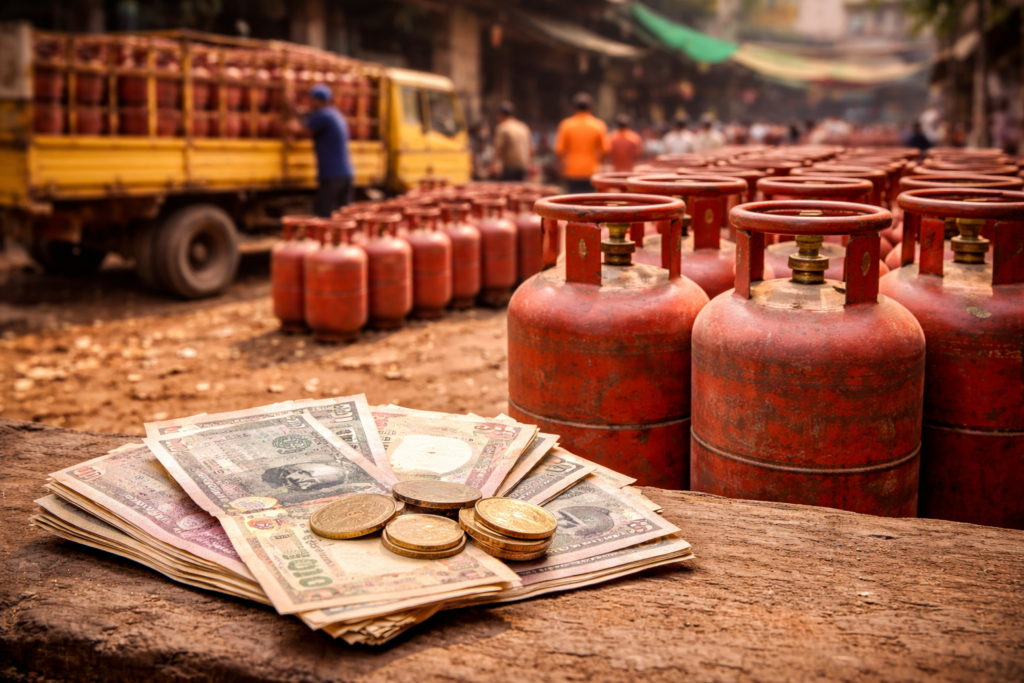
Whenever supply disruptions occur, consumers naturally start wondering whether fuel prices might increase.
In reality, LPG prices in India do not change instantly in response to short term supply pressure. Domestic LPG pricing is influenced by several factors including international energy markets, government policy decisions, and subsidy structures.
Short term supply disruptions do not always lead to immediate price adjustments. However, longer supply pressure combined with global energy market fluctuations can sometimes influence pricing trends over time.
Energy market observers often note that LPG pricing is linked to broader global fuel markets, including crude oil movements. If global fuel prices remain volatile, it can eventually affect LPG pricing decisions as well.
For now, authorities appear more focused on stabilizing supply distribution rather than announcing immediate price changes.
What Authorities and Companies Are Saying
Government officials and energy companies have acknowledged the supply pressure but have also emphasized that steps are being taken to stabilize the situation.
Oil companies are reportedly increasing supply distribution and adjusting delivery priorities in order to ensure domestic LPG availability remains stable. In some cases, production adjustments or supply reallocations may be used to manage shortages in specific regions.
Statements from energy sector authorities suggest that supply levels are being monitored closely to prevent the LPG shortage from turning into a broader national issue.
Energy market coverage from outlets such as NDTV Business frequently points out that short term fuel distribution disruptions can occur due to logistics challenges rather than an actual nationwide shortage of supply.
In other words, the current situation appears to be more about distribution pressure than a complete collapse of LPG availability.
Could the LPG Shortage Continue
Whether the LPG shortage continues will largely depend on how quickly supply chains stabilize.
If distributors receive additional supply from refineries and imports continue without disruption, the pressure on commercial users could ease relatively quickly. Fuel supply chains often recover once logistical bottlenecks are resolved.
However, if demand continues rising while distribution capacity remains strained, localized shortages could persist for some time. Seasonal demand spikes, transportation disruptions, or refinery maintenance schedules could also influence the duration of supply pressure.
Energy markets are complex, and temporary disruptions are not uncommon. The key factor will be how efficiently oil companies and authorities manage supply distribution across different regions.
Conclusion
The current LPG shortage discussion in India highlights how sensitive fuel distribution systems can become when supply chains face pressure. While headlines may sound alarming, the situation currently appears to be affecting commercial users more than domestic households.
Restaurants, hotels, and small food vendors are likely to feel the impact first because their LPG consumption is higher and their operations depend on frequent distributor deliveries. Domestic households remain a priority for supply distribution, which has helped prevent widespread disruption so far.
Still, the situation is a reminder that even a widely used fuel like LPG depends on a complex network of production, imports, transport, and distribution. When any part of that system slows down, supply pressure can appear quickly.
If supply adjustments and distribution improvements continue as expected, the current LPG shortage may remain a temporary disruption rather than a long term crisis.
FAQs
What is causing the LPG shortage in India?
The LPG shortage in India is mainly linked to supply chain pressure, rising demand, and distribution challenges affecting commercial users such as restaurants and hotels. Domestic households are usually prioritized during supply disruptions.
Who is most affected by the LPG shortage?
Commercial users including restaurants, hotels, catering services, and small food vendors are typically affected first because they consume larger amounts of LPG and rely on frequent cylinder deliveries.
Are households affected by the LPG shortage?
At the moment, most domestic LPG consumers are not facing major disruptions because residential supply is often prioritized during fuel distribution challenges.
Can LPG prices increase because of the shortage?
Short term supply disruptions do not always lead to immediate price increases. However, longer supply pressure combined with global fuel market changes can influence LPG pricing in the future.
Why is LPG demand increasing in India?
LPG demand in India has increased over the past decade due to government programs encouraging clean cooking fuels and a growing number of households switching from traditional fuels to LPG cylinders.