
Every year, salaried people in India face the same confusion.
Should you choose the new tax regime or stick with the old one?
And most people don’t actually calculate both. They just follow what someone at work said or assume the old regime must be better because it allows deductions.
That’s lazy — and expensive.
So let’s break down New vs Old Tax Regime 2026 properly using official FY 2026–27 slabs and real salary examples.
If you ever want to cross-verify slab rates or notifications, you can check the official Income Tax India e-Filing Portal.
First, Understand the Core Difference
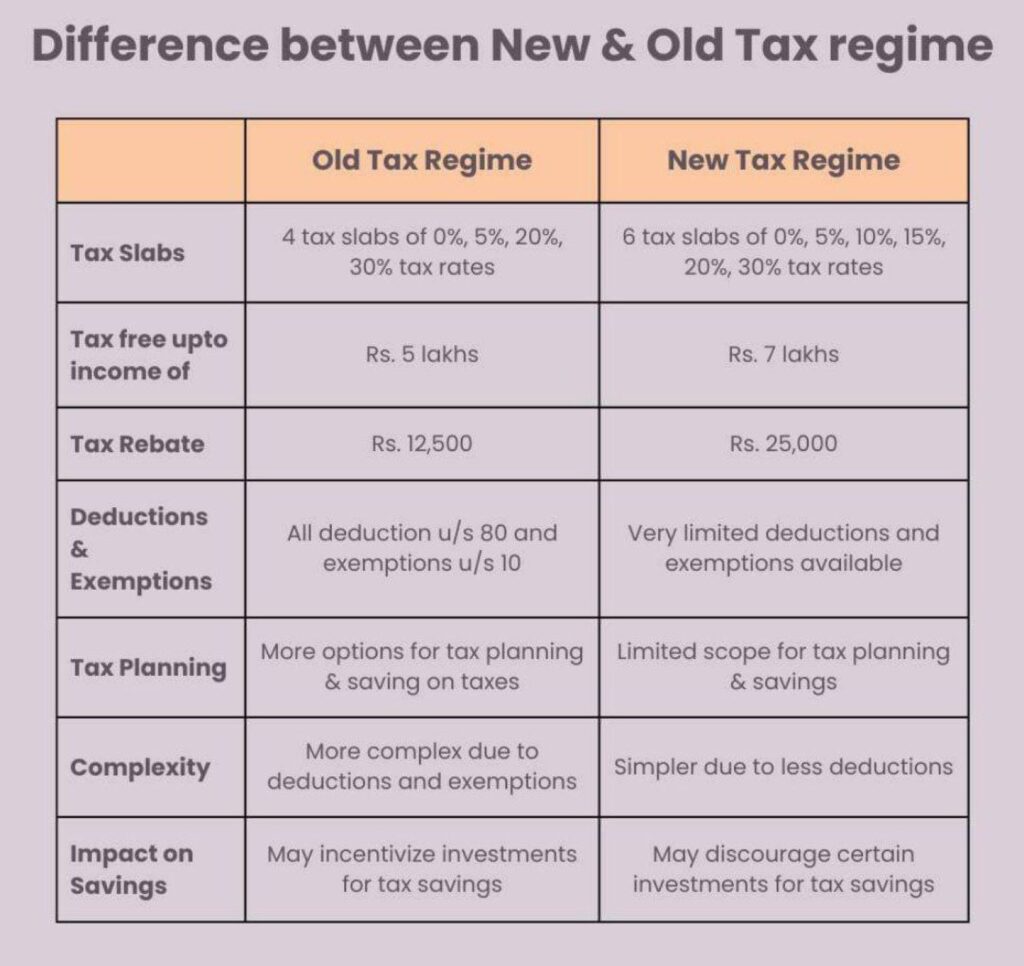
Before jumping into numbers, here’s what actually separates the two regimes.
New Tax Regime 2026
- Lower tax slab rates
- Standard deduction of ₹50,000 for salaried employees
- Very limited deductions
- Section 87A rebate if taxable income is up to ₹12 lakh
- 4% Health & Education Cess applies
The government has been encouraging this regime in recent budgets presented by Nirmala Sitharaman, and official announcements are available on the Union Budget portal.
The idea is simple: lower rates, fewer complications.
Old Tax Regime
- Higher tax slab rates
- Allows deductions like:
- Section 80C (₹1.5 lakh limit)
- Section 80D (health insurance)
- HRA
- Home loan interest (Section 24)
- LTA and others
You can verify available deductions on the official Income Tax Deductions & Exemptions page.
Old regime rewards planning. But you need proper documentation.
Now let’s stop theory and calculate.
Salary Scenario 1: ₹7 Lakh Per Year
Let’s assume a salaried employee earning ₹7,00,000 annually.
Under New Tax Regime 2026
Gross income = ₹7,00,000
Standard deduction = ₹50,000
Taxable income = ₹6,50,000
Tax Calculation
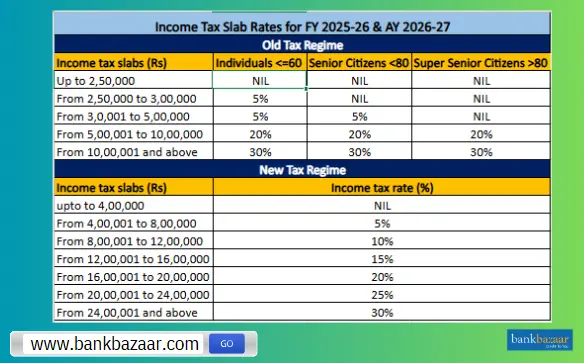
- ₹0 – ₹4L → 0
- ₹4L – ₹6.5L (₹2.5L at 5%) → ₹12,500
Total tax = ₹12,500
Cess (4%) = ₹500
Total before rebate = ₹13,000
Since taxable income is below ₹12 lakh, Section 87A rebate applies.
Final tax payable = ₹0
Under Old Tax Regime (No Deductions Claimed)
Taxable income = ₹6,50,000
- ₹0 – ₹2.5L → 0
- ₹2.5L – ₹5L → ₹12,500
- ₹5L – ₹6.5L (₹1.5L at 20%) → ₹30,000
Total tax = ₹42,500
Cess (4%) = ₹1,700
Final tax payable = ₹44,200
Verdict at ₹7L
Under New vs Old Tax Regime 2026, the new regime clearly wins at ₹7 lakh.
Unless you have serious deductions, choosing old regime here makes no financial sense.
Salary Scenario 2: ₹10 Lakh Per Year
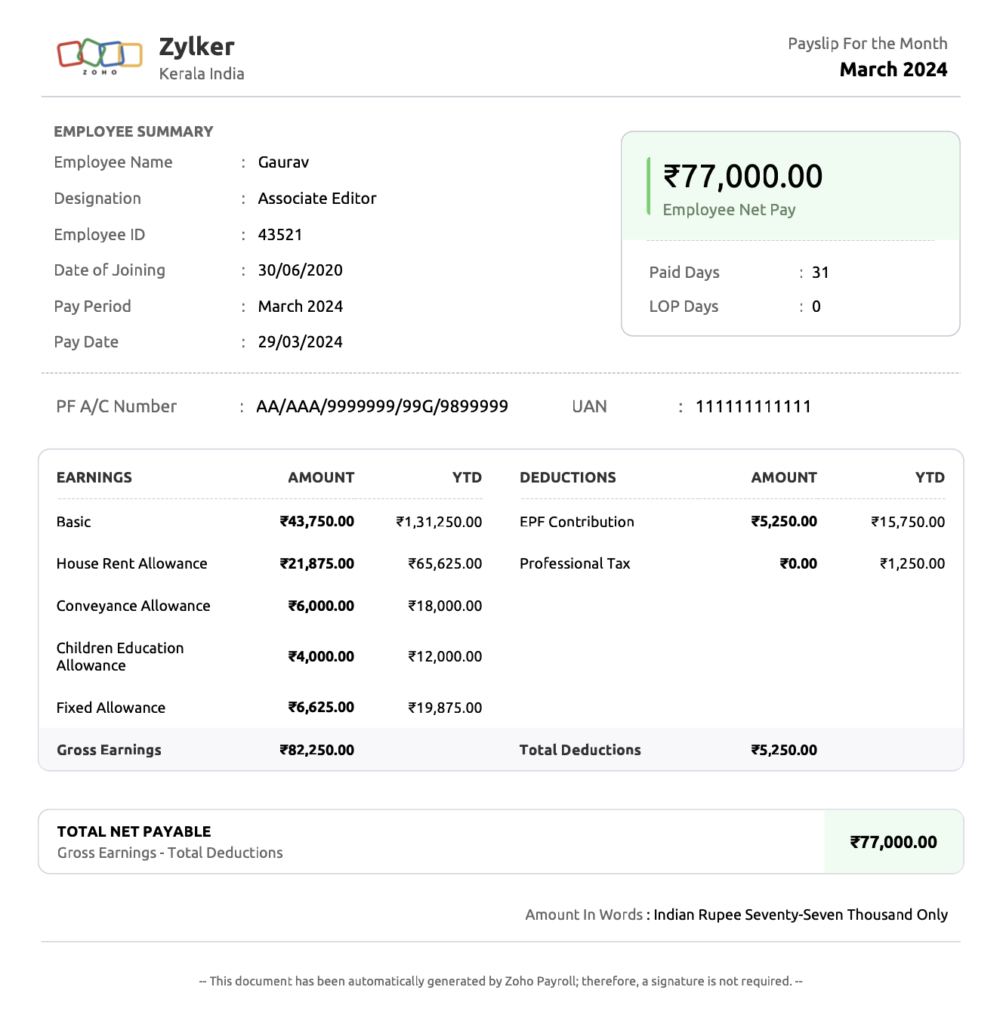
This is where most salaried professionals fall.
Annual income = ₹10,00,000
Under New Tax Regime 2026
Gross income = ₹10,00,000
Standard deduction = ₹50,000
Taxable income = ₹9,50,000
Tax calculation:
- ₹0 – ₹4L → 0
- ₹4L – ₹8L → ₹20,000
- ₹8L – ₹9.5L (₹1.5L at 10%) → ₹15,000
Total tax = ₹35,000
Cess (4%) = ₹1,400
Total before rebate = ₹36,400
Taxable income under ₹12L → rebate applies
Final tax payable = ₹0
Under Old Tax Regime (With Basic Deductions)
Assume:
- ₹1.5L under 80C
- ₹25K under 80D
Total deductions = ₹1,75,000
Taxable income = ₹8,25,000
Tax calculation:
- ₹0 – ₹2.5L → 0
- ₹2.5L – ₹5L → ₹12,500
- ₹5L – ₹8.25L → ₹65,000
Total tax = ₹77,500
Cess (4%) = ₹3,100
Final tax payable = ₹80,600
Verdict at ₹10L
New regime = ₹0
Old regime = ₹80,600
That’s not a small gap.
For most salaried individuals at ₹10L, the new regime is financially stronger in 2026.
Salary Scenario 3: ₹15 Lakh Per Year
Now let’s move higher.
Annual income = ₹15,00,000
Under New Tax Regime 2026
Gross income = ₹15,00,000
Standard deduction = ₹50,000
Taxable income = ₹14,50,000
Tax calculation:
- ₹0 – ₹4L → 0
- ₹4L – ₹8L → ₹20,000
- ₹8L – ₹12L → ₹40,000
- ₹12L – ₹14.5L (₹2.5L at 15%) → ₹37,500
Total tax = ₹97,500
Cess (4%) = ₹3,900
Final tax payable = ₹1,01,400
Rebate does not apply (income above ₹12L).
Under Old Tax Regime (With Strong Deductions)
Assume:
- ₹1.5L under 80C
- ₹25K under 80D
- ₹2L home loan interest
Total deductions = ₹3,75,000
Taxable income = ₹11,25,000
Tax calculation:
- ₹0 – ₹2.5L → 0
- ₹2.5L – ₹5L → ₹12,500
- ₹5L – ₹10L → ₹1,00,000
- ₹10L – ₹11.25L → ₹37,500
Total tax = ₹1,50,000
Cess (4%) = ₹6,000
Final tax payable = ₹1,56,000
Verdict at ₹15L
New regime = ₹1,01,400
Old regime = ₹1,56,000
Even after solid deductions, new regime remains cheaper in this scenario.
So What’s the Final Answer on New vs Old Tax Regime 2026?
Here’s the simple takeaway:
- If your taxable income is up to ₹12 lakh → new regime effectively gives zero tax due to rebate.
- If you don’t aggressively maximize deductions → new regime usually wins.
- Old regime only makes sense if you have very high and structured deductions.
The biggest mistake?
Choosing emotionally instead of calculating.
When it comes to New vs Old Tax Regime 2026, don’t guess.
Run both numbers once.
The math doesn’t lie.
FAQs
Which is better in 2026 – new tax regime or old tax regime?
Under the New vs Old Tax Regime 2026 comparison, the new regime benefits most salaried individuals earning up to ₹12 lakh due to the Section 87A rebate. However, the old regime may be better if you have high deductions like home loan interest and full 80C usage.
Is tax zero under the new tax regime in 2026?
Yes, if your taxable income (after standard deduction) is up to ₹12 lakh, you can claim Section 87A rebate and reduce your tax liability to zero under the new regime.
Does the old tax regime still exist in 2026?
Yes, the old tax regime is still available. Taxpayers can choose between the new and old regime while filing income tax returns.
Can I switch between new and old tax regimes?
Salaried individuals can generally switch regimes every financial year while filing their return. However, business income cases may have restrictions.
Who should choose the old tax regime in 2026?
The old tax regime may be beneficial for individuals who:
Claim full 80C deductions
Have home loan interest
Claim HRA
Actively invest for tax savings
1 thought on “New vs Old Tax Regime 2026: Which One Saves More for Salaried People?”