
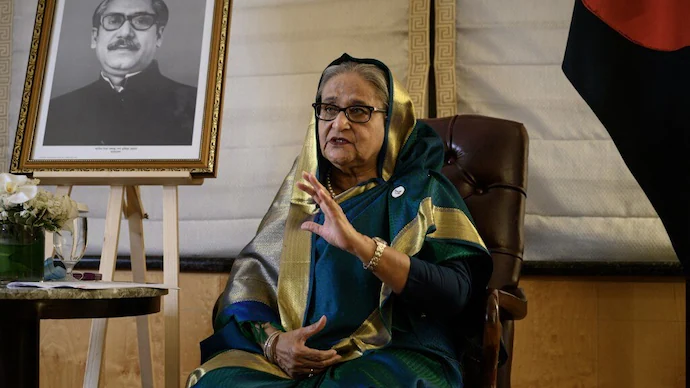
Bangladesh hasn’t just had a political shake-up — it’s had a complete system collapse, and India is now sitting in the middle of the mess.
Former Prime Minister Sheikh Hasina, once one of South Asia’s most powerful leaders, has been sentenced to death in absentia by a special tribunal.
The charges? “Crimes against humanity” during the deadly 2024 student protest crackdown.
India didn’t plan for this moment.
But now she’s here — living inside Indian borders — and New Delhi is stuck in a crisis it can’t avoid.
This is the kind of story that doesn’t just trend — it rewrites regional politics.
India Becomes the Unwilling Center of the Storm
Hasina isn’t hiding in Dubai, London, or some neutral safe house.
She’s in India.
Multiple outlets including Hindustan Times confirm she is staying in India after fleeing Bangladesh when her government collapsed.
Now Bangladesh’s new authorities have moved in fast.
They’ve sentenced her to death and are calling for extradition.
This instantly turns a Bangladesh-only issue into a full-blown diplomatic nightmare for India.
Why the Death Sentence Matters So Much
In harsh terms:
Hasina isn’t just any ex-leader. She ruled Bangladesh for over 15 years and shaped its political, military, and economic direction.
The tribunal verdict — covered globally by AP News — states she’s responsible for the violent crackdown on students during 2024 unrest.
But her supporters call this ruling “revenge” by the new interim regime.
Her critics call it “long overdue.”
Either way, this is the most extreme verdict Bangladesh has ever issued against a former prime minister.
And India is holding the most wanted person in Bangladesh right now.
Why India Suddenly Has Skin in the Game
Here’s the real picture
1. India is hosting her — and the world is watching
If India extradites her, she faces execution.
If India refuses, Bangladesh will accuse India of shielding a “criminal.”
This puts India in a diplomatic chokehold.
NDTV and TOI have already highlighted extradition pressure.
The Bangladesh political vacuum is spilling into India’s borders
Bangladesh is burning — protests, violent clashes, mobs attacking Hasina-linked homes.Times of India.
Instability in Bangladesh always hits Indian border states:
- Tripura
- Assam
- Meghalaya
- West Bengal
India is already preparing for possible refugee movements and security risks.
3. China and Pakistan now see an opening
Hasina was considered India’s closest ally in the region.
Her fall opens Bangladesh to influence from Beijing and Islamabad.
Al Jazeera’s report shows how Bangladesh’s internal conflict is attracting geopolitical attention
For India, losing influence in Bangladesh = strategic disaster.
4. Indian readers are searching like crazy
Google Trends in India shows massive spikes for:
- “Hasina death sentence”
- “Hasina India”
- “Bangladesh verdict”
This is exactly the type of story that boosts traffic on Indian news sites.
What Actually Happened? A Quick Breakdown
To keep your readers hooked, here’s the fast, factual chain of events:
- In 2024, Bangladesh witnessed massive student protests over government job quota systems.
- Police and security forces cracked down heavily.
- Hundreds were injured, dozens killed.
- Hasina’s government was blamed globally for excessive force.
- In 2025, her government collapsed after nationwide uprisings.
- She fled to India.
- A Bangladesh tribunal tried her in absentia and sentenced her to death.
BBC’s earlier coverage on the protest crisis gives needed background:
So What Now? India’s Big Dilemma
India has three choices — and each one is messy.
1. Extradite Hasina
This aligns with Bangladesh’s demand.
But sending her back to face death will:
- damage India’s human-rights reputation
- look like India abandoned an ally
- deepen political divide in Bangladesh
2. Refuse Extradition
This could:
- turn Bangladesh’s public opinion against India
- fuel anti-India protests
- push Bangladesh toward China or Pakistan
3. Third Option: Safe-passage to a neutral country
India may negotiate quietly with:
- UAE
- UK
- US
- Canada
This avoids direct confrontation but requires delicate diplomacy.
Why This Matters for Everyday Indians
Your needs to feel the impact, not just the politics.
It matters because:
- Bangladesh instability = immediate effects on Indian border security
- India’s diplomatic credibility is on the line
- Political shifts in Dhaka affect trade, migration, and regional power balance
- India is being portrayed internationally as Hasina’s protector
- The outcome could reshape India’s neighborhood policy for years
This isn’t just “foreign news.”
This is right next door, with real consequences.
Hasina’s Fall Has Dragged India Into a Crisis It Cannot Ignore
Sheikh Hasina’s downfall is the loudest political shock Bangladesh has seen in years.
But the aftershocks are being felt inside India, not just across the border.
New Delhi didn’t create this crisis — but now it must navigate it.
Because the world is watching how India handles a fallen leader it once supported.
And each decision India takes will shape the future of South Asian geopolitics.
FAQs
Why was Sheikh Hasina sentenced to death?
She was convicted in absentia by a Bangladesh tribunal for “crimes against humanity” during the 2024 student protest crackdown. The court claims she ordered excessive force that led to multiple deaths and injuries.
Is Sheikh Hasina currently in India?
Yes. She fled Bangladesh after her government collapsed and has been staying in India ever since. Several Indian outlets have confirmed her presence.
Why is this issue trending in India?
Because India is now holding a former PM who has been sentenced to death. Bangladesh wants her extradited, and India must decide whether to hand her over, protect her, or arrange safe passage elsewhere. This directly affects India’s foreign policy and border stability.
Can India extradite Sheikh Hasina to Bangladesh?
Technically yes, but politically and morally complicated.
Extraditing her means sending her to almost-certain execution — which clashes with India’s human-rights position. Refusing extradition risks angering Bangladesh’s new regime.
How does the crisis in Bangladesh affect India?
Instability in Bangladesh can spill into India’s border states (Assam, Tripura, Meghalaya, West Bengal). It impacts migration, security, cross-border crime, and trade routes.
Why are protests happening in Bangladesh now?
After Hasina’s fall, Bangladesh plunged into political violence. Her opponents want trials, while her supporters claim the new government is punishing her for political revenge.
Is China involved in this situation?
Not directly — but Beijing is watching closely. Hasina was considered pro-India, and her exit creates an open field for China to increase influence in Bangladesh.
Will India give her asylum officially?
India hasn’t announced anything. Right now, Hasina is in India, but the government is being extremely cautious due to the diplomatic sensitivity.
Could this crisis cause refugee inflow into India?
If Bangladesh becomes unstable or violent, yes. Indian border states have historically seen refugee spikes during Bangladesh’s political upheavals.
What happens next for Sheikh Hasina?
Three possibilities:
India quietly moves her to a third country
India refuses extradition and keeps her safe
Bangladesh keeps demanding her return, escalating diplomatic friction
The situation is fluid and developing day by day.