
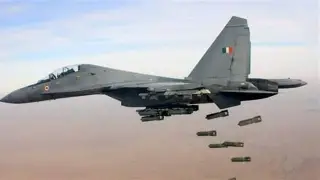
An IAF Su-30MKI fighter jet’s undercarriage failure at Pune Airport shut down the runway for nine hours, cancelled over 80 flights, and exposed something deeper about how India runs its shared civil-military airports.
It started like any other Friday night at Pune International Airport. Passengers boarding, flights taxiing, everything moving on schedule.
Then, at 10:25 PM on April 17, 2026, it stopped.
A Sukhoi Su-30MKI fighter jet from the Indian Air Force suffered an undercarriage failure while landing at Pune’s Lohegaon Airport. What followed was nine hours of runway closure, over 80 cancelled flights, and a city’s air connectivity brought to a standstill by a single mechanical failure.
The Indian Air Force Pune Incident was not just an aviation emergency. It was a stress test for India’s shared civil-military airport model, and the results were uncomfortable.
Quick Facts: Indian Air Force Pune Incident
- Date: April 17, 2026, at 10:25 PM
- Aircraft: IAF Sukhoi Su-30MKI
- Cause: Undercarriage (landing gear) failure
- Runway closure: Approximately 9 hours
- Flights affected: 80+ cancelled or diverted
- Operations resumed: April 18, departures from 7:30 AM
The Night Everything Went Wrong
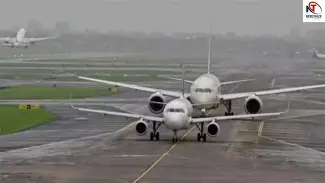
A Fighter Jet, a Broken Runway, and 80+ Cancelled Flights
For hundreds of passengers at Pune that night, the experience was similar: boarding pass in hand, then an announcement, then nothing. No clear explanation. Just a growing crowd of frustrated travellers with no flights and nowhere to go.
According to Times of India, the IAF Sukhoi Su-30MKI’s landing gear malfunctioned mid-approach, resulting in a hard landing that left the jet stranded directly on the only runway at Lohegaon Airport, blocking it completely.
Because Pune Airport operates on a single shared runway, there was no alternative taxiway or backup. All operations stopped immediately.
What the IAF Said and What They Did Not
The Indian Air Force’s Media Coordination Centre issued a statement shortly after midnight. As reported by The Indian Express, the statement confirmed the aircrew were safe and there was no damage to civil property.
What was not confirmed publicly until later was that the aircraft involved was a Su-30MKI, one of India’s most advanced frontline fighter jets. A court of inquiry has since been ordered to investigate whether the failure was caused by a technical fault, a maintenance lapse, or something else.
Nine Hours of Chaos on the Ground

Passengers Were Left Without Information
Agha Meesam Hyder, booked on an IndiGo flight to Bhopal at 1 AM, described the situation as chaotic. Airlines offered passengers two options: cancel and take a refund, or wait with no clear timeline.
As India Today reported, IndiGo did not officially inform passengers the runway was non-operational until 11:45 PM, one hour and 20 minutes after the incident. Over 80 flights were cancelled or diverted, and at least 32 arriving flights were affected.
Nine Hours of Crane Work
Clearing a Su-30MKI from a runway is not a straightforward operation. Heavy cranes and specialised equipment had to be deployed. Technical teams worked through the night.
Airport Director Santosh Dhoke initially estimated the work would take four to five hours. According to The Economic Times, it took nearly nine. Departures finally resumed at 7:30 AM on April 18. Arrivals restarted at 8:00 AM. The first departure, a SpiceJet flight to Delhi, took off at 9:17 AM.
The Bigger Problem Nobody Wants to Talk About
Pune Airport Was Not Built for This Volume
At the centre of the Indian Air Force Pune Incident is a structural issue that has been sitting unaddressed for years. Pune’s Lohegaon Airport is a dual-use facility. The IAF controls the runway. The Airports Authority of India manages civilian traffic. Both sides are growing, and fast.
Pune has recorded some of its highest-ever passenger numbers in recent months, placing it among India’s busiest airports. Yet it still operates on a single runway shared between fighter jets, training aircraft, and commercial flights. When a military aircraft has a technical emergency, civilian operations have no fallback.
This Is Not the First Time
The Indian Air Force Pune Incident is the latest in a series of runway disruptions caused by IAF operations at Lohegaon. These incidents may be infrequent, but when one can shut down an entire airport for nine hours, cancel over 80 flights, and ripple across domestic schedules nationwide, frequency is not the only measure that matters.
Questions About the Su-30MKI Fleet
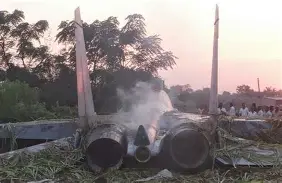
The Su-30MKI is India’s primary air superiority fighter. It is also a platform that has seen multiple incidents over the years, raising ongoing questions about maintenance cycles, ageing components, and spare part availability for Russian-origin aircraft.
As The Indian Express explained, the cause of this particular undercarriage failure is still under investigation. The key question is whether this is an isolated mechanical fault or part of a broader pattern within the fleet.
“Is this an isolated glitch, or a symptom of something systemic?” That question is now in front of a court of inquiry.
What the Indian Air Force Pune Incident Really Means
Three Fault Lines Exposed at Once
The Indian Air Force Pune Incident revealed structural gaps across three areas simultaneously.
One: Operational fragility at shared airports. A single unexpected military event can paralyse an entire city’s air connectivity. There is no contingency system in place for civilian passengers when the shared runway becomes unavailable.
Two: Passenger communication failures. Information was delayed by over an hour. Airlines scrambled to respond without clear protocols. Passengers were left to figure things out on their own during a situation that was beyond their control.
Three: Limited public transparency from the IAF. Confirming crew safety is essential and was done promptly. But when a military incident disrupts tens of thousands of passengers and spreads across national flight schedules, real-time public updates become part of the responsibility.
The Ministerial Escalation That Says a Lot
Union Minister of State for Civil Aviation Murlidhar Mohol, who also represents Pune as an MP, posted on X that he was in constant contact with airport and Air Force authorities throughout the night. The response was prompt and the intent was right.
But the fact that a crisis at Pune Airport escalates to a Union Minister speaks more about the absence of a proper crisis management system than about its strength.
What Needs to Change
A Second Runway Is No Longer Optional
For a city of Pune’s size and air traffic volume, a second runway has shifted from a long-term aspiration to an immediate operational need. A situation where one military incident can ground an entire airport is not sustainable infrastructure planning. This has been in discussion for years. The Indian Air Force Pune Incident should give that conversation genuine urgency rather than temporary attention.
Maintenance Findings Must Be Made Public
Whatever the court of inquiry determines about the Su-30MKI undercarriage failure, the IAF should communicate those findings publicly and not just internally. Confidence in defence aviation maintenance is built through transparency. Silence tends to fill itself with speculation.
Passenger Protocols Need to Be Faster
Airlines and airport authorities need clearer, faster protocols for unplanned closures. Passengers should not be receiving official information at 11:45 PM about an incident that happened at 10:25 PM. That 80-minute gap needs to be closed, and the responsibility for closing it falls on both the airport and the airlines.
The Hard Landing Was Just the Beginning
The hard landing at Pune happened in a matter of seconds. The problems it brought to the surface have been building for considerably longer.
A fighter jet with a failed undercarriage. A city with no backup runway. Passengers stranded without information for over an hour. A system that needed nine hours of overnight crane work just to return to normal operations.
India’s aviation sector is growing at a rapid pace. Its defence capabilities are expanding as well. But the shared infrastructure that connects both worlds, airports like Pune’s Lohegaon, has not kept pace with either.
The Su-30MKI is off the runway. Flights are back on schedule. But the questions raised by the Indian Air Force Pune Incident do not disappear just because the airport reopened.
They will be waiting, the next time the runway is needed by both a fighter jet and a full flight of passengers at the same moment.
This article references reporting from Times of India, The Indian Express, India Today, and The Economic Times.
FAQs
What happened in the Indian Air Force Pune Incident?
On April 17, 2026, an IAF fighter jet suffered an undercarriage failure during landing at Pune’s Lohegaon airport, causing a hard landing. The runway was shut for over 9 hours, leading to 80+ flight cancellations. Both pilots were safe.
Which aircraft was involved in the Pune IAF incident?
The aircraft involved was a frontline Indian Air Force fighter jet, widely reported to be a Su-30 MKI, which developed an undercarriage (landing gear) failure during its landing approach.
How long was Pune airport runway closed after the IAF incident?
The runway remained closed for approximately 9 hours, from around 10:25 PM on Friday, April 17 to 7:30 AM on Saturday, April 18, 2026, when flight operations resumed in phases.
Were any passengers or pilots injured in the Pune IAF hard landing?
No. Both IAF pilots were confirmed safe and there was no damage to civilian property. However, over 80 flights were cancelled or diverted, affecting thousands of passengers.
Does the IAF Pune incident reveal bigger safety problems in Indian Air Force?
Many defence analysts believe the incident highlights ongoing concerns about aircraft maintenance standards, ageing fleet issues, and the dual-use nature of Pune’s Lohegaon base for both military and civilian aviation.