
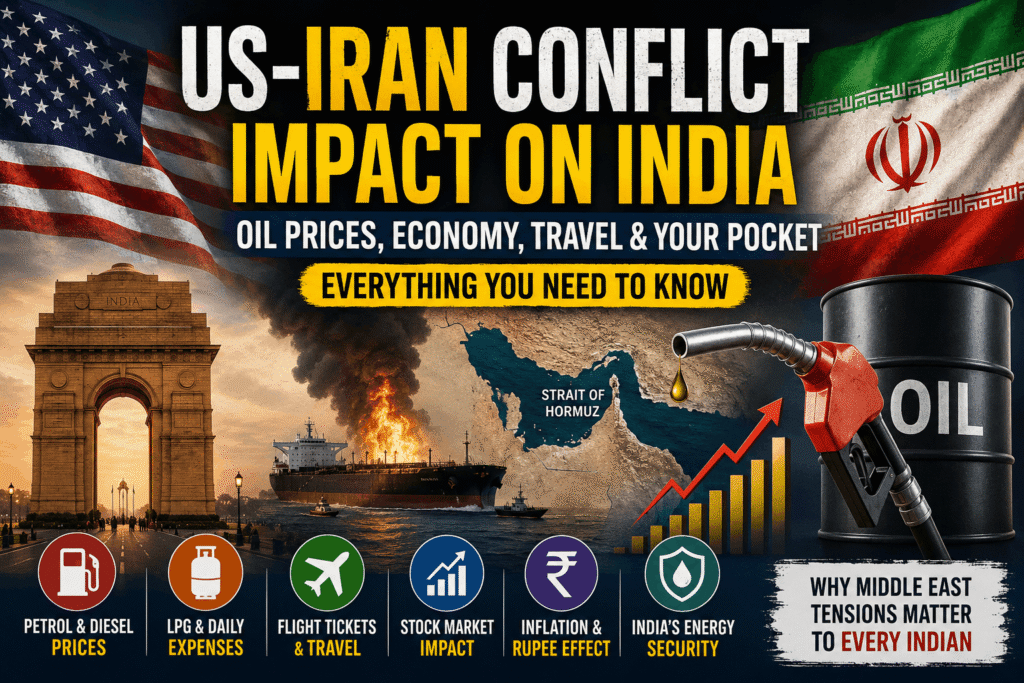
When news breaks about missile strikes or military tensions in the Middle East, it is easy to assume the conflict has little to do with everyday life in India. In reality, the US-Iran conflict impact on India is much bigger than many people realize. From petrol prices and LPG cylinders to airfares, grocery bills, and the stock market, events thousands of kilometres away can eventually affect millions of Indian households.
The latest US Iran conflict latest news has once again put global energy markets on edge. Fresh military action and uncertainty surrounding the Strait of Hormuz have raised concerns about oil supplies, prompting governments and businesses around the world to monitor the situation closely. According to Reuters’ latest report on rising oil prices after renewed U.S.-Iran tensions, traders remain cautious as any disruption to oil shipments could affect global fuel markets.
For India, this is more than just another international headline. As one of the world’s largest energy importers, the country remains closely connected to what happens in the Gulf region. Understanding why does the US-Iran conflict matter to India helps explain why experts, businesses, and policymakers are watching every new development.
Why Does The US-Iran Conflict Matter To India?
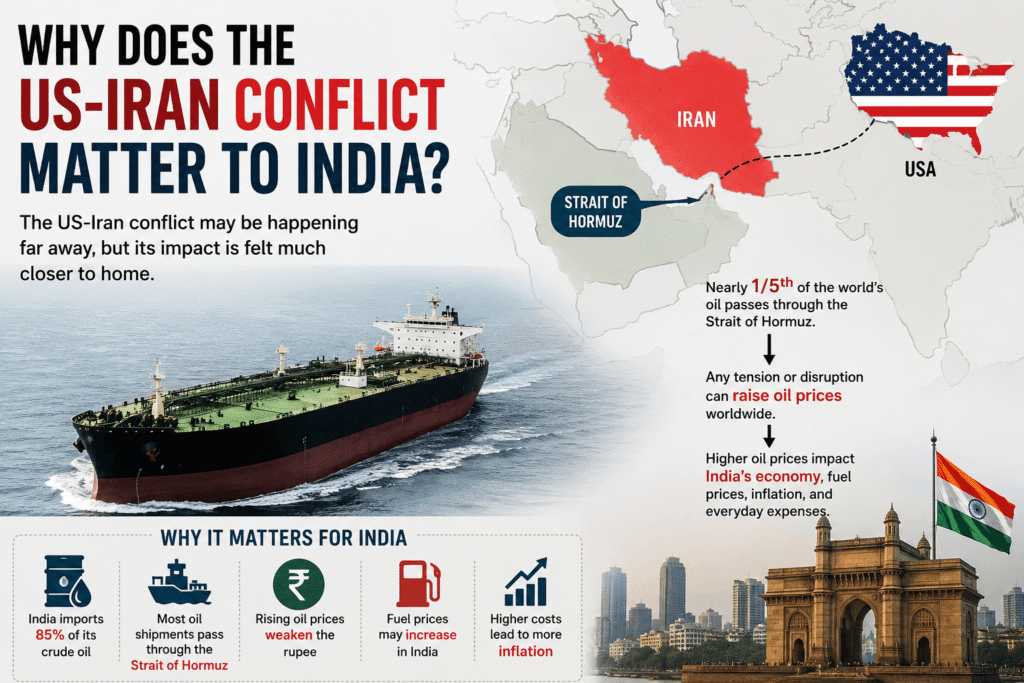
The biggest reason is energy security.
India imports around 85% of the crude oil it consumes, making it heavily dependent on international energy markets. While India has diversified its suppliers over the last few years, the Middle East remains one of the country’s most important sources of crude oil and natural gas. The Times of India’s recent analysis on the Strait of Hormuz explains why the region remains critical for India’s energy needs.
Another major concern is the Strait of Hormuz, a narrow sea passage connecting the Persian Gulf with the Arabian Sea. Nearly one-fifth of the world’s oil and LNG shipments pass through this route, making it one of the most strategically important waterways on the planet. Any military escalation around this area can delay shipments, increase insurance costs for cargo vessels, and push global crude oil prices higher.
Although India oil imports from Iran have declined significantly over the past several years because of international sanctions, India is still affected whenever the Gulf region becomes unstable. Oil is traded in a global market, which means disruptions involving one major producer often influence prices everywhere.
This is why developments involving the United States and Iran are closely watched not only by governments but also by businesses, investors, airlines, and ordinary families across India.
Could Petrol And LPG Prices Increase In India?
This is the question that concerns most people.
Whenever international crude oil prices rise, many Indians wonder whether they will soon have to pay more for petrol, diesel, or LPG cylinders. While domestic fuel prices depend on several factors, including taxes, exchange rates, and decisions by oil marketing companies, higher global crude prices can eventually increase fuel costs if they remain elevated for a prolonged period.
According to Reuters’ latest energy market coverage, oil markets have become increasingly volatile as traders assess the risk of supply disruptions in the Middle East. Even temporary uncertainty can influence global pricing because energy companies prepare for possible shortages.
If tensions continue over the coming weeks, India could experience several economic effects, including:
- Higher petrol and diesel prices
- Increased LPG refill costs
- More expensive transportation and logistics
- Higher operating costs for airlines
- Gradual increases in the prices of everyday goods
A simple example shows how quickly these costs can spread.
Imagine a fruit trader in Nashik, Maharashtra, transporting grapes to wholesale markets in Mumbai. If diesel prices rise because of sustained increases in crude oil costs, transportation becomes more expensive. Retailers may then increase prices, meaning consumers ultimately pay more for the same products.
The same principle applies across India. Delivery services, trucking companies, manufacturers, and even food delivery platforms like Swiggy and Zomato could face higher operating costs if fuel prices remain under pressure.
For families managing monthly expenses through apps such as PhonePe or Paytm, even small increases in transport or grocery bills can gradually affect household budgets.
The good news is that India is better prepared than it was a decade ago. The country has diversified its crude oil suppliers and strengthened its strategic petroleum reserves to reduce the impact of short-term disruptions. The Times of India recently reported that India has rebuilt its crude inventories to improve energy security amid global uncertainty.
However, if geopolitical tensions continue for an extended period, India may still face higher import costs and inflationary pressure because global energy markets remain closely interconnected.
How Could The US-Iran Conflict Affect The Indian Economy And Stock Market?
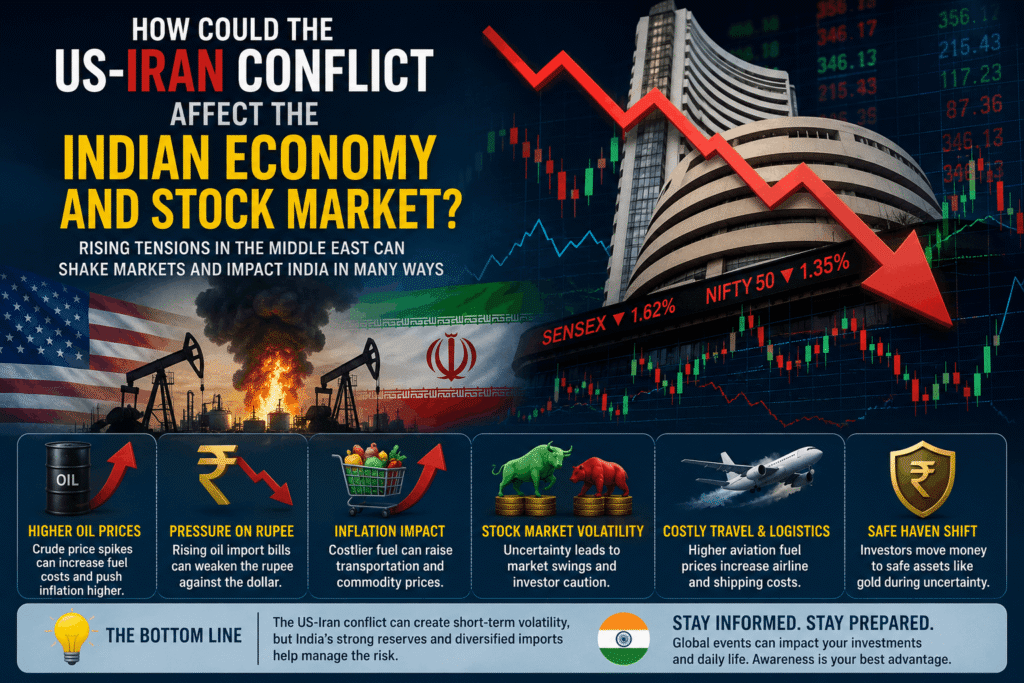
The US-Iran conflict impact on India extends far beyond fuel prices. If tensions continue, they could influence the Indian stock market, the rupee, inflation, and business confidence over the coming weeks.
Financial markets generally dislike uncertainty. When geopolitical risks rise, investors often shift money into safer assets such as gold while reducing exposure to equities. This can lead to increased volatility in benchmark indices like the Sensex and Nifty 50.
Certain sectors may feel the impact more than others:
- Airlines could face higher aviation fuel costs.
- Oil marketing companies may see pressure if crude prices remain elevated.
- Logistics and transportation firms could experience rising operating expenses.
- Manufacturing businesses may have to deal with costlier raw materials and shipping.
For investors using platforms like Zerodha, Groww, or Upstox, short-term market swings during global conflicts are not unusual. However, experts generally advise focusing on long-term investment goals instead of reacting to daily headlines.
Another important factor is inflation. If higher fuel prices continue for an extended period, transportation costs could increase across multiple industries. That may eventually make groceries, consumer goods, and essential services more expensive for Indian households.
Could Flights And International Travel Become More Expensive?
Travel is another area that could be affected if tensions in the Middle East persist.
Many international flights between India, Europe, and North America pass near or through parts of the Middle East. During periods of military conflict, airlines sometimes adjust flight paths to avoid high-risk airspace.
These alternative routes can result in:
- Longer flight durations
- Higher fuel consumption
- Increased operating costs
- More expensive international airfares
According to Reuters’ latest coverage on the Middle East conflict and energy markets, airlines and shipping companies continue to monitor developments closely as security concerns evolve.
For travellers planning vacations or business trips from cities such as Delhi, Mumbai, Bengaluru, or Hyderabad, it is worth checking airline updates before departure. While there is no widespread disruption to Indian flights at the moment, prolonged regional instability could lead to operational changes.
Is India Prepared If The Conflict Continues?
Compared with a decade ago, India is in a stronger position to manage global energy disruptions.
One major reason is the country’s diversified import strategy. While India oil imports from Iran have declined significantly because of international sanctions, India now sources crude from multiple countries, including Russia, Iraq, Saudi Arabia, the UAE, and the United States.
India has also strengthened its strategic petroleum reserves, which act as an emergency buffer if global supplies become temporarily disrupted. The Times of India’s recent report on India’s crude inventory highlights how the country has improved its energy preparedness amid global uncertainty.
However, no country is completely insulated from global oil markets. If crude prices remain elevated for several weeks or months, India could still experience higher import costs, pressure on the rupee, and increased inflation.
What Should Indians Watch In The Coming Days?
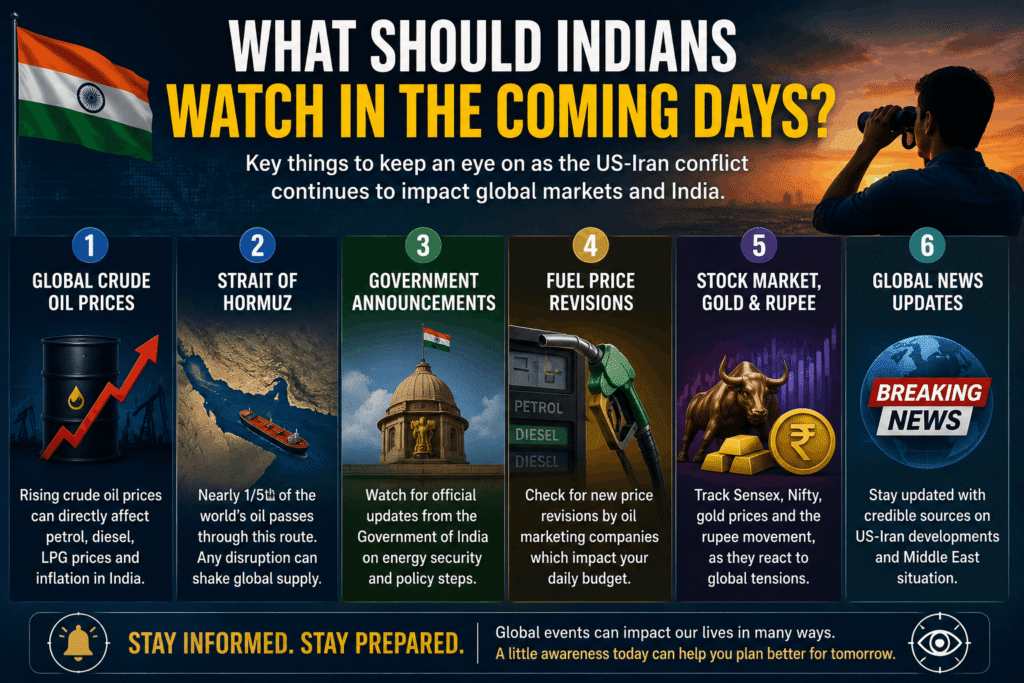
The situation continues to evolve, and its impact on India will depend on how events unfold in the Middle East.
Here are the key indicators worth following:
- Global crude oil prices, especially Brent crude.
- Developments in the Strait of Hormuz, which remains one of the world’s most important oil shipping routes.
- Official statements from the Government of India regarding energy security and foreign policy.
- Fuel price revisions announced by Indian oil marketing companies.
- Movements in the Sensex, Nifty, gold prices, and the Indian rupee.
Reliable updates are available through Moneycontrol, The Economic Times, NDTV Profit, The Hindu BusinessLine, and official government announcements.
Final Thoughts
The latest US Iran conflict latest news is not just another international story. It has real implications for India’s economy, energy security, businesses, and household budgets.
Although India has taken important steps to diversify its energy imports and strengthen crude reserves, it remains connected to global oil markets. That means prolonged tensions in the Middle East could eventually influence fuel prices, inflation, airline costs, and market sentiment across the country.
For now, there is no immediate reason for panic, but staying informed is essential. Whether you are a commuter filling up your bike in Lucknow, an investor tracking the markets in Ahmedabad, or a family planning an overseas holiday from Kochi, understanding the US-Iran conflict impact on India helps explain why developments thousands of kilometres away can still affect everyday life at home.
As the situation develops, following credible sources such as Reuters, The Times of India, and Moneycontrol’s analysis of the Strait of Hormuz and India’s energy security can help you separate facts from speculation and better understand how global events may shape India’s economy in the weeks ahead.
FAQs
Why does the US-Iran conflict matter to India?
The US-Iran conflict impact on India is significant because India imports most of its crude oil. Any disruption in the Middle East can influence fuel prices, inflation, and economic growth.
Will petrol prices increase in India because of the US-Iran conflict?
Petrol prices could increase if global crude oil prices remain high for an extended period. Domestic fuel prices also depend on taxes, exchange rates, and government policy.
Does India still import oil from Iran?
India’s direct imports of Iranian oil have reduced significantly because of international sanctions. However, India is still affected by tensions involving Iran because oil prices are determined in the global market.
How could the US-Iran conflict affect the Indian economy?
A prolonged conflict could increase inflation, raise transportation costs, create volatility in the stock market, and put pressure on the Indian rupee.
Could international flights from India become more expensive?
Yes. If airlines are forced to avoid parts of the Middle East or fuel prices remain high, international airfares from India could increase.