
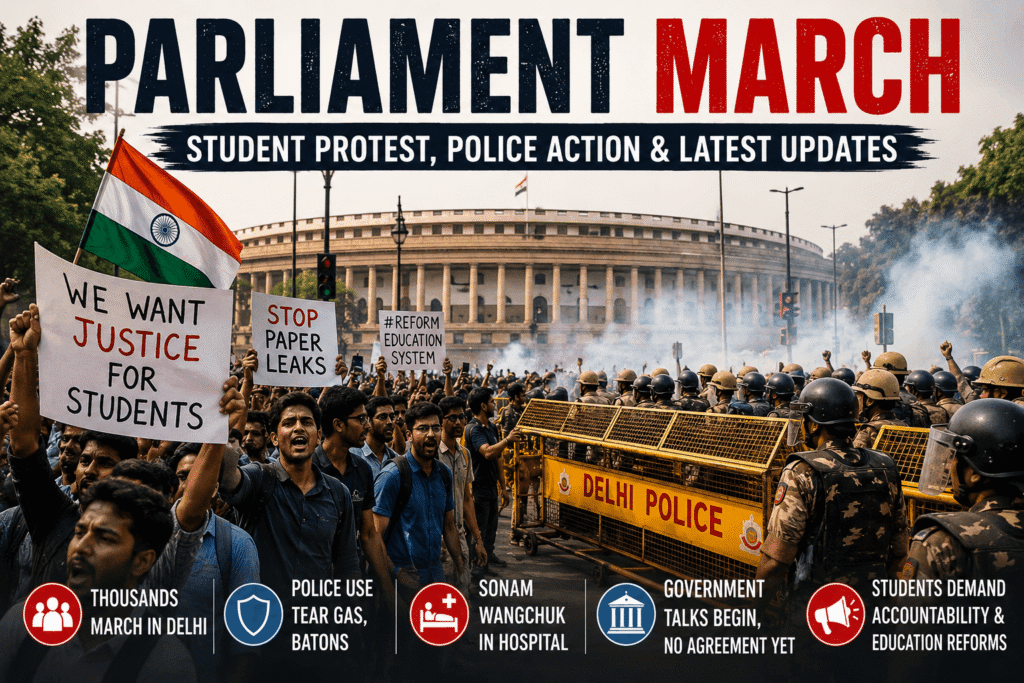
Parliament March Today became one of the biggest stories in India after thousands of students and supporters marched through central Delhi, hoping to take their demands directly to Parliament. What began as a peaceful demonstration later turned into a tense standoff as police stopped the march, fired tear gas, and used batons after clashes broke out near security barricades.
For many people watching from across the country, the biggest question wasn’t just what happened. It was why thousands of young people felt they had no choice but to travel to Delhi in the first place.
The protest is the latest chapter in a movement that has grown steadily over the past few weeks. Students say repeated examination paper leaks have damaged trust in the education system and left many wondering whether years of hard work can still guarantee a fair opportunity.
If you missed how the movement reached this point, you can read our earlier coverage on Sonam Wangchuk Taken to Hospital After 21-Day Hunger Strike and the full background behind the Sonam Wangchuk hunger strike.
What You Need to Know
- Thousands marched toward Parliament despite police denying permission.
- Heavy security and barricades were placed across central Delhi.
- Police used tear gas and batons after clashes near barricades.
- Sonam Wangchuk remains in hospital and continues supporting the movement.
- Protesters are demanding accountability for examination paper leaks and broader education reforms.
- Initial contact has taken place between government representatives and protest leaders, but no agreement has been announced.
Why Were Students Marching?
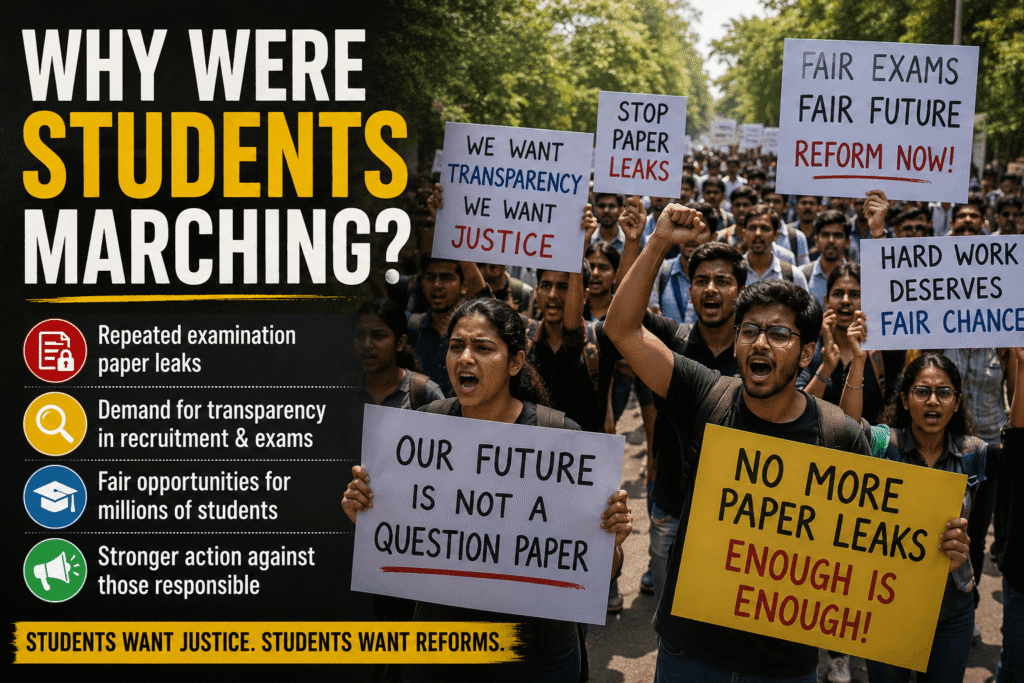
The Student Protest Today did not begin because of a single incident.
For months, concerns over examination paper leaks have sparked anger among students preparing for competitive exams. Many believe repeated irregularities have unfairly affected honest candidates who spent years studying for their future.
The movement gained national attention during Sonam Wangchuk’s three-week hunger strike. After his health deteriorated, he was shifted to hospital under medical supervision, but the protests continued. Instead of slowing down, support for the movement grew in several parts of the country.
Protest organisers say they are demanding stronger action against those responsible for examination leaks, greater transparency in the recruitment process, and reforms that restore confidence in India’s education system. Government officials have acknowledged the protests but have not accepted all of the demands raised by organisers.
What Happened During the Parliament March Today?
Protesters began gathering near Jantar Mantar early in the day before starting their planned march toward Parliament.
Delhi Police had already announced that permission for the march had not been granted because Parliament’s Monsoon Session was underway. Additional police personnel, barricades, and traffic restrictions were put in place around key government buildings. According to Reuters, authorities said the measures were necessary to maintain security in one of the country’s most sensitive areas.
As the march moved forward, protesters encountered several layers of barricades. Organisers repeatedly urged participants to remain peaceful and continue the demonstration without violence. However, tensions increased when some protesters attempted to move beyond the restricted area.
According to The Associated Press and Reuters, police later used tear gas and batons to disperse parts of the crowd after clashes broke out near the barricades. Police said the gathering was unauthorised and that force was used to maintain public order. Protest organisers, on the other hand, criticised the police response and said the march was intended to remain peaceful.
By the evening, today’s Delhi Protest Today had become one of the country’s most closely watched developments, with images from the march spreading widely across television and social media. While opinions remain divided over how events unfolded, the protest once again brought the concerns of students into the national spotlight.
Why Did Police Stop the Parliament March?
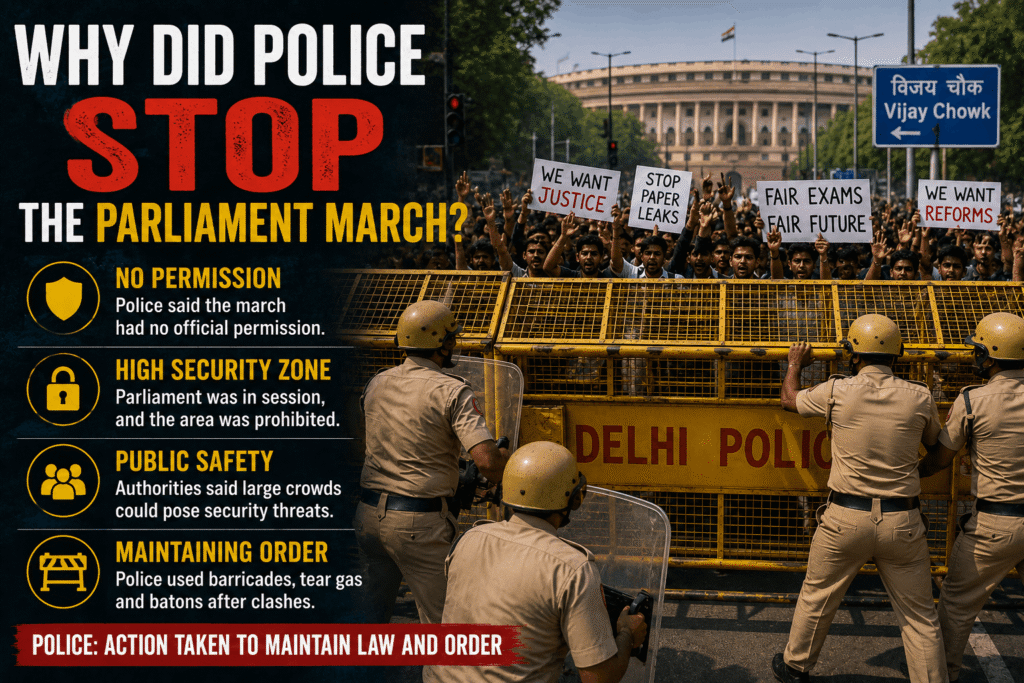
One of the biggest questions after today’s events is why the march was stopped before reaching Parliament.
According to Delhi Police, the organisers did not have permission to hold the march in the high-security zone around Parliament, especially on the opening day of the Monsoon Session. Officers said additional security, barricades, and traffic restrictions were put in place to prevent large crowds from entering restricted areas.
Protest organisers offered a different view. They said the march was planned as a peaceful demonstration and argued that students should have the right to express their concerns through democratic means. They also claimed that participants were repeatedly asked to avoid violence and remain calm throughout the march.
As the crowd reached the barricades, tensions increased and clashes broke out in some areas. According to Reuters and The Associated Press, police later used tear gas and batons to disperse sections of the crowd. Authorities said the action was necessary to maintain public order, while organisers criticised the police response.
What Is Sonam Wangchuk Saying From Hospital?
Although Sonam Wangchuk was not physically present at the march, his message continued to shape the movement.
The activist remains under medical care after ending his 21-day hunger strike. From the hospital, he urged supporters to keep the movement peaceful and stay focused on the issues affecting students rather than the confrontation on the streets.
His appeal has become one of the movement’s central messages. Organisers have repeatedly asked supporters to avoid violence and continue pressing for accountability through peaceful democratic action.
Has the Government Responded?
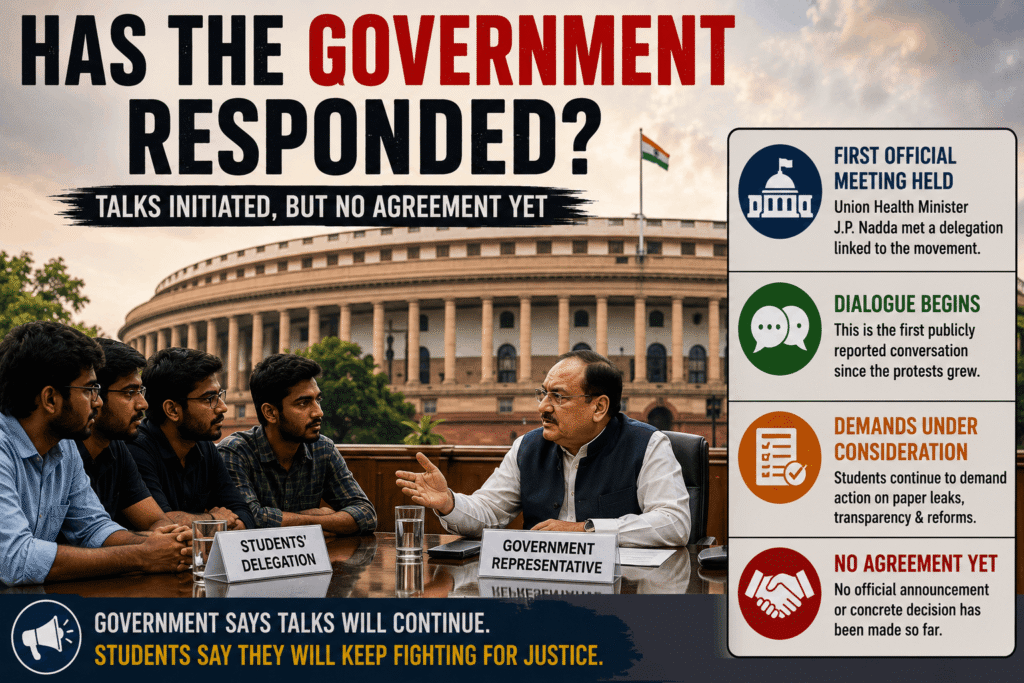
Following the day’s events, attention quickly shifted to the government’s response.
Officials defended the security arrangements, saying the march had not received permission and that public safety around Parliament had to remain the priority during the Monsoon Session.
At the same time, there were early signs of communication between the government and representatives linked to the protest. Reports indicate that Union Health Minister J.P. Nadda met a delegation associated with the movement, making it the first publicly reported dialogue since the demonstrations intensified. However, no official agreement or announcement addressing the protesters’ demands had been made at the time of writing.
For many students, the larger issues remain unresolved. They continue to seek stronger action against examination paper leaks, greater transparency in recruitment and examinations, and reforms that restore confidence in the education system.
What Happens Next?
The next few days could be important for everyone involved.
Organisers are expected to decide their next steps after reviewing today’s events, while public attention will remain on Sonam Wangchuk’s health and any future discussions with the government.
Whether today’s confrontation becomes the beginning of meaningful dialogue or leads to more demonstrations will depend on how both sides respond in the coming days.
Final Thoughts
Today’s Parliament March Today was about more than a march through the streets of Delhi. It reflected the frustration of many students who believe repeated examination irregularities have damaged trust in a system that shapes their future.
At the same time, the events also highlighted the challenge authorities face in balancing the right to peaceful protest with security around Parliament during an active session.
Whatever readers think about today’s confrontation, one fact is clear: the questions raised by students have not disappeared. The coming days will show whether those concerns are addressed through dialogue, policy changes, or further protests.
For now, the most reliable way to follow this developing story is through verified reporting from trusted organisations such as Reuters, The Associated Press, and The Indian Express, along with official statements from the authorities and protest organisers.
FAQs
What happened during the Parliament March today?
Thousands of students and supporters marched toward Parliament in Delhi to demand accountability over examination paper leaks and education reforms. Police stopped the march near security barricades, and clashes later led to the use of tear gas and batons in some areas.
Why did students organize the Parliament March?
Protest organisers say the march was held to demand stronger action against repeated examination paper leaks, greater transparency in recruitment and examinations, and broader education reforms.
Why did Delhi Police stop the Parliament March?
Delhi Police said the march did not have official permission and that security restrictions were necessary because Parliament’s Monsoon Session was underway.
Is Sonam Wangchuk still involved in the protest?
Yes. Although Sonam Wangchuk remains in hospital after his hunger strike, he has continued to support the movement through public messages urging peaceful demonstrations.
What could happen after the Parliament March?
Attention is now focused on whether discussions between the government and protest representatives continue and what the organisers announce as their next step.