
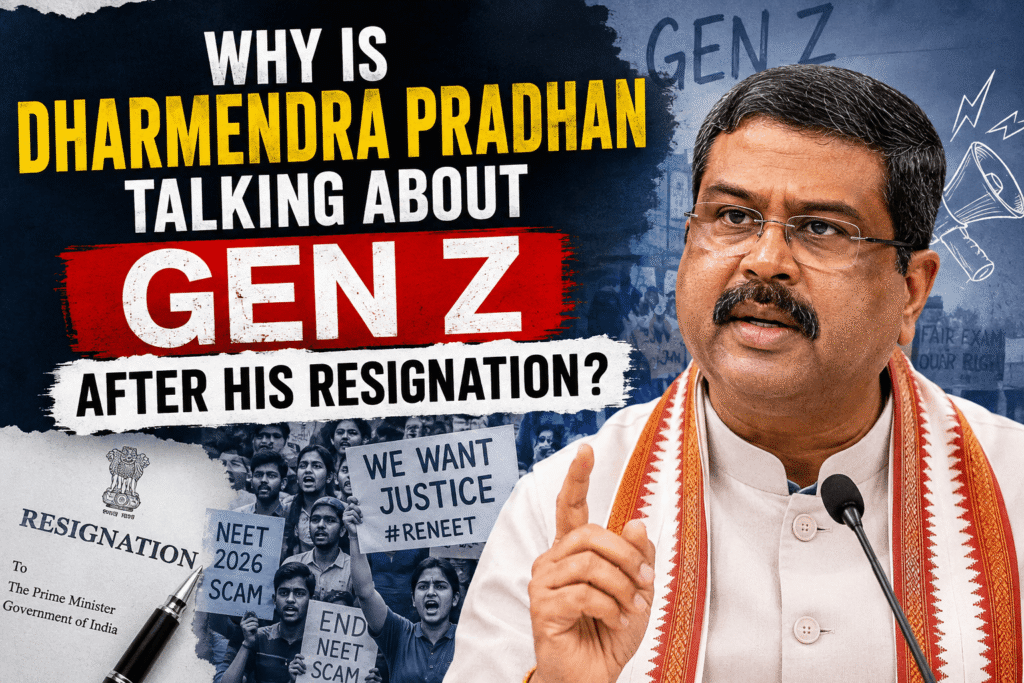
Dharmendra Pradhan has spoken publicly about his resignation, and Gen Z is at the centre of his explanation.
The former Union Education Minister resigned on July 25 after weeks of student protests linked to the NEET paper leak controversy and examination irregularities. Now, he has explained why he offered to step down and what he believes happened during the protests.
His latest comments are getting attention because Pradhan said some people tried to mislead Gen Z during the protests. At the same time, he described young people as an important force whose aspirations need to be understood.
So, why is Dharmendra Pradhan Gen Z becoming a talking point again, and what exactly did the former Education Minister say?
What Did Dharmendra Pradhan Say About Gen Z?
Pradhan spoke about the issue at an event in Sambalpur, Odisha, on August 8.
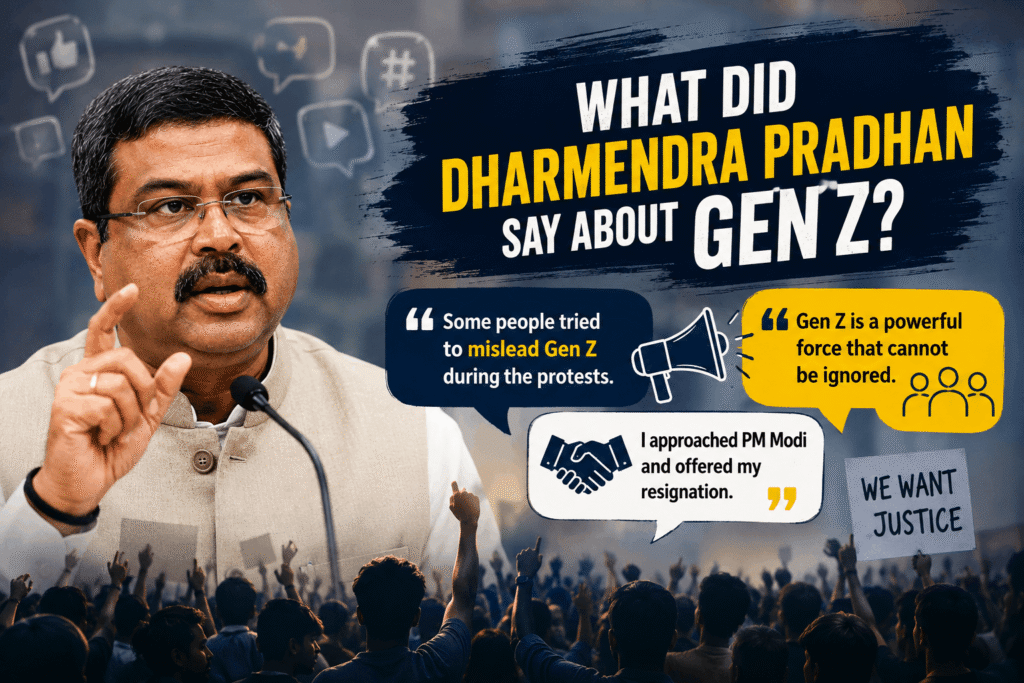
According to Hindustan Times, Pradhan said he felt that some people had tried to mislead the younger generation during the protests.
He also spoke about the growing importance of Gen Z and said young people cannot simply be ignored.
Pradhan further said he had approached Prime Minister Narendra Modi and offered his resignation. His explanation suggests that he saw the situation as bigger than his own position as Education Minister.
According to The News Minute, Pradhan said he sought Modi’s approval to acknowledge the aspirations of Gen Z.
That is an important part of his latest statement because it gives more context to the resignation that happened in July.
Why Did Dharmendra Pradhan Resign?
To understand the Dharmendra Pradhan on Gen Z story, we have to go back to July.
Pradhan resigned as Union Education Minister on July 25, after weeks of student protests over the NEET-UG controversy and examination irregularities. For the full background, you can also read our breakdown of why Dharmendra Pradhan resigned.
His resignation became one of the biggest developments in the student movement. Protesters had been demanding accountability from the Education Ministry, with the Cockroach Janta Party, or CJP, becoming closely associated with the protests.
NDTV reported that Pradhan submitted his resignation to Prime Minister Narendra Modi after the student protests over the NEET controversy.
In his resignation letter, Pradhan addressed the country’s youth and said he did not want students’ futures to become caught up in the controversy.
The resignation therefore came after significant pressure from a movement that had placed students and young people at the centre of the national debate.
What Happened During The Student Protests?
The protests were driven by concerns about the NEET-UG examination, alleged paper leak issues and wider questions about the reliability and fairness of competitive examinations.
The movement later grew beyond one examination issue. The protests eventually produced several important developments, which we covered in our detailed look at the student protest outcome.
Students and supporters demanded accountability and wanted the government to address concerns surrounding the examination system.
The CJP movement became one of the most visible parts of the protests. Demonstrations were held at Jantar Mantar in Delhi, while social media helped spread the movement and attract more young people.
Reuters reported that thousands of supporters of the youth-led movement protested in Delhi during the period leading up to Pradhan’s resignation.
The protests eventually created enough political pressure for Pradhan’s resignation to become a major turning point.
Is Dharmendra Pradhan Blaming Gen Z?
This is where the latest statement needs to be understood carefully.
It would be too simple to say that Pradhan blamed Gen Z for the protests.
His reported comments were more complicated.
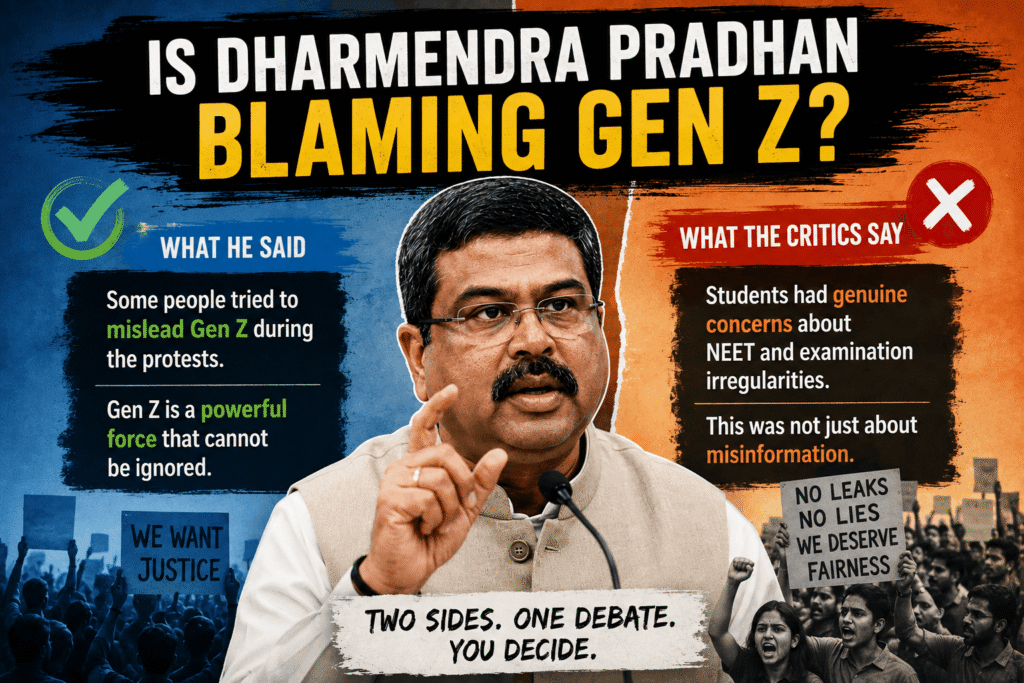
Pradhan said some people tried to mislead young people during the protests. But he also said Gen Z is a powerful force and that its aspirations need to be recognised.
So his argument appears to separate two things: the concerns of young people and the possibility that other people may have tried to influence those concerns.
That distinction is important.
Students can have genuine reasons to protest while politicians can still argue that a protest movement is being influenced by outside forces.
The safest way to describe the Dharmendra Pradhan latest statement is therefore this: he acknowledged the importance of young people while saying he believed some attempts were made to mislead them during the protests.
Why Is He Talking About Gen Z Now?
The timing is a major reason his comments are attracting attention.
Pradhan resigned only a few weeks ago. Now he is publicly explaining how he viewed the protests and why he decided to step down.
He is also talking about Gen Z at a time when young Indians have become a major part of India’s political conversation.
The recent student movement showed how quickly young people can use social media to organise, share information and bring an issue into the national spotlight.
This is very different from traditional political movements that depend mainly on established parties or large organisations.
For Gen Z, a campaign can begin online and quickly move into the streets.
That is one reason political leaders are paying more attention to this generation.
Congress Pushes Back On The Argument
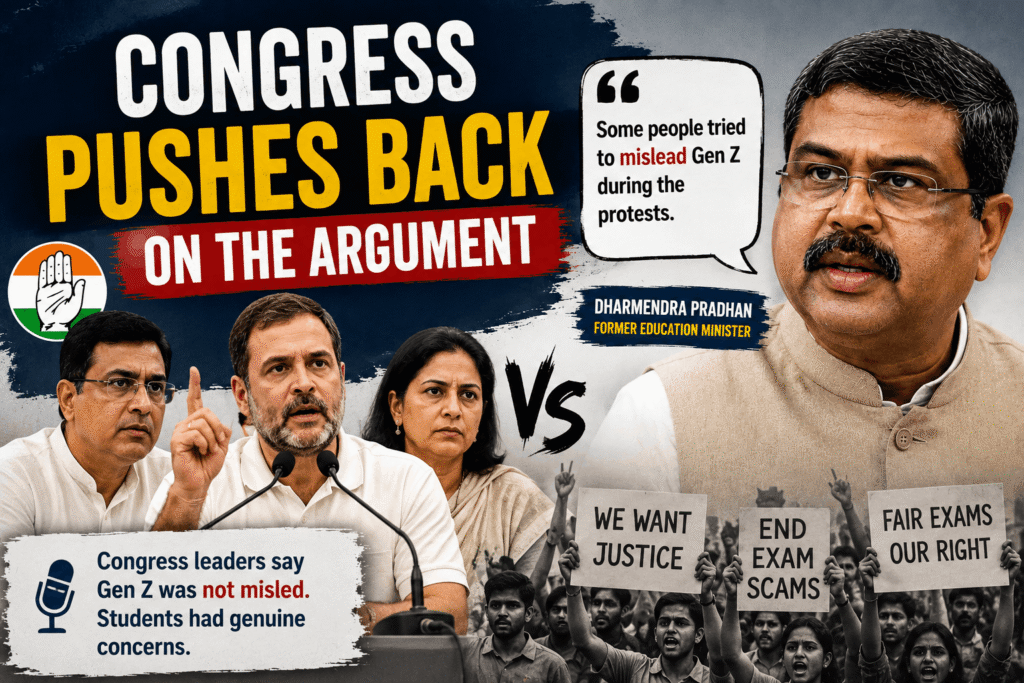
Pradhan’s explanation has also opened the door to a wider political debate.
Opposition leaders have rejected the idea that young protesters were simply being misled. Critics argue that students had genuine concerns about examination irregularities and the NEET controversy.
That disagreement matters because it shows the two very different ways the protests are being viewed.
From Pradhan’s side, some people may have tried to influence young protesters.
From the protesters’ and opposition’s side, the anger was rooted in real concerns about examinations, fairness and accountability.
This is why the story is not simply about one politician and Gen Z. It is also about who gets to define the reason behind a major youth movement.
What Does This Mean For Gen Z?
The bigger question is whether political leaders will simply talk about Gen Z or actually respond to the issues young people care about.
For students preparing for competitive examinations, a paper leak allegation or major examination irregularity can affect years of preparation.
That is why the NEET controversy became so emotional for many students.
The protests were about more than a political personality. They were also about trust in an examination system that can determine a student’s education and career path.
Pradhan’s latest remarks show that he understands the political importance of this generation, even though his explanation of the protests is different from that of his critics.
What Happens Next?
It is too early to know whether Pradhan’s comments will change the debate surrounding the student protests.
But his explanation has added a new layer to the story.
The former Education Minister has now connected his resignation directly with the situation involving young protesters and explained that he wanted their aspirations to be acknowledged.
The wider issue of examination reform is also likely to remain important.
A minister’s resignation can change the political situation, but it does not automatically solve problems surrounding competitive examinations.
For students, the real question is what happens to the system after the political headlines disappear.
The Bigger Picture
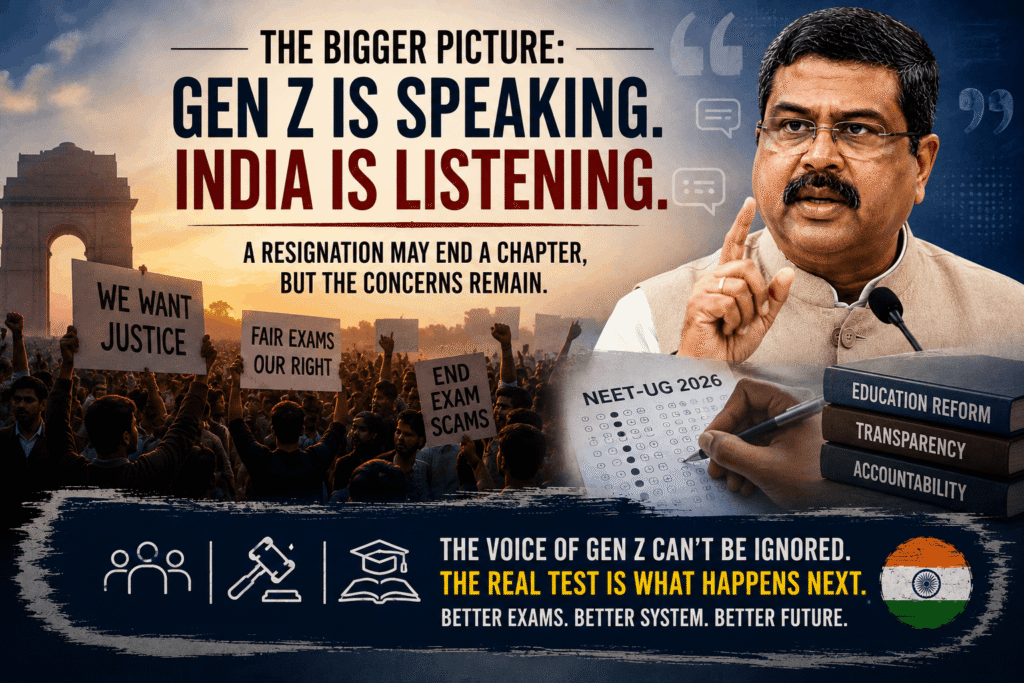
The Dharmendra Pradhan Gen Z story is ultimately about more than one resignation.
It shows how much influence young Indians can have when they organise around an issue they care about.
The student protests grew from concerns about examinations and accountability into a national political story. Pradhan eventually resigned, and now he is explaining why he believes Gen Z played such an important role in that episode.
His message is that young people cannot be ignored, but that their concerns can also be influenced by others.
His critics see the issue differently and argue that students were raising genuine concerns that deserved answers.
That debate is unlikely to disappear immediately.
For India’s young population, however, the bigger test will be whether the concerns raised during the protests lead to better examination systems, stronger accountability and greater trust.
A resignation can become a major political headline. But for students, the real result will be whether the system they depend on actually becomes better.
FAQs
Why is Dharmendra Pradhan talking about Gen Z?
Dharmendra Pradhan has spoken about Gen Z while explaining his resignation as Education Minister. He said some people attempted to mislead young protesters, while also saying that the aspirations of Gen Z need to be understood.
What did Dharmendra Pradhan say about Gen Z?
Pradhan said Gen Z is a powerful force that cannot be ignored. He also said attempts were made to mislead young people during the protests connected to the NEET controversy.
Why did Dharmendra Pradhan resign?
Dharmendra Pradhan resigned as Union Education Minister on July 25, 2026, amid student protests linked to the NEET-UG controversy and examination irregularities.
What were the student protests about?
The protests focused on concerns surrounding the NEET-UG examination, alleged examination irregularities and demands for greater accountability in the education system.
What is the Gen Z protest in India?
The term refers to the youth-led protests that gained attention through demonstrations and social media, with students raising concerns about examination issues, accountability and other problems affecting young Indians.
Is Dharmendra Pradhan blaming Gen Z for the protests?
Not exactly. Pradhan said some people tried to mislead Gen Z, but he also described young people as an important force whose aspirations should be acknowledged.