
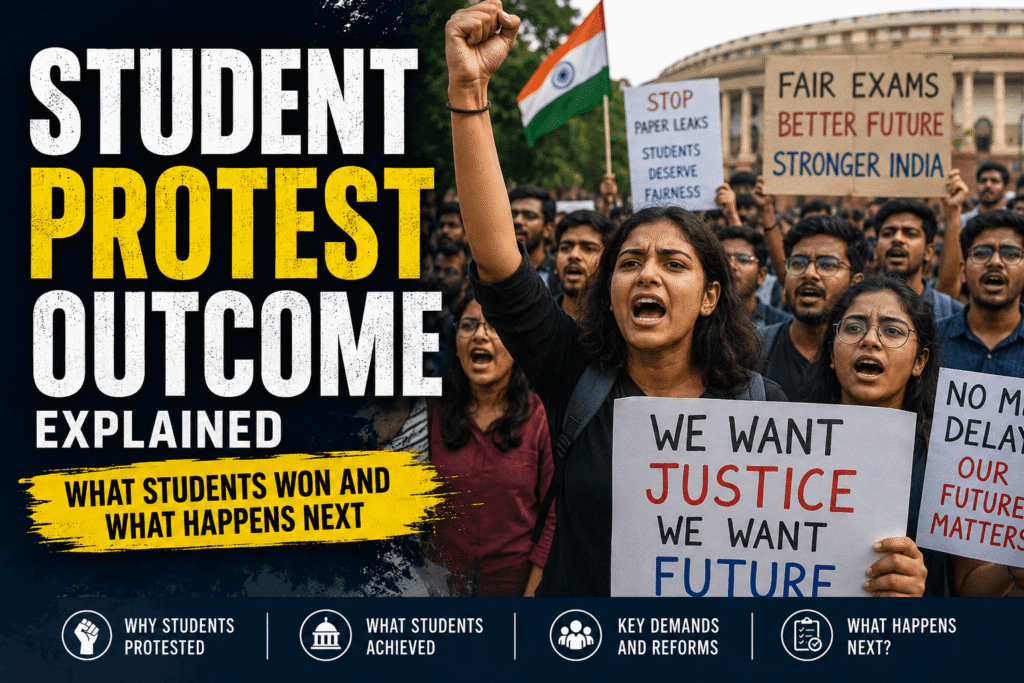
For weeks, students across India stood together with one clear message: they wanted a fair education system they could trust.
What started as frustration over alleged examination irregularities in competitive exams soon grew into a nationwide movement. Students marched peacefully, organised demonstrations, joined hunger strikes, and used social media to keep their voices heard. Parents, teachers, and ordinary citizens also joined the conversation, making it one of the biggest youth-led movements India has seen in recent years.
Now that the demonstrations have officially ended, many people are asking the same question:
What was the Student Protest Outcome?
Did students actually achieve what they were fighting for, or is the real challenge only beginning?
In this article, we’ll look at how the movement grew, what students achieved, what they demanded, and why the impact of these protests could shape India’s education system for years to come.
Key Takeaways
- The Student Protest Outcome included major political developments and nationwide attention to education reform.
- The protests began over concerns about alleged examination irregularities and transparency.
- Protest leaders later announced the end of the demonstrations after talks with the government.
- The government committed to reforms aimed at strengthening the examination system.
- The long-term success of the movement will depend on how effectively those reforms are implemented.
Why Did The Student Protest Begin?
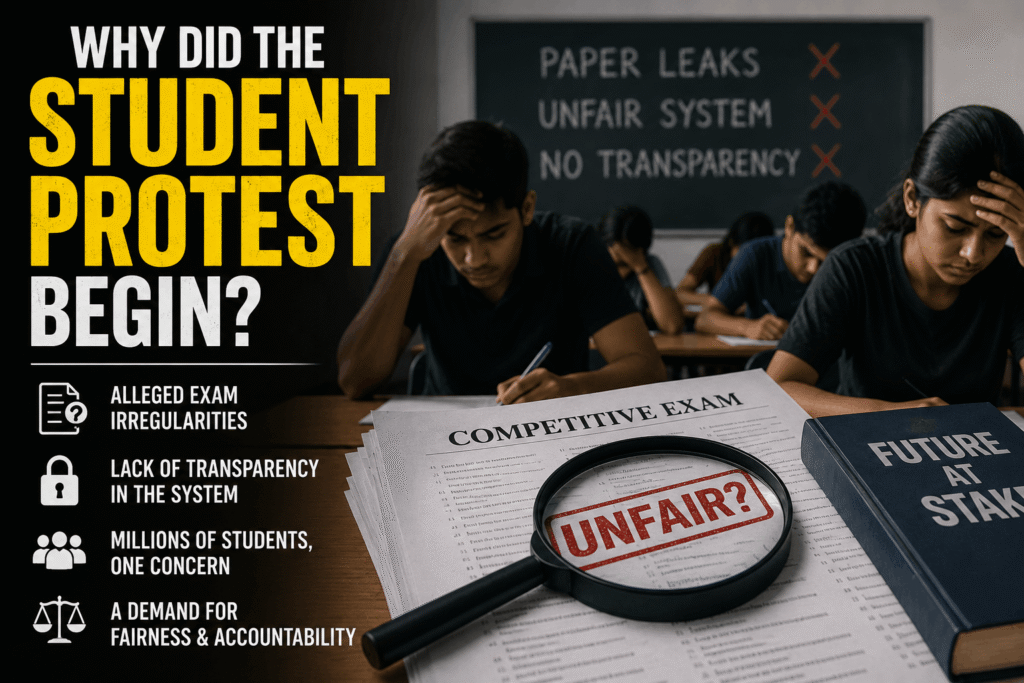
The protests began after allegations of irregularities in major competitive examinations, particularly NEET. For millions of students, these exams represent years of preparation and determine future careers. When concerns were raised about fairness and transparency, frustration quickly spread across the country.
Students argued that the issue was much bigger than a single examination. They wanted an education system that was transparent, accountable, and fair for every candidate.
According to Reuters’ report on how the examination controversy sparked a nationwide youth movement, growing public concern over examination integrity encouraged students from different states to unite behind a common cause.
How Did The Protest Become A National Movement?
The Student Protest India movement quickly spread beyond college campuses and became one of the largest youth-led demonstrations in the country in recent years.
Peaceful rallies were organised in several cities, while students used social media to share updates and encourage others to participate. As public attention grew, many parents, teachers, education experts, and professionals also expressed support.
One of the defining moments came during Parliament March Today, where thousands of protesters demanded greater accountability and long-term reforms to India’s education system.
The movement gained even more national attention through Sonam Wangchuk’s hunger strike. His peaceful protest became a powerful symbol of the wider campaign and inspired many young people to continue raising their voices.
Public concern increased further after Sonam Wangchuk was taken to hospital after a 21-day hunger strike. The incident kept national attention focused on the movement and highlighted the determination of many protesters.
As reported by Reuters’ coverage of the nationwide youth demonstrations, the movement gradually became about more than examination controversies. It also reflected wider concerns about accountability, public trust, and the future of millions of young Indians.
Student Protest Outcome Explained: What Students Won
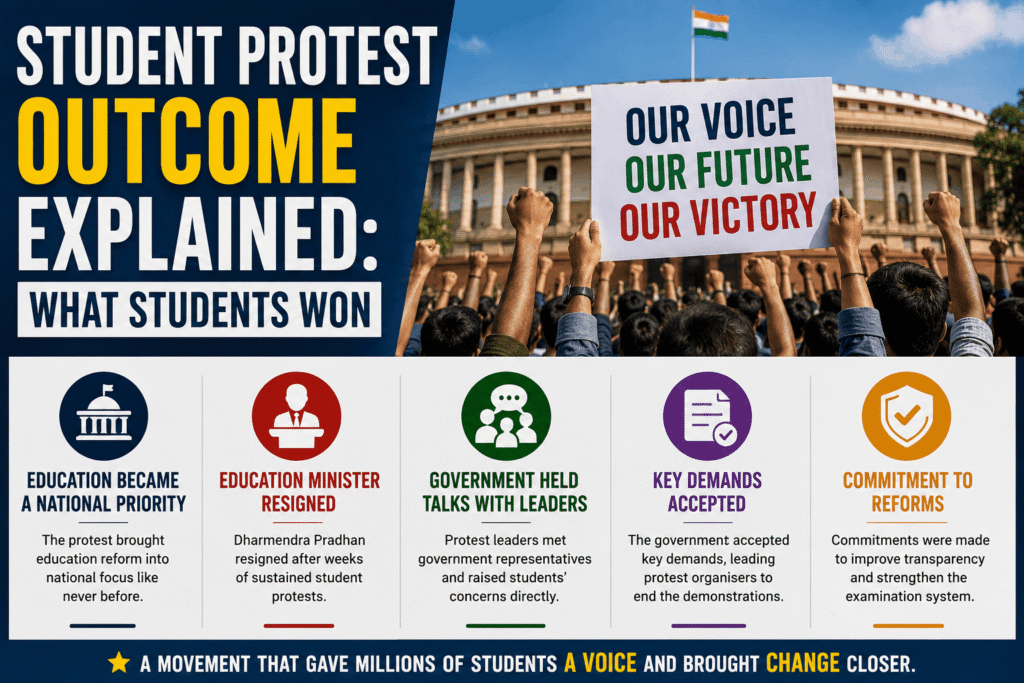
Although protesters understood that lasting reforms would take time, the movement achieved several important outcomes that many participants described as major victories.
Education Became A National Priority
Perhaps the movement’s biggest achievement was bringing education reform into the national spotlight.
For weeks, television channels, newspapers, and digital platforms focused on student concerns. Millions of Indians who were not directly connected to competitive examinations also joined the discussion, turning education into one of the country’s biggest public issues.
A Major Political Development
One of the most significant moments came with the Dharmendra Pradhan resignation.
According to Reuters’ report on the education minister’s resignation, Education Minister Dharmendra Pradhan stepped down after weeks of sustained youth protests. Protest leaders described the resignation as one of the movement’s biggest achievements and a sign that peaceful public pressure could influence national decision-making.
Government Held Talks With Protest Leaders
Another important outcome came when government representatives met protest leaders to discuss their concerns.
According to the Associated Press’ report on the protest outcome, protest organisers later announced the end of the demonstrations after saying the government had accepted their key demands.
For many students, these discussions represented an important step forward. They showed that organised, peaceful participation could open the door to meaningful dialogue between citizens and policymakers.
Student Protest Outcome At A Glance
- Weeks of nationwide student demonstrations brought education reform into the national spotlight.
- Education Minister Dharmendra Pradhan resigned during the movement.
- Government representatives held talks with protest leaders.
- Protest organisers announced the end of the demonstrations after saying their key demands had been accepted.
- Commitments were made to improve transparency and strengthen India’s examination system.
What Students Asked For During The Protest
Although the demonstrations have officially ended, understanding the Student Protest Demands helps explain why so many young people joined the movement.
From the beginning, student groups said their campaign was about building a fairer education system for future generations. While the resignation of the education minister became the most visible outcome, protesters repeatedly stressed that they also wanted meaningful reforms that would prevent similar controversies in the future.
A Fair And Transparent Examination System
The biggest demand was a competitive examination system that students could trust.
Protesters called for stronger safeguards against paper leaks, better security during examinations, greater transparency in the evaluation process, and stricter action against anyone found responsible for examination irregularities.
Many students said they simply wanted every candidate to have an equal opportunity to succeed based on merit.
Faster Investigations
Student organisations also demanded quicker investigations whenever allegations of examination irregularities emerged.
They argued that delays create unnecessary stress for millions of candidates who spend years preparing for highly competitive examinations.
Greater Accountability
Another major demand was accountability.
Protest leaders said public confidence could only be restored if officials responsible for serious failures were held accountable and corrective action was taken transparently.
Long-Term Education Reforms
Beyond the immediate controversy, many students also called for wider reforms that would improve transparency, strengthen governance, and reduce the chances of similar incidents happening again.
For many participants, the movement was not just about one examination. It was about protecting the future of India’s education system.
What Exactly Did Students Win?
The immediate Student Protest Results included several significant developments.
- Education Minister Dharmendra Pradhan resigned after weeks of sustained protests.
- Government representatives held discussions with protest leaders.
- Protest organisers said the government had accepted their key demands before officially ending the demonstrations.
- Commitments were made to strengthen transparency and improve confidence in the examination system.
- Education reform became one of the biggest national conversations in India.
These developments marked important progress for the movement. However, many education experts believe the real success will depend on how effectively those commitments are implemented over the coming months and years.
Was The Protest Successful?
In the short term, many observers believe the movement achieved several of its publicly stated goals.
It brought education reform into the national spotlight, encouraged nationwide public debate, resulted in a major political development, and led to discussions between protest leaders and the government.
According to Reuters’ report on the conclusion of the youth protests, protest organisers officially announced the end of the demonstrations after saying the government had accepted their key demands.
However, the long-term success of the movement will not be measured by announcements alone.
The real test will be whether the promised reforms improve examination security, strengthen transparency, and rebuild confidence among students, parents, and educators across the country.
What Happens Next?
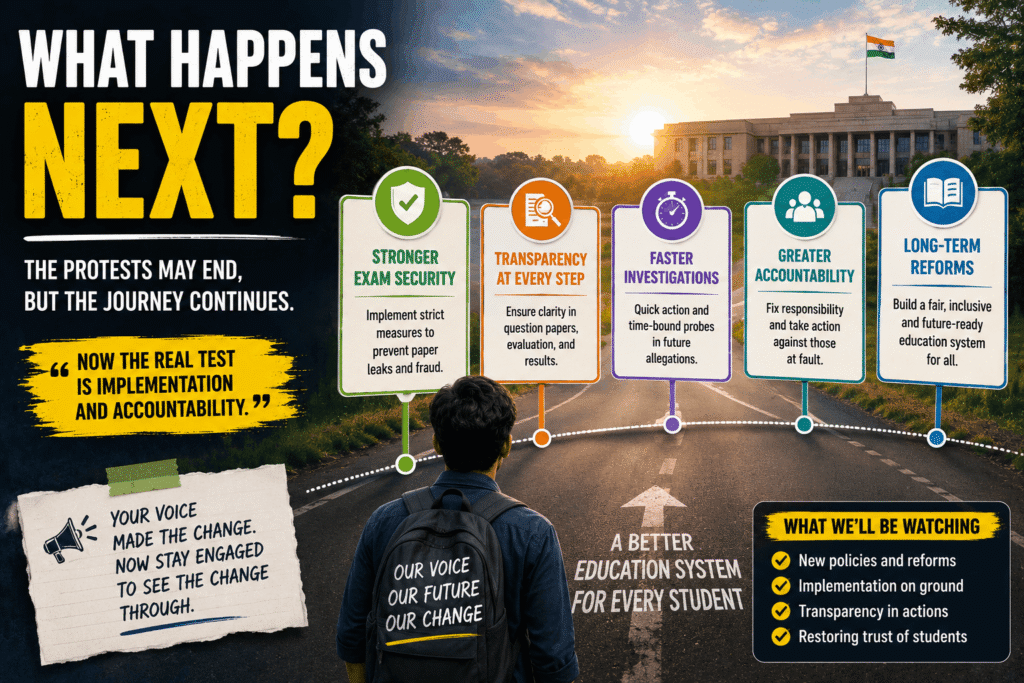
Although the demonstrations have ended, the conversation about education reform is expected to continue.
Attention will now shift from protests to implementation.
Students, parents, teachers, and education experts will be watching closely to see how the government delivers on its commitments and whether meaningful policy changes are introduced.
Among the issues many people will continue following are:
- Improvements to examination security.
- Greater transparency throughout the examination process.
- Faster investigations into future allegations.
- Measures aimed at rebuilding trust in India’s education system.
The outcome of these reforms will determine whether this movement becomes a lasting turning point for education in India.
Why This Protest Matters Beyond Education
The importance of the movement extends well beyond competitive examinations.
It showed that students from different states could unite around a common cause and keep national attention focused on an issue affecting millions of young people.
The movement also demonstrated that peaceful public participation can influence national discussions and encourage governments to engage with citizens through dialogue.
Even people who had no direct connection to competitive examinations followed the story because it raised broader questions about fairness, accountability, and equal opportunity.
That may become one of the movement’s most enduring achievements.
Final Thoughts
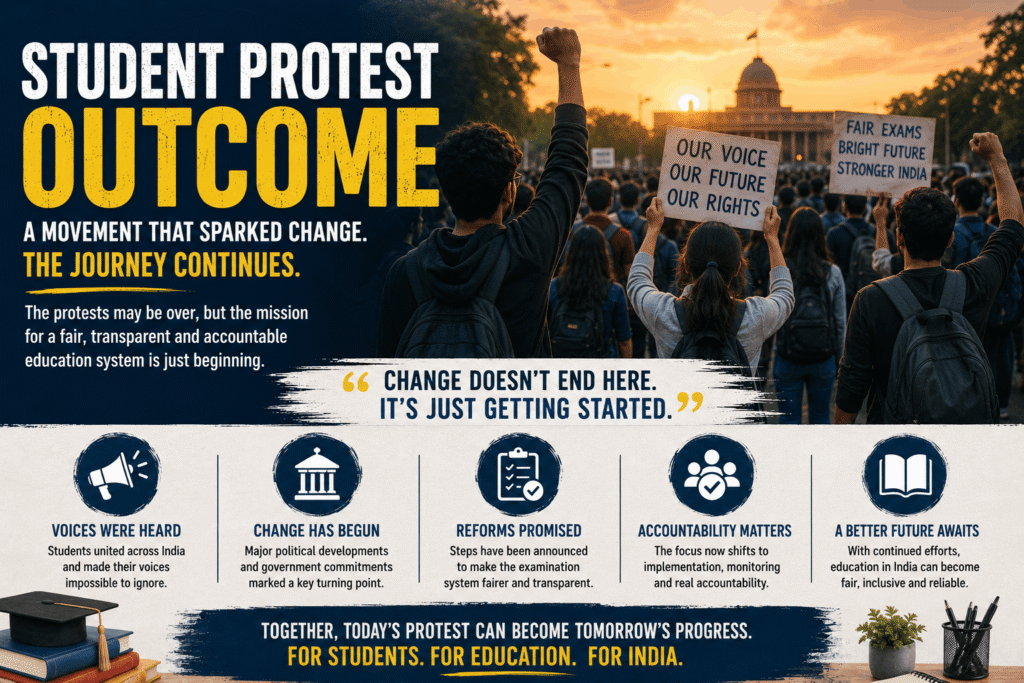
The biggest Student Protest Outcome was not simply one political event.
The movement succeeded in making education reform a national priority and giving millions of students a stronger voice in the public conversation. While the immediate Student Protest Results included major political developments and government commitments, the long-term impact will depend on how effectively those promises are implemented.
For many people, the protests proved that peaceful public participation can influence national discussions. Although the demonstrations have ended, the conversation about building a fairer and more transparent education system is far from over.
FAQs
What was the Student Protest Outcome?
The Student Protest Outcome included major political developments, government talks with protest leaders, and commitments to strengthen India’s examination system.
Why did students protest?
Students protested over concerns about alleged examination irregularities, transparency, accountability, and the fairness of India’s competitive examination system.
What were the main Student Protest Demands?
Students demanded a fair examination system, stronger safeguards against paper leaks, faster investigations, greater accountability, and long-term education reforms.
Is the student protest over?
Yes. Protest organisers officially announced the end of the demonstrations after talks with the government and said their key demands had been accepted.
What happens after the protests?
Attention now turns to the implementation of promised reforms, including examination security, transparency, and rebuilding public confidence in India’s education system.
1 thought on “Student Protest Outcome Explained: What Students Won And What They Are Still Demanding”