
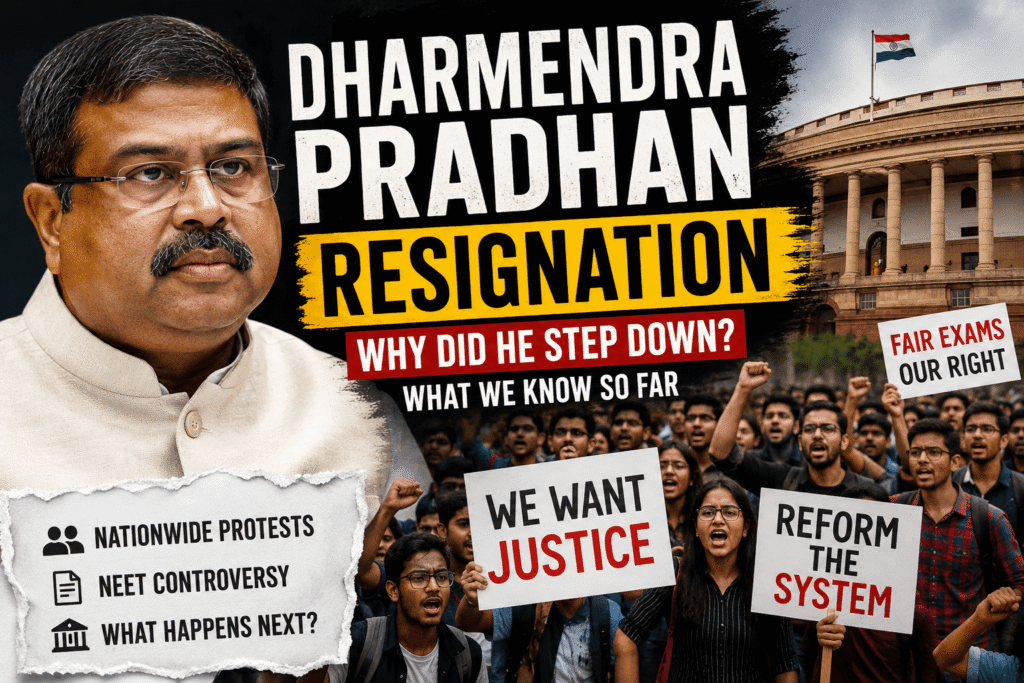
Thousands of students spent weeks raising their voices. Peaceful protests spread across several states. Hunger strikes captured national attention. Parliament witnessed heated debates as young people demanded accountability and reforms to India’s examination system.
Then came the announcement that changed the political conversation.
The Dharmendra Pradhan resignation quickly became one of the biggest political stories in India. The resignation followed weeks of nationwide protests linked to the NEET controversy and growing political pressure over the government’s handling of the issue.
While many protest leaders have described the decision as a major moment for their movement, the government has not officially stated that the protests alone caused the resignation. Even so, the Dharmendra Pradhan resignation has renewed discussions about education reforms, examination security, and public accountability.
So, why did Dharmendra Pradhan resign? What events led to this moment, and what could it mean for millions of students preparing for competitive examinations? Here’s everything we know so far.
What Led To The Dharmendra Pradhan Resignation?
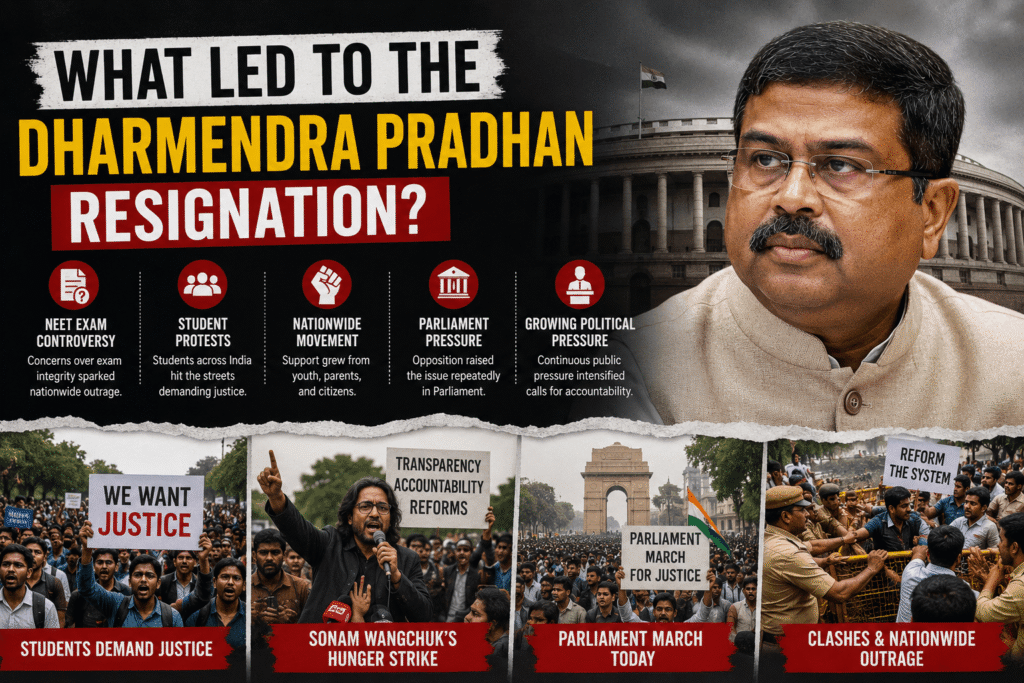
The events leading to the Dharmendra Pradhan resignation did not happen overnight.
The controversy began after serious concerns were raised about the NEET examination and the integrity of India’s competitive examination system. Students questioned whether enough was being done to protect the fairness of one of the country’s most important entrance exams. As frustration grew, demands for transparency and accountability became louder.
Over the following weeks, demonstrations spread to different parts of India. Students, youth groups, professionals, parents, and supporters joined peaceful protests calling for stronger safeguards, better examination security, and meaningful education reforms.
The movement gained even greater attention after Sonam Wangchuk’s hunger strike became a national talking point. His peaceful protest encouraged many young people to speak openly about the need for long-term reforms in India’s education system.
The issue reached another major turning point during the Parliament March Today protests, when thousands of protesters gathered in New Delhi to demand action. Although many demonstrations remained peaceful, some later resulted in clashes with police, bringing even greater national attention to the movement.
As the protests continued, the issue moved beyond university campuses and became one of the biggest national discussions of the year.
Why Did Dharmendra Pradhan Resign?
The question dominating headlines across the country is simple.
Why did Dharmendra Pradhan resign?
According to reports from Reuters and Associated Press, the resignation came after weeks of nationwide protests, increasing political pressure, and public demands for accountability over the government’s handling of the NEET controversy.
Opposition leaders repeatedly questioned the government’s response, while students argued that stronger leadership and meaningful reforms were needed to restore confidence in India’s examination system.
It is important to separate confirmed facts from public opinion.
The resignation itself has been widely reported by multiple reliable news organisations. However, the government has not officially said that the protests alone were responsible for the decision. Political observers believe several factors, including public pressure, parliamentary debate, and the continuing controversy, likely influenced the outcome.
For many protesters, however, the Dharmendra Pradhan resignation became a sign that their concerns had finally reached the highest levels of government.
How Did A Student Protest Become A Nationwide Movement?
The protests did not become a nationwide movement overnight.
What started as demonstrations by students gradually attracted support from teachers, professionals, social activists, and ordinary citizens who believed India’s examination system needed stronger safeguards.
Social media also played an important role. Videos, photographs, and personal stories from protest sites spread quickly, allowing people across the country to follow developments in real time. As public awareness grew, more supporters joined peaceful demonstrations demanding accountability and education reforms.
One of the defining moments came when Sonam Wangchuk was taken to hospital after his 21-day hunger strike. Images of his hospitalisation quickly spread online and renewed national attention on the movement.
Although many demonstrations remained peaceful, some marches later saw clashes between protesters and police. Those incidents kept the issue in the national spotlight and increased pressure on political leaders to respond.
By the time Dharmendra Pradhan announced his resignation, the movement had become one of the largest youth-led protest campaigns of the year.
Timeline Of The Dharmendra Pradhan Resignation
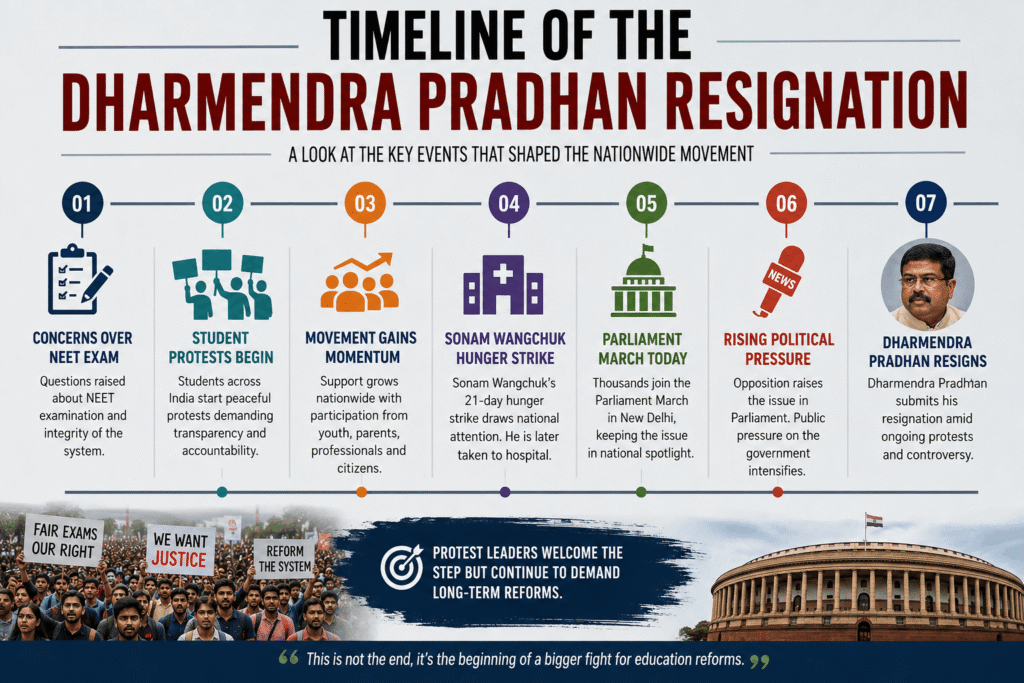
The events unfolded over several weeks.
- Concerns were raised over the NEET examination and examination integrity.
- Students began organising peaceful protests in different parts of India.
- Public support continued to grow as the movement spread.
- Sonam Wangchuk was taken to hospital after his 21-day hunger strike, bringing even greater public attention to the protests.
- The Parliament March Today demonstrations kept the issue at the centre of national debate.
- Dharmendra Pradhan announced his resignation.
- Protest leaders welcomed the decision while continuing to demand long-term reforms to India’s education system.
How Did The Government Respond?
Following the Dharmendra Pradhan resignation, the government’s focus quickly shifted to restoring public confidence in India’s education system.
Officials said that improving the security of competitive examinations and strengthening transparency would become important priorities. Discussions also began around reviewing existing examination procedures, improving monitoring systems, and preventing similar controversies in the future.
According to Reuters, the resignation came after weeks of nationwide protests and growing political pressure surrounding the NEET controversy. Protest leaders later welcomed the decision but also made it clear that they wanted lasting reforms rather than symbolic action.
For many students, the resignation was an important moment. However, many also believe that real success will depend on whether meaningful reforms are introduced in the coming months.
Why Are Many Protesters Calling This A Turning Point?
The Dharmendra Pradhan resignation has become much more than a political headline.
For many young people, it represents the idea that peaceful public movements can bring national attention to issues that affect millions of students.
Throughout the protests, students repeatedly said their demands were not directed at one individual alone. They wanted stronger examination security, faster investigations into alleged irregularities, greater transparency, and a system they could trust.
That is why many protest leaders have described the resignation as an important milestone rather than the final goal.
At the same time, several education experts have pointed out that changing one minister will not automatically solve every challenge facing India’s examination system. Building public trust will require consistent reforms, better oversight, and stronger accountability.
What Happens Next?
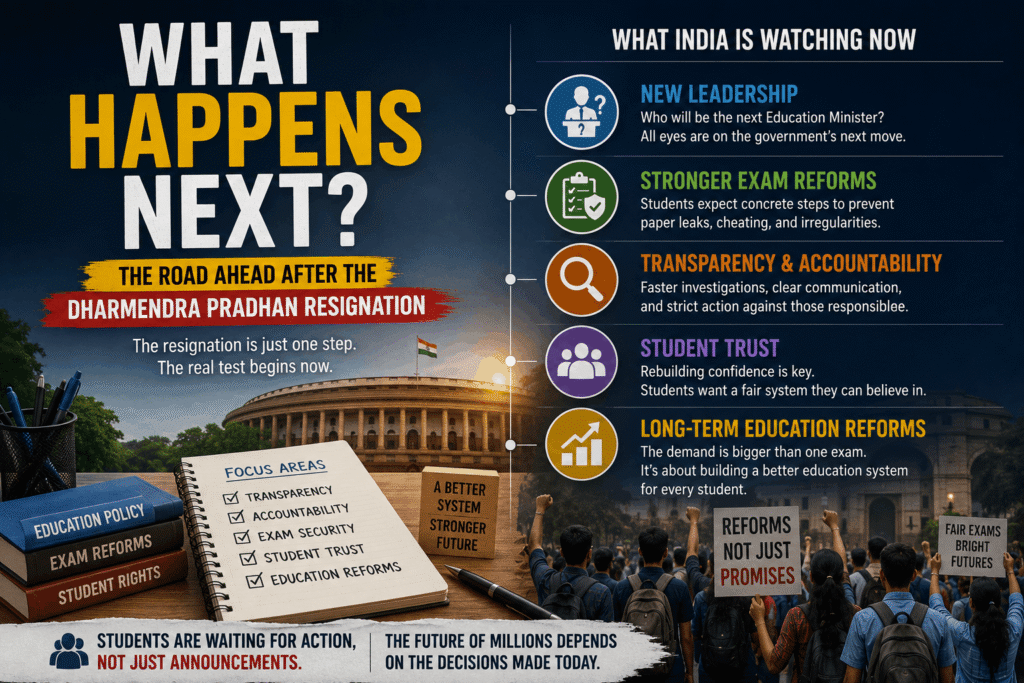
Attention is now turning toward the government’s next steps.
One of the biggest questions is who will become the next Union Education Minister and what changes the new leadership may introduce.
Students and education experts are closely watching for reforms that could include:
- Better protection against examination paper leaks.
- Stronger digital security during competitive examinations.
- Faster investigations whenever irregularities are reported.
- Greater transparency in recruitment and admission processes.
- Clear communication with students during major examination controversies.
Many students also hope that future policies will focus on preventing similar situations rather than simply responding after problems arise.
Whether these expectations are met will become clearer over the coming months.
Why This Story Matters To Every Student
Not every student appears for the same examination, but almost every family in India understands how important competitive exams can be.
Years of preparation, financial sacrifices, and personal dreams often depend on a single examination. When concerns are raised about fairness or transparency, the impact reaches far beyond classrooms.
That is one reason this movement attracted support from many people who were not directly connected to the NEET examination. For them, the issue was about protecting confidence in India’s education system and ensuring that future students receive a fair opportunity.
The conversation has now expanded beyond one controversy. It has become a broader discussion about accountability, public trust, and the future of education reforms in India.
Final Thoughts
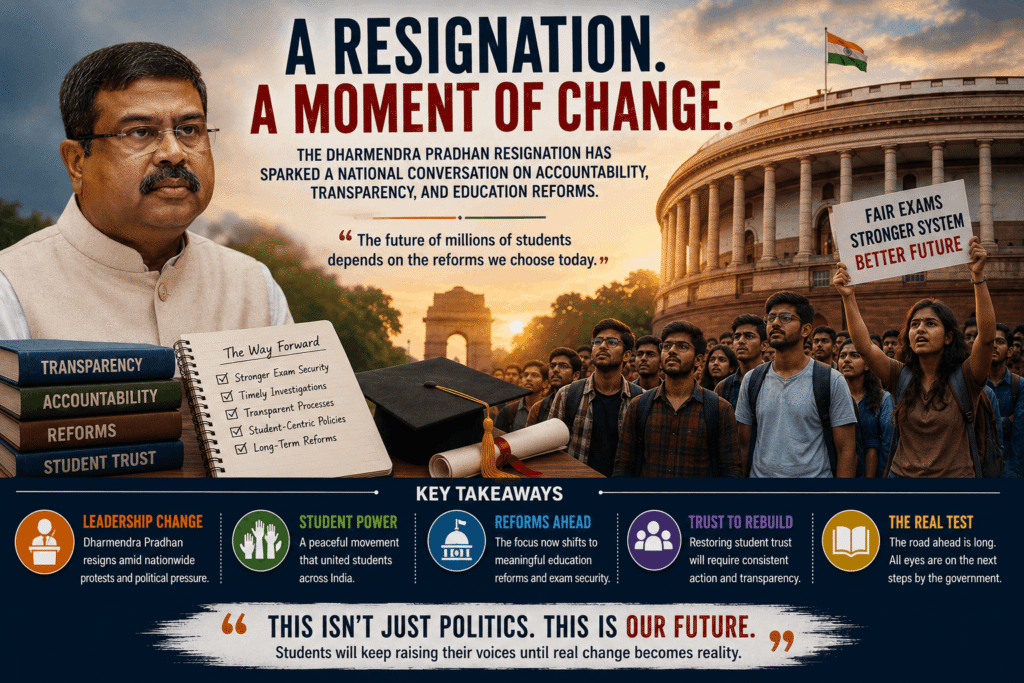
The Dharmendra Pradhan resignation marks one of the most closely watched political developments related to India’s education system in recent years.
The resignation itself has been confirmed by multiple reliable news organisations. At the same time, the precise reasons behind the decision involve several factors, including public protests, political pressure, and the government’s handling of the NEET controversy. While many protest leaders view the resignation as a significant achievement for their movement, the government has not officially described it in those terms.
What happens next will matter even more.
Students across the country are now waiting to see whether the next Education Minister introduces reforms that improve examination security, strengthen transparency, and rebuild confidence in India’s competitive examination system.
If meaningful reforms follow, this moment may be remembered not only for the Dharmendra Pradhan resignation, but also for encouraging a wider conversation about accountability and the future of education in India.
FAQs
Why did Dharmendra Pradhan resign?
Dharmendra Pradhan resigned following weeks of nationwide protests and political pressure related to the NEET controversy. While many protest leaders described the resignation as a major moment for their movement, the government has not officially stated that the protests alone caused the decision.
When did Dharmendra Pradhan resign?
According to the latest reports, Dharmendra Pradhan announced his resignation on 25 July 2026.
What were students protesting about?
Students were demanding greater transparency, stronger examination security, and accountability following the NEET controversy.
Who will replace Dharmendra Pradhan?
The government has not officially announced a permanent replacement. An official appointment is expected through normal government procedures.
What does the Dharmendra Pradhan resignation mean for students?
Many students hope the resignation will lead to stronger education reforms, improved examination security, and greater transparency in India’s competitive examination system.
Is the student protest over?
While some protest leaders welcomed the resignation, many groups continue to call for long-term reforms beyond leadership changes.
Sources
For verified updates and further reading, readers can refer to Reuters, Associated Press, and The Indian Express Education section.
1 thought on “Why Did Dharmendra Pradhan Resign? The Full Story Behind India’s Student Protest Movement”