
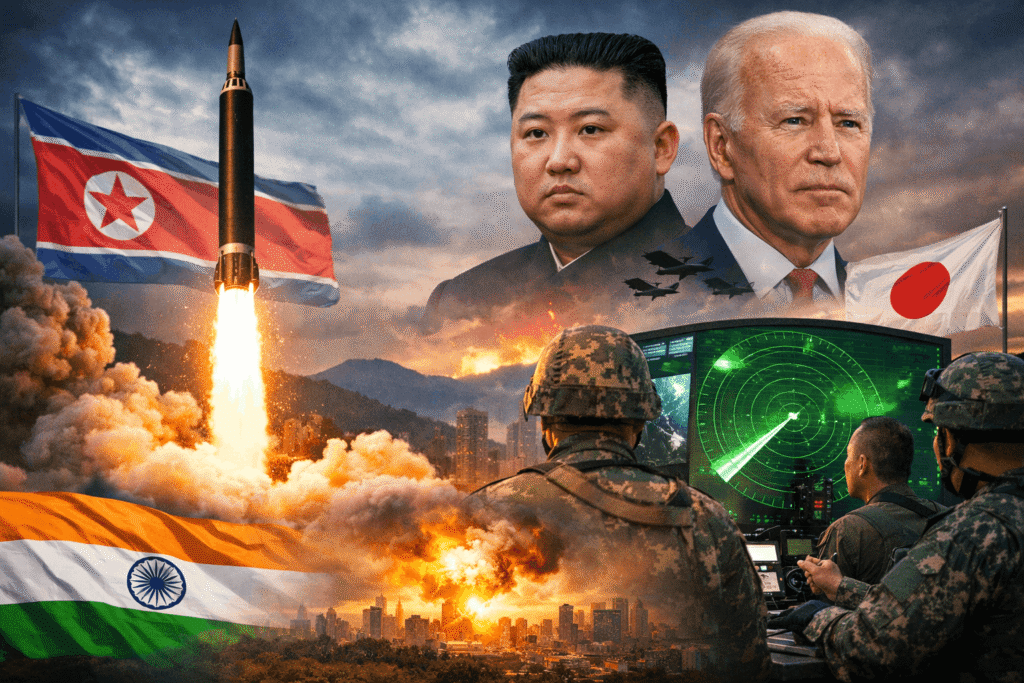
A new North Korea missile test has once again pushed global tensions higher and raised concerns across Asia and beyond. The latest launch from North Korea has drawn sharp reactions from several countries, especially in East Asia, where missile tests are closely monitored for security reasons.
While such launches are not entirely new, every test sends a signal to the world about shifting geopolitical dynamics. Countries including South Korea, Japan, and the United States quickly began tracking the missile’s trajectory after the launch was detected. Military officials and analysts say the development highlights the growing uncertainty around regional stability.
For India, the situation may seem distant at first glance. However, events like a North Korea missile test often carry broader geopolitical consequences that can indirectly affect economic stability, diplomatic relations, and security across Asia.
What Happened During the Latest North Korea Missile Test
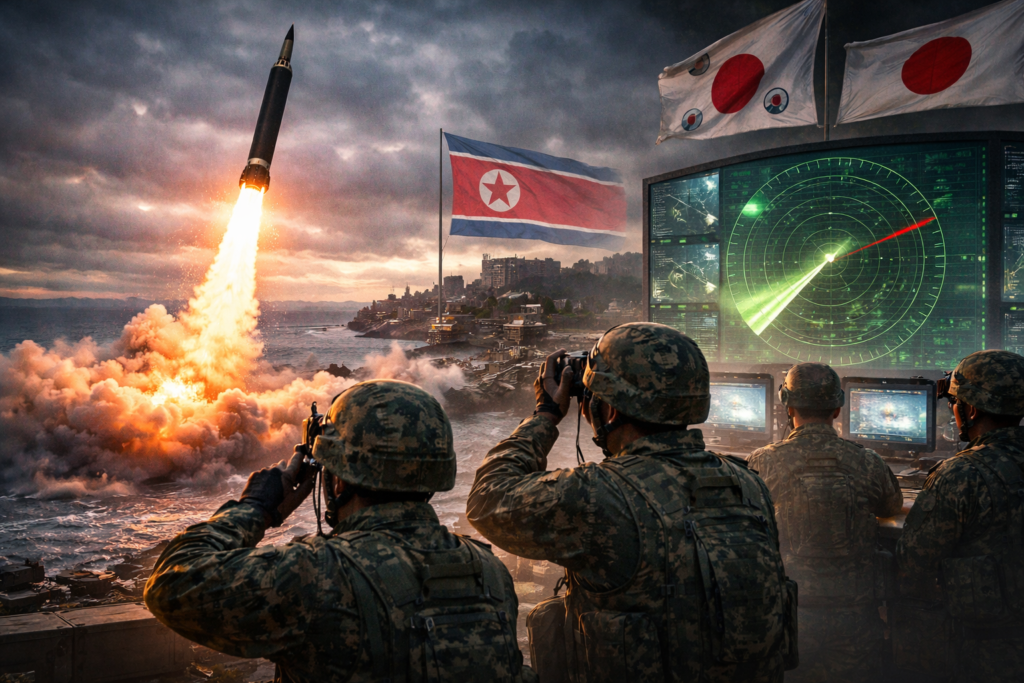
According to multiple international reports, the missile was launched from North Korean territory and traveled hundreds of kilometers before landing in waters outside Japan’s exclusive economic zone. The launch was quickly detected by defense systems in the region, and governments in Tokyo and Seoul issued immediate statements condemning the test.
Several reports from Reuters suggest that the missile was likely a ballistic system capable of traveling long distances. Ballistic missiles are especially concerning because they can potentially carry nuclear payloads and travel across continents depending on their design.
North Korea has conducted a series of similar tests over the past decade as part of its military development program. The country’s leader, Kim Jong Un, has repeatedly emphasized strengthening the nation’s strategic defense capabilities.
International observers say these launches often occur during periods of diplomatic tension or military exercises involving other countries in the region.
Why the North Korea Missile Test Matters Globally
A North Korea missile test does not only affect the Korean Peninsula. It quickly becomes a global issue because it touches on nuclear security, military balance, and international diplomacy.
Ballistic missile launches from North Korea have repeatedly been criticized by the United Nations. The UN Security Council has passed several resolutions restricting North Korea’s missile and nuclear programs, arguing that such developments threaten international peace and stability.
A detailed overview of these resolutions and global reactions can be found through United Nations security reports that track nuclear proliferation concerns around the world.
Beyond legal concerns, the larger issue is strategic stability in Asia. Japan and South Korea remain on high alert during such tests because the missiles can potentially travel through or near their airspace.
This is why even a single launch triggers emergency meetings between governments and defense agencies across the region.
What It Means for India
For India, the North Korea missile test is not an immediate military threat. However, it still matters in several important ways.
First, India has consistently supported global efforts to limit nuclear proliferation. New missile tests raise concerns about the spread of advanced weapons technologies and the possibility of escalating military competition in Asia.
Second, India is deeply connected to global geopolitics through trade routes, energy markets, and diplomatic partnerships. Any instability in Asia can ripple through global systems that India depends on.
Situations like these are part of a broader pattern where international conflicts and tensions reshape global relations. Our earlier analysis on how global wars affect India explains how geopolitical conflicts influence India’s strategic decisions, diplomatic posture, and economic priorities.
India usually responds to such developments by calling for restraint, dialogue, and peaceful resolution through diplomatic channels.
That approach has remained consistent across different global crises, whether they involve regional conflicts or rising tensions between major powers.
Could Global Markets React to Rising Tensions

Geopolitical tension rarely stays confined to politics. Financial markets often react quickly when military developments make headlines.
Events like a North Korea missile test can lead to volatility in global markets, especially when investors fear escalation. Defense stocks sometimes rise, while broader markets may react cautiously depending on the severity of the situation.
Energy prices can also fluctuate when geopolitical risks increase. Even if the conflict is geographically distant, global supply chains and trade routes are sensitive to instability.
India’s financial markets are not immune to these effects. As discussed in our analysis on how war tensions impact the Indian stock market, geopolitical uncertainty often leads to short term volatility in equities, commodities, and currency markets.
However, long term market impact usually depends on whether tensions escalate into a broader regional crisis or remain contained.
What Could Happen Next
Predicting North Korea’s next move is always difficult. The country has a long history of conducting missile tests as part of both military development and diplomatic signaling.
Sometimes these launches are followed by additional tests, while in other cases they become part of negotiations or diplomatic discussions involving major powers.
Countries in the region will likely continue monitoring the situation closely. Military tracking systems in Japan and South Korea remain on alert whenever a launch occurs, and international organizations often respond with statements or renewed diplomatic pressure.
For the global community, the real concern is not just one test but the pattern behind it. Each new launch raises questions about future stability in Asia and whether diplomatic efforts will succeed in preventing further escalation.
For India, the approach remains steady. Watch closely, encourage diplomatic dialogue, and ensure that regional tensions do not spill over into broader economic or security disruptions.
The latest North Korea missile test is another reminder that global stability can shift quickly. Even events happening thousands of kilometers away can eventually influence markets, diplomacy, and security in interconnected ways.
FAQs
What is the latest North Korea missile test about?
The latest North Korea missile test involved the launch of a ballistic missile that traveled hundreds of kilometers before landing in waters near Japan. The launch raised concerns among countries in East Asia and triggered international reactions.
Why does the North Korea missile test matter globally?
A North Korea missile test matters globally because ballistic missiles can potentially carry nuclear warheads. Such launches increase security concerns and often lead to diplomatic responses from major powers and international organizations.
Is North Korea allowed to conduct missile tests?
The United Nations has imposed sanctions and restrictions on North Korea’s missile and nuclear programs. Many countries argue that continued missile tests violate international resolutions.
Does the North Korea missile test affect India?
While India is not directly threatened, the North Korea missile test can influence global stability, energy markets, and geopolitical relations in Asia. These factors can indirectly affect India’s economy and diplomatic strategies.
Why does North Korea continue missile testing?
North Korea conducts missile tests to develop its military capabilities and demonstrate strategic strength. These launches are often linked to regional tensions and diplomatic negotiations.