
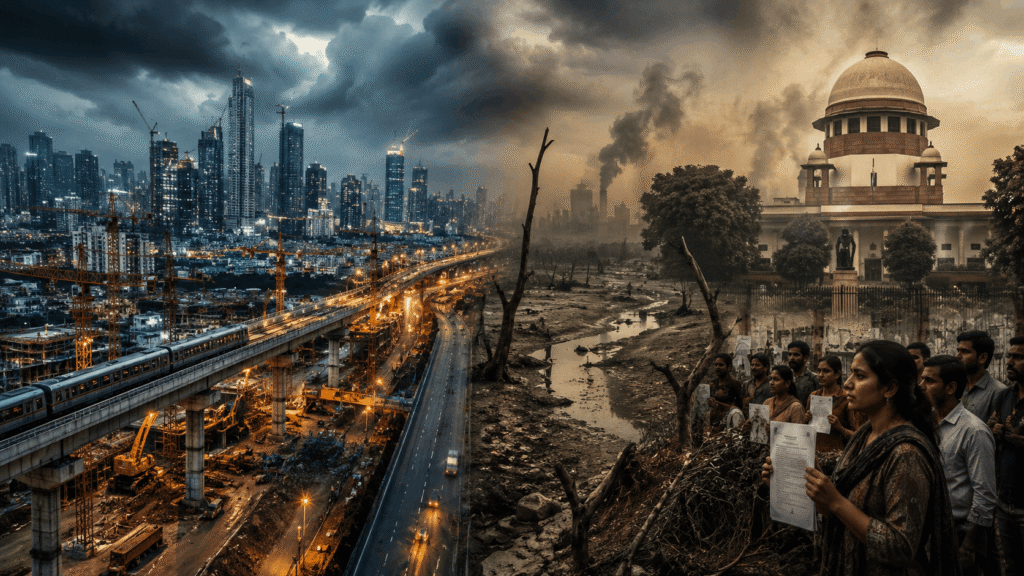
The debate around environmental activism and development in India exploded again after controversial CJI remarks on environmental litigants triggered backlash from lawyers, activists, and civil society groups across the country.
The controversy began after Supreme Court judge Justice Surya Kant reportedly made sharp observations during court proceedings, leading many environmental groups to accuse the judiciary of unfairly targeting people who use environmental litigation to challenge major projects.
Within hours, the issue became one of the most discussed legal and political controversies in India.
According to reports published by The Hindu and The Indian Express, critics argued that the remarks could discourage legitimate environmental litigation and weaken democratic accountability around infrastructure and industrial expansion.
But the CJI environmental remarks controversy is about far more than one courtroom observation.
It exposed a growing national divide between people who believe environmental litigants are protecting India’s future and those who believe endless litigation is slowing down the country’s growth.
Why the CJI Remarks on Environmental Litigants Became So Controversial
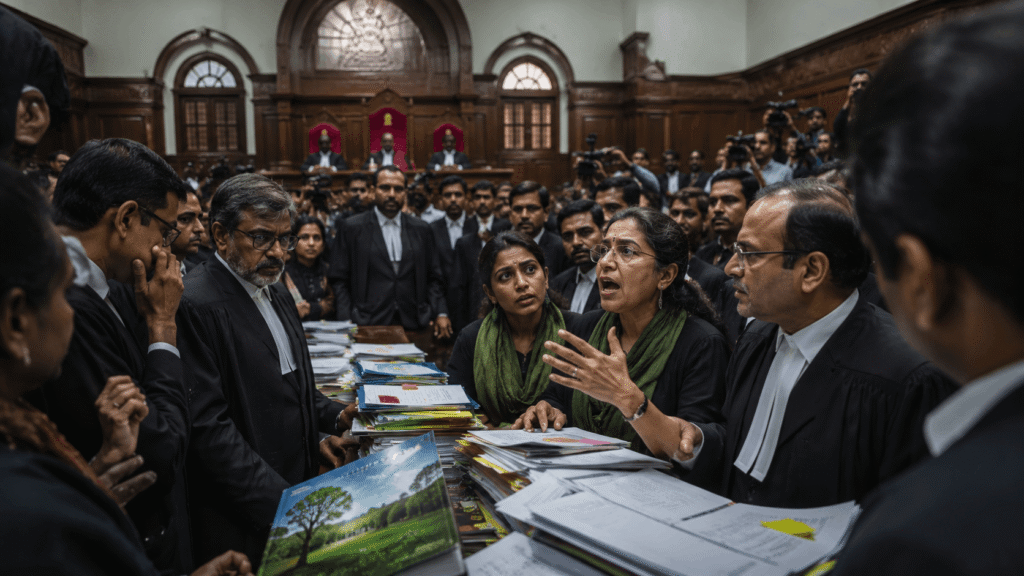
Environmental litigation in India has always been politically charged.
Public Interest Litigations, commonly known as PILs, have historically played a major role in exposing illegal mining, pollution, deforestation, displacement issues, and ecological damage caused by unchecked development projects.
Many activists argue that without environmental litigation, several corporations and even government-backed projects would operate without proper accountability.
That is exactly why the recent remarks triggered such a strong reaction.
Critics believe that framing environmental litigants as obstacles creates a dangerous narrative where anyone raising ecological concerns can be painted as anti-development.
Several lawyers and environmental groups warned that the comments could discourage legitimate environmental challenges at a time when Indian cities are already dealing with rising pollution, heatwaves, water shortages, and climate stress.
India is currently facing some of its worst environmental pressures in decades.
Extreme heat events have intensified across multiple states. Air pollution continues to remain severe in major cities. Flooding during monsoon seasons has become increasingly destructive, while groundwater depletion is becoming a serious concern in both urban and rural regions.
In that environment, many activists believe environmental scrutiny is more important than ever.
That explains why the environmental activists backlash spread so quickly online and inside legal circles.
Why Many Indians Support Faster Development Despite the Environmental Litigation Debate
This is the uncomfortable part that rarely gets discussed honestly.
A significant number of ordinary Indians are frustrated with how large infrastructure and industrial projects often get delayed for years due to litigation, approvals, protests, and bureaucratic roadblocks.
For many citizens, development is no longer an abstract political slogan.
It is directly connected to:
- jobs
- transport
- housing
- electricity
- economic mobility
- urban growth
When highways, metro systems, renewable energy projects, industrial corridors, or railway expansions face repeated delays, public frustration grows rapidly.
That frustration becomes even stronger when people believe certain cases are being used strategically to stall projects indefinitely rather than genuinely protect the environment.
This is why the CJI environmental remarks controversy became much larger than a courtroom issue.
It tapped into a growing divide inside modern India.
One side fears India is sacrificing its ecology in the name of rapid growth.
The other fears India will never modernize if every project gets trapped inside years of legal resistance.
Both sides believe they are protecting the country.
That is what makes this debate emotionally explosive.
Why the Environmental Litigants Controversy India Is Facing Matters Beyond the Courtroom
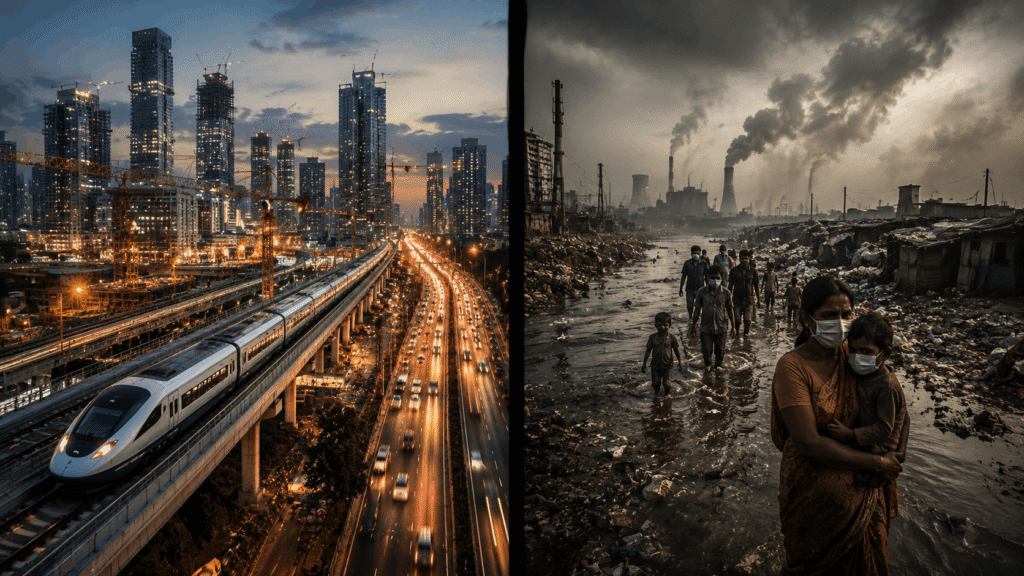
India is currently trying to position itself as one of the world’s fastest-growing major economies.
Massive infrastructure expansion is happening across sectors including:
- highways
- freight corridors
- semiconductor manufacturing
- ports
- renewable energy
- smart cities
- railway modernization
At the same time, environmental concerns are becoming harder to ignore.
Cities are becoming hotter.
Air quality remains dangerous in many regions.
Forests continue shrinking in multiple states.
Climate-related disasters are becoming more frequent.
Groundwater depletion is worsening.
This creates a direct collision between two major national priorities:
- economic growth
- environmental sustainability
That collision is now showing up everywhere, including inside courtrooms.
The environmental litigants controversy India is witnessing today reflects a deeper national identity crisis about what kind of development model the country wants to follow over the next decade.
Should growth move faster even if environmental risks increase?
Or should environmental oversight remain strict even if development slows down?
There is no simple answer.
This is also why the Justice Surya Kant remarks spread so rapidly across social media and political discussions. The controversy touched a nerve because many Indians already feel trapped between environmental collapse and development delays. That emotional tension is what transformed a courtroom debate into a nationwide conversation.
Why Lawyers and Activists Reacted So Strongly
For activists and legal groups, the controversy is not just symbolic.
They believe judicial language matters because it shapes how future environmental cases are perceived.
If courts begin viewing environmental litigation with suspicion by default, activists fear genuine cases involving deforestation, pollution, displacement, or illegal land use may not receive fair consideration.
That concern explains why several groups reacted almost immediately.
According to reporting from ThePrint, former civil servants and environmentalists publicly objected to the remarks and warned against undermining environmental protections through broad generalizations.
Many critics also argued that environmental litigation exists precisely because regulatory failures are common in India.
In several past cases, courts themselves have intervened to stop ecological damage after administrative systems failed to act.
That history matters.
Environmental litigation in India is not new social media activism. It has been deeply connected to constitutional rights, conservation battles, public health concerns, and tribal displacement issues for decades.
That is why many legal experts viewed the remarks as much bigger than a passing courtroom observation.
The Real Reason This Debate Hit a Nerve Across India
Most controversies disappear quickly because they remain limited to political or legal circles.
This one spread because ordinary people already feel trapped between two collapsing systems.
Many Indians believe development is happening too slowly.
At the same time, many also feel cities are becoming increasingly unlivable.
People want:
- better roads
- more jobs
- faster infrastructure
- cleaner air
- safer water
- sustainable cities
- less pollution
The problem is that modern India often treats these goals as opposites instead of balancing them intelligently.
That is why the Justice Surya Kant remarks triggered such intense reactions.
The controversy touched a deeper national anxiety:
Can India grow aggressively without destroying environmental stability?
And if environmental protections weaken, who eventually pays the long-term price?
Usually, it is not the wealthy.
It is ordinary citizens living through floods, polluted air, water shortages, collapsing urban systems, and extreme heatwaves.
Why This Controversy Will Not Fade Quickly
This issue is unlikely to disappear after one news cycle because the underlying conflict is becoming more intense every year.
India’s future growth plans will require:
- industrial expansion
- land acquisition
- urban redevelopment
- energy infrastructure
- transport corridors
All of these create environmental pressure.
That means clashes between governments, corporations, courts, activists, and citizens will likely continue increasing.
The CJI remarks on environmental litigants may eventually fade from headlines, but the larger conflict behind the controversy is only becoming more intense.
India is trying to grow rapidly while also facing rising pollution, climate pressure, water shortages, and ecological stress. That means environmental litigation will remain a major national issue for years to come.
The real challenge is no longer choosing between development and environmental protection.
It is figuring out whether India can realistically achieve both before the divide becomes impossible to control.
FAQs
What are the CJI remarks on environmental litigants?
The controversy began after Justice Surya Kant reportedly made remarks during court proceedings that critics interpreted as targeting environmental litigants and activists involved in legal challenges against development projects.
Why are activists angry over the CJI environmental remarks controversy?
Many activists and lawyers believe the remarks could discourage legitimate environmental litigation and weaken public accountability around large infrastructure and industrial projects.
What is environmental litigation in India?
Environmental litigation usually refers to legal cases and Public Interest Litigations filed to challenge pollution, deforestation, illegal construction, ecological damage, or environmental policy decisions.
Why is the environmental litigants controversy India is facing important?
The controversy reflects a larger national debate about balancing economic growth, infrastructure development, and environmental protection in rapidly urbanizing India.
What role do environmental activists play in India?
Environmental activists often use legal action, public campaigns, and research to challenge projects they believe could damage ecosystems, forests, water resources, or public health.
Why is the development vs environment debate growing in India?
India is expanding infrastructure and industrial projects rapidly while also facing climate stress, pollution, water shortages, and ecological challenges. This has intensified conflicts between growth and sustainability.