

The Chief Justice remarks youth controversy triggered outrage across India as students and unemployed graduates questioned the country’s broken education and job system.
India’s young generation studied harder than any generation before them. They crammed for boards in 40-degree heat with load-shedding every other hour. Sat NEET in cities they had never visited before. Applied to hundreds of jobs on Naukri.com with zero callbacks. Learned real skills on YouTube because their colleges had nothing useful to offer. And when the jobs still did not come, India’s graduates freelanced. Posted. Asked questions. Filed RTIs.
And the Chief Justice of India called them cockroaches for it.
Not a random uncle at a family dinner. Not a politician at an election rally. The highest judicial authority in this republic. The guardian of every citizen’s constitutional dignity.
That is not a slip of the tongue. That is exactly how power sees the generation it failed.
“If India’s youth are cockroaches, there is only one question worth asking: who designed the gutter?”
What Were the Chief Justice Remarks on Youth That Broke the Internet?
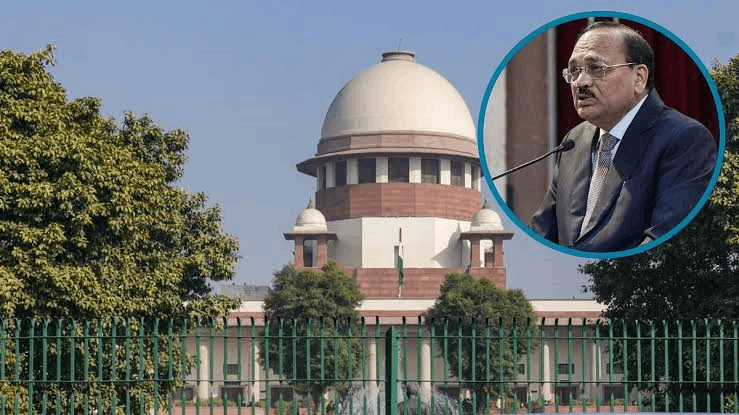
On May 15, 2026, Chief Justice of India Surya Kant, sitting on the Supreme Court bench, made remarks during a hearing that stopped this country mid-scroll.
He said unemployed young Indians are “like cockroaches” who fail to get jobs, crawl into media, social media, and RTI activism, and start “attacking the system.” He stamped India’s aspirants as “parasites of society.”
The Chief Justice remarks on youth went viral within hours. Every college WhatsApp group. Every comment section. Every family chat from Srinagar to Kanyakumari erupted.
A clarification came the next day. He said the media misquoted him. Said he was targeting people with fake degrees, not India’s youth in general.
But here is the bitter truth nobody in power is saying out loud: words do not wait for press releases.
Those words landed on a 24-year-old in Patna who just found out NEET was cancelled because someone leaked the paper on WhatsApp. They landed on a 27-year-old in Hyderabad doing freelance work after 200 rejections. They landed on every young Indian who already felt invisible to the system that was supposed to serve them.
A clarification the morning after does not undo that. Not even close.
11 Million Unemployed Graduates — So Who Is the Real Parasite Here?
Before throwing the word “cockroach” at India’s job seekers, someone should look at the actual numbers. Really look at them.
India’s youth unemployment rate climbed to 15.2% in March 2026, rising from 13.8% just a year earlier. And that only counts people actively searching for work. The real number is worse.
Here is the stat that should make every policymaker sit down in shame: the unemployment rate among graduates in India is 13%, while it is practically zero for people with no education at all.
The more you study in India, the harder it is to find a job. Read that again slowly.
Out of 367 million young Indians between ages 15 and 29, roughly 11 million graduates are currently sitting without work. That is more than the entire population of Sweden. Waiting. Not out of laziness. Out of a structural failure that India’s aspirants did not create and did not choose.
Nearly 25% of Indian youth fall in the NEET category — Not in Education, Employment, or Training — well above the global average of 20%.
India’s Gen Z workers are not lazy. They are trapped inside a system that educated them, promised them a future, and then quietly locked every door on the way out.
Did the Education System Prepare India’s Young Generation — or Betray Them?
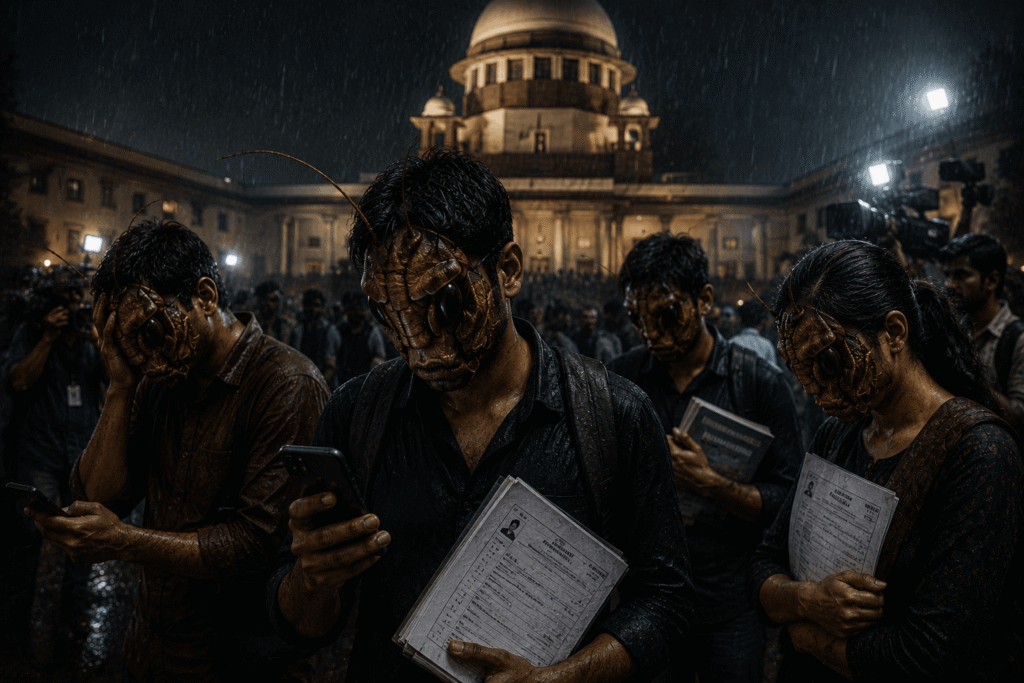
You want to know why India’s graduates are on social media, in journalism, and filing RTIs? Start right here.
Just weeks before the Chief Justice remarks on youth shook this country, India’s education system handed its biggest scandal yet. NEET-UG 2026 was cancelled after a paper leak spread through WhatsApp across coaching networks in Rajasthan, Bihar, and Kerala. It affected 22.79 lakh students — aspirants who had spent months, sometimes years, betting everything on a single exam.
One student from Rajasthan studying medicine in Kerala shared a “guess paper” with his father in Sikar. The father passed it to a coaching centre. Within days, 22 lakh futures were shattered in what experts are now calling a catastrophic failure of India’s examination infrastructure. Same story as NEET 2024. Same story as UGC-NET. Same mafia. Zero accountability.
In this very same month, CBSE’s Class 12 OSM system crashed, wiping out thousands of students’ scores overnight and destroying college eligibility they spent their entire school life building.
Rahul Gandhi said what every parent in India was already screaming: “The Education Ministry has become a department of disasters.” Three exams. Three age groups. One minister. All failed at the same time.
So yes. The Chief Justice remarks on youth called India’s aspirants cockroaches.
But who handed the keys of India’s exam system to a paper leak mafia operating freely on WhatsApp? Answer that first. Then talk about parasites.
From Patna to Bengaluru: This Is Not a Trend, It Is a National Emergency
This is not an Instagram reel problem. This is a pan-India crisis playing out in every city, every tier-2 town, every village where a family sold land to pay for coaching fees.
Think about the boy from a small town in Bihar who borrowed money from relatives for NEET coaching in Patna. Who traveled alone to another city on a sleeper train. Who came home to find the paper was already on WhatsApp before he even walked into the exam hall.
Think about the engineering graduate from Hyderabad, four-year degree in hand, who sent applications to 200 companies on LinkedIn and is now doing Swiggy delivery while learning new skills on YouTube at midnight.
Think about the young woman from a tier-3 city in UP who fought her entire family for the right to study, scored well, and is now doing data entry from home because every job posting demands three years of experience she cannot possibly have at 22.
India’s young generation is not on social media because they gave up. They are on social media because it is the only space in this country where their voice is not filtered, bought, or silenced.
When every door that was promised turns out to be locked, India’s job seekers build their own window. That is not cockroach behavior. That is a generation refusing to disappear quietly.
Is Social Media Activism an Attack — or the Only Tool India’s Youth Has Left?

Let’s be direct about what the Chief Justice remarks on youth were really targeting.
He did not like that India’s young generation is using journalism, RTI filings, and social media to hold power accountable. He called it “attacking the system.”
India’s unemployed youth call it surviving.
Here is what “attacking the system” actually looks like from their side:
- Filing an RTI to ask where three years of unfilled government vacancies went
- Posting on Instagram to expose a coaching centre that took two lakh rupees and delivered nothing
- Starting a YouTube channel to teach skills that CBSE and state boards never bothered to include
- Freelancing on Fiverr and Upwork because private sector hiring froze and rent was still due
Within 72 hours of the Chief Justice remarks on youth going viral, 2 million Indians signed up for the Cockroach Janta Party — a satirical movement started with one Google Form by a 30-year-old Indian student. Eligibility criteria? “Unemployed, lazy, chronically online, ability to rant professionally.”
Two million people did not join a meme. They joined a mirror.
That is what happens when the highest court in the land tells a generation that every surviving strategy they have is parasitic.
The Questions the System Will Never Answer
The CJI issued a clarification. The news cycle moved on. The memes kept going.
But in every Swiggy delivery rider’s pocket, every BYJU’s-debt household, every college group chat with five unemployed graduates and one forwarded job link — the real questions are still sitting there, unanswered.
Who Designed an Exam System That Gets Leaked Every Two Years?
NEET 2024. UGC-NET. NEET 2026. Same pattern. Same paper leak mafia. Same cancellation notices sent to lakhs of aspirants the morning their futures were supposed to begin.
Who Built Colleges That Produce Graduates Nobody Wants to Hire?
Graduate unemployment in India sits at 13%, while unemployment among those with no education is near zero. That is not a skills gap. That is a policy failure decades in the making.
Who Promised a Demographic Dividend and Forgot to Build the Jobs?
India’s young generation was told for twenty years that this country’s population boom was its greatest strength. Then the jobs never came. The factories never scaled. The startups collapsed. And India’s Gen Z workers were left holding a degree certificate and a subscription to a job portal that sends the same rejection email every Monday morning.
The Chief Justice remarks on youth did not create this generation’s anger. They just confirmed what India’s graduates already knew — that power sees them as a problem to be managed, not a generation that deserves to be served.
India’s Young Generation Did Not Choose This. The System Built This.

India’s job seekers are not asking for sympathy. They are asking for accountability.
Fix the exam system so that 22 lakh aspirants never again come home to a cancelled future because a paper leaked on WhatsApp. Build an education pipeline where a degree connects to a real job — not to three more years of unpaid internships that young Indians have to fund themselves. Stop treating RTI filings and citizen journalism as threats to the republic. They are the only accountability tools that reach ordinary people when official oversight has already failed. Create real employment — not statistical jugaad, not schemes named after slogans, not five-year vision documents. Actual dignified work for a generation that has been patient long enough.
India’s young generation survived the BYJU’s collapse. Survived NEET 2024. Survived every broken promise, every leaked paper, every reform announced and quietly buried. They will survive being called cockroaches by the Chief Justice of India too.
But let the record be absolutely clear.
India’s young generation did not choose this gutter.
The system built it. And they just refused to drown quietly inside it.
FAQs
What is the Chief Justice remarks youth controversy?
The Chief Justice remarks youth controversy began after comments linked to Chief Justice Surya Kant were interpreted online as comparing unemployed youth and activists to “cockroaches” and “parasites,” triggering massive backlash across India.
Why are Indian youth angry over the Chief Justice remarks?
Many young Indians connected the remarks to larger frustrations around unemployment, exam paper leaks, expensive education, and lack of job opportunities.
What did Chief Justice Surya Kant clarify later?
Chief Justice Surya Kant later clarified that the remarks were allegedly aimed at people using fake degrees and exploiting professional systems, not India’s youth in general.
Why is educated unemployed India becoming a major issue?
Millions of graduates in India struggle to find stable jobs despite degrees, rising competition, and growing economic pressure, making educated unemployment a serious national concern.
How did social media react to the Chief Justice remarks youth issue?
The controversy spread rapidly across Instagram, X, YouTube, and WhatsApp, where students, job seekers, and creators criticized the system and shared personal struggles.
3 thoughts on “If We’re Cockroaches, You Built the Gutter: A Response to India’s Broken System”