

A few years ago, getting a stable office job in Bengaluru, Pune, or Gurugram felt like winning life. Families proudly told relatives their son or daughter worked in IT, banking, consulting, or a multinational company. But in 2026, many young people are quietly starting to question whether traditional jobs in India are still worth the pressure, burnout, and emotional exhaustion.
Across LinkedIn, Reddit India, X, and even WhatsApp groups, conversations about toxic work culture, layoffs, and mental stress are becoming more common. Many young Indians no longer believe that spending 10 to 12 hours daily in office calls and traffic automatically guarantees a better future.
According to the latest Deloitte Gen Z and Millennial workplace survey, most young workers now prioritize flexibility, mental health, and work-life balance over promotions and leadership titles. That mindset shift is changing how people view careers across India.
Why Are Young Indians Losing Interest in Traditional Jobs in India?
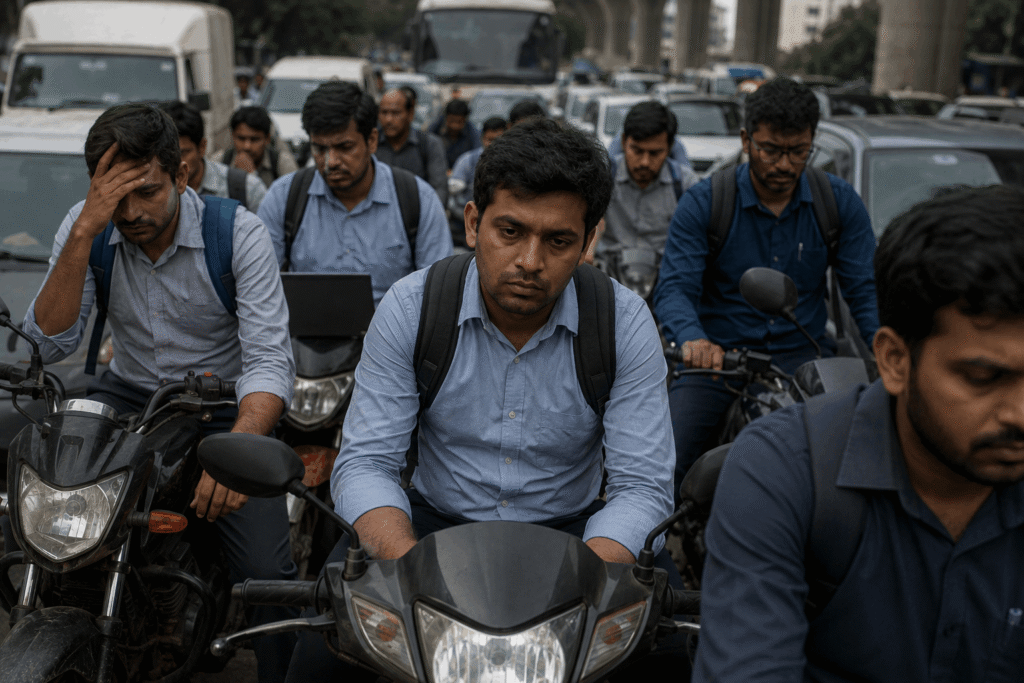
The biggest reason is simple. The emotional cost of many corporate jobs in India now feels too high.
In metro cities, many freshers earn between ₹25,000 and ₹45,000 monthly, but living expenses continue rising rapidly. In Bengaluru, Hyderabad, Mumbai, and Gurugram, rent, transport, food delivery, and EMIs can eat away most of a salary within weeks.
Even employees earning decent packages often feel financially and mentally drained. A person making ₹80,000 or even ₹1 lakh monthly may still struggle with rent, traffic, rising lifestyle costs, and nonstop work pressure.
Many young professionals now feel trapped in what people online are calling the “salary loop.” The paycheck increases, but peace of mind disappears.
The ₹1 Lakh Salary Trap Many Indians Relate To
This is becoming one of the biggest hidden frustrations among urban Indian workers.
Someone working in tech or consulting in Bengaluru may earn a strong salary on paper. But after paying:
- ₹30,000 to ₹40,000 rent
- Fuel or cab costs
- Swiggy and Zomato expenses
- Family responsibilities
- EMIs and subscriptions
there is often very little emotional satisfaction left.
The bigger issue is that work never fully stops. Employees are expected to stay active on Slack, Teams, WhatsApp, and email even after office hours.
A recent Economic Times report on workplace disengagement in India highlighted how workplace burnout and “quiet quitting” are rising sharply among younger Indian employees.
For many workers, the problem is no longer just money. It is the feeling that life revolves entirely around work. Rising expenses and poor financial habits are also increasing the financial pressure on India’s middle class in metro cities.
Is Job Pressure in India Becoming Too Much?
For a growing number of young people, yes.
The pressure starts early. Students compete for college seats, internships, placements, and promotions almost nonstop. By the time many enter the workforce, they already feel mentally exhausted.
Once inside the system, the pressure becomes even heavier:
- Long commutes
- Weekend calls
- Constant performance tracking
- Fear of layoffs
- AI replacing tasks
- Unrealistic deadlines
In cities like Bengaluru and Gurugram, spending 3 to 4 hours daily in traffic is normal for many office workers. After that, they still continue answering emails late into the night.
A viral Times of India report about employee burnout recently gained huge attention online because thousands of Indians related to the feeling of emotional exhaustion caused by modern work culture.
Even workers earning decent salaries say they struggle because many Indian middle-class families already feel financially exhausted due to rising urban expenses and lifestyle pressure.
This is one reason why searches related to job pressure in India and workplace burnout are growing rapidly.
Why Remote Work India Trends Are Changing Career Goals

The rise of remote work India opportunities has completely changed how many young people think about success.
Earlier, moving to a metro city and working in a large office was considered the ideal path. But after remote work became more common, many Indians realized they could earn online without sacrificing their entire lifestyle.
Today, thousands of young Indians are building income through:
- Freelancing
- Content creation
- YouTube
- Affiliate marketing
- Graphic design
- Online coaching
- AI automation work
- Remote startups
Platforms like Upwork, Fiverr, LinkedIn, and Internshala are becoming popular alternatives to traditional office careers.
Many young professionals are now exploring side income ideas in India to reduce dependence on one salary and create more financial freedom.
This shift is especially visible in places like:
- Dehradun
- Goa
- Himachal Pradesh
- Jaipur
- Kochi
Many young professionals now prefer slower, flexible lifestyles instead of constantly chasing promotions in metro cities.
A recent Times of India feature on leaving Gurugram corporate culture went viral because it reflected what many Indians are already thinking privately.
The dream itself is changing. Earlier people wanted office cabins and company designations. Now many simply want freedom over their time.
Why Young Indians Are Unhappy With Jobs Even After Getting Good Salaries
This is where older generations often misunderstand younger workers.
Many parents still believe a high-paying corporate role automatically guarantees happiness and security. But younger Indians are realizing that emotional health, free time, and personal control matter just as much as salary.
A recent Economic Times story about a Bengaluru tech worker leaving a ₹2.5 lakh monthly job became widely discussed online because people connected deeply with the idea of choosing peace over prestige.
This growing frustration explains why young Indians are unhappy with jobs despite earning better salaries than previous generations.
Many workers now say they want:
- Flexible schedules
- Hybrid work
- Better mental health
- More family time
- Side income freedom
- Less toxic workplaces
That shift is reshaping career decisions across India.
How AI Is Making Traditional Jobs in India Feel Less Secure

Artificial intelligence is also playing a major role in this changing mindset.
Young employees are watching companies automate customer support, coding assistance, content work, and marketing tasks faster than expected. Even skilled workers are starting to worry about long-term stability.
According to Deloitte’s latest survey, 74% of Gen Z and millennial employees are already using AI tools regularly at work. That number is expected to grow rapidly over the next year.
This uncertainty is pushing many Indians to diversify their income instead of depending fully on one company or one career path.
That is why searches around:
- freelancing
- passive income
- creator economy
- online business
- AI-proof skills
are rising sharply across India.
What This Shift Means for India’s Future Workforce

The idea of success in India is slowly changing.
For decades, the safest path was simple:
study hard, get a stable job, stay loyal to one company, and slowly build a secure life.
But many young Indians no longer fully believe that system works the same way anymore.
Today, people are questioning whether:
- endless hustle is sustainable
- office culture is emotionally healthy
- high salaries are worth burnout
- traditional career paths still guarantee security
Companies may eventually need to rethink work culture, flexibility, employee mental health, and expectations if they want to retain younger talent.
For many Indian families, the dream once centered around a stable office job with a fixed salary. But for a growing number of young people in 2026, freedom, mental peace, flexibility, and control over time now matter more than corporate titles and office cabins.
FAQs
Why are young Indians losing interest in traditional jobs in India?
Many young Indians feel that traditional jobs in India no longer provide enough work-life balance, emotional stability, or long-term security. Rising burnout, high living costs, and workplace pressure are major reasons behind this shift.
Why are corporate jobs in India becoming stressful?
Many corporate jobs in India now involve long working hours, constant online availability, performance pressure, and fear of layoffs. Employees in metro cities also struggle with traffic, expensive rent, and mental exhaustion.
Is remote work becoming more popular in India?
Yes. Remote work India trends continue growing as many professionals prefer flexible schedules, lower living costs, and better work-life balance compared to traditional office culture.
What careers are young Indians choosing instead of traditional jobs?
Many young Indians are exploring freelancing, content creation, online businesses, remote startups, AI-related services, affiliate marketing, and creator economy careers instead of traditional office jobs.
How is AI affecting traditional jobs in India?
AI is changing hiring trends and automating many repetitive tasks across industries. This has increased uncertainty among young professionals and made many workers rethink long-term career stability.